
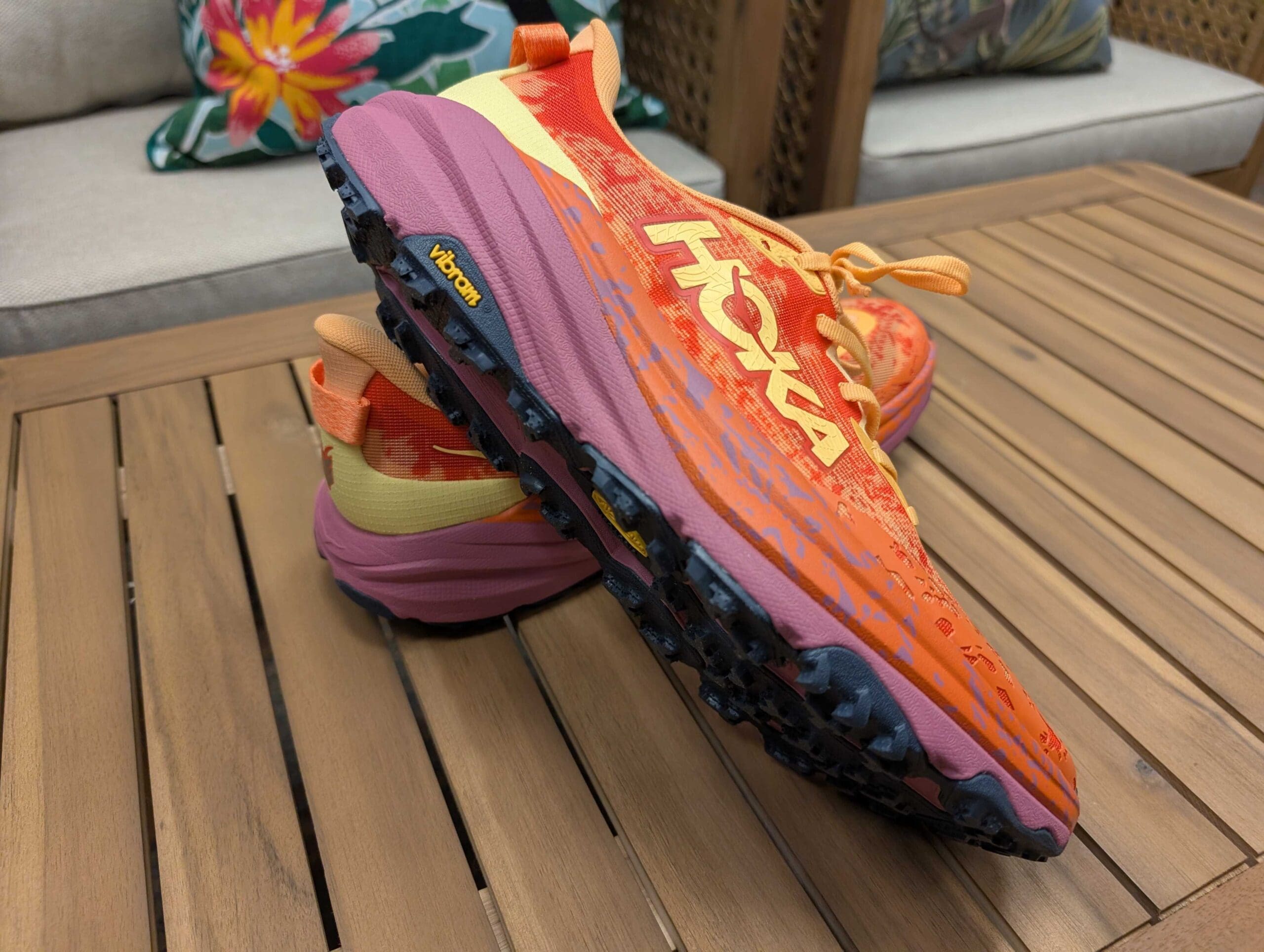
In the history of the Speedgoat line, the HOKA Speedgoat 6 will likely be remembered as the “polarizing” one. After the Speedgoat 5’s disappointing durability left longtime trail running fans questioning their loyalty to the series, HOKA had serious work to do. The verdict? They listened. They fixed most of what went wrong—but not everything.
While its predecessor was soft and plush, and its successor (the Speedgoat 7) brought back the bounce, the 6th version went in a completely different direction: firmness, durability, and speed. If you’re looking at a pair of 6s on clearance now that the 7 has arrived, here’s the full breakdown.
HOKA Speedgoat 6 Performance Review
After miles of testing across fire roads, rocky climbs, and muddy descents, here’s how the Speedgoat 6 actually performs where it counts.

HOKA Speedgoat 6
- ✓Single-density CMEVA midsole: Provides a firm and stable platform that excels at high speeds on hard-packed dirt and fire roads.
- ✓Vibram® Megagrip with 5mm lugs: Delivers “amazing” traction and elite-level confidence on wet rocks, mud, and technical mountain terrain.
- ✓Internal chassis and woven upper: Holds your foot securely on steep side-hills to ensure you don’t slide off the footbed during technical maneuvers.
PROS
- + Predictable mountain stability
- + Confidence-inspiring grip
- + Lighter, snappier feel
- + Rugged abrasion resistance
CONS
- – Infamous short tongue
- – Long break-in period
- – Aggressive toe taper
- – Muted ground feedback
The Midsole: “Responsive” or Just “Hard”?
The Speedgoat 6 moved away from the softer foams of the past to a single-density CMEVA midsole. This foam is lighter than the Speedgoat 5’s, but noticeably firmer—and that firmness was intentional. The Speedgoat 5 was notorious for breaking down around the 100-mile mark, and HOKA overcorrected with a more resilient formulation that holds its structure well past that point.
The 6 Experience: It feels fast on hard-packed dirt roads. It doesn’t “mush” out, giving you a stable, predictable platform for pushing the pace. The trade-off is a real break-in period—the first 50 miles feel stiff and somewhat unyielding. Give it time, and the foam softens to something more comfortable while maintaining its long-term resilience.
The Comparison: Next to the Speedgoat 7’s Supercritical EVA, the 6 feels “flat” and “muted.” While the 7 feels like it’s actively helping you spring forward, the 6 requires your legs to do more of the work. The 7 also delivers better out-of-the-box comfort with no extended break-in required.
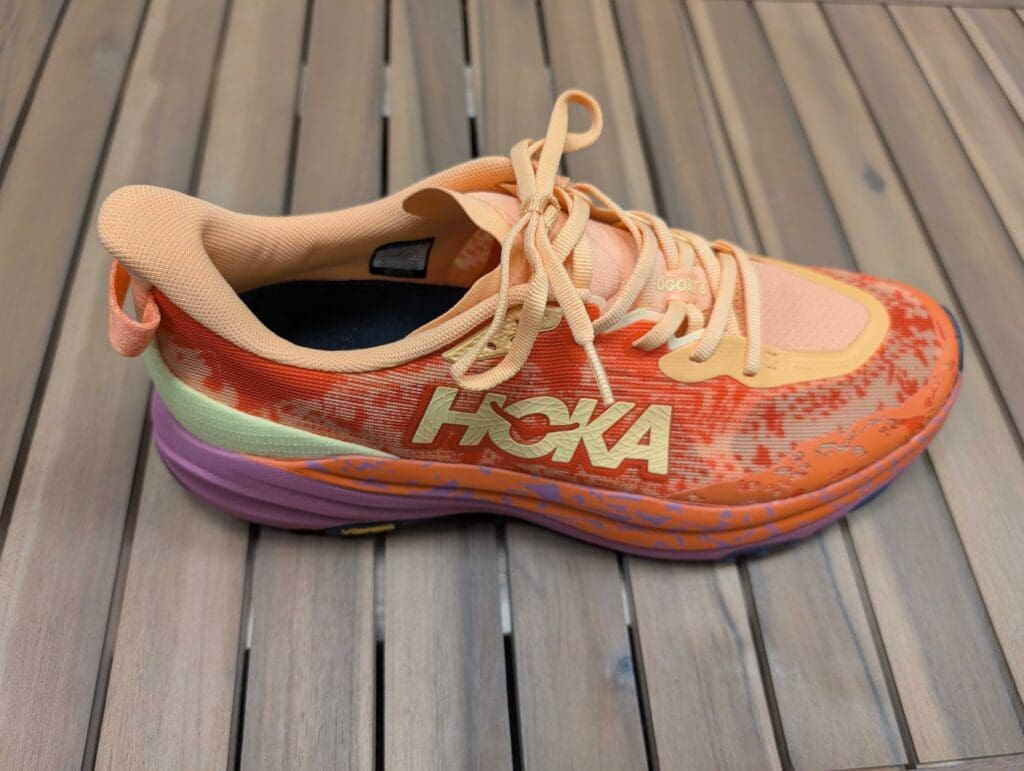
The Tongue: The “Short” Straw
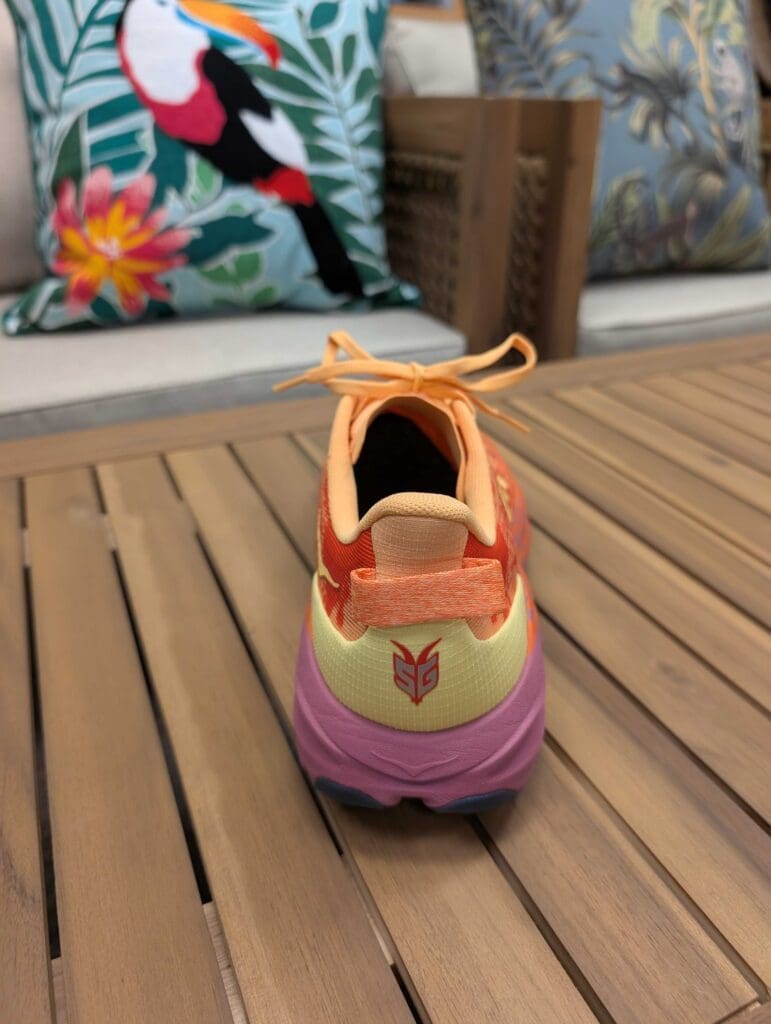
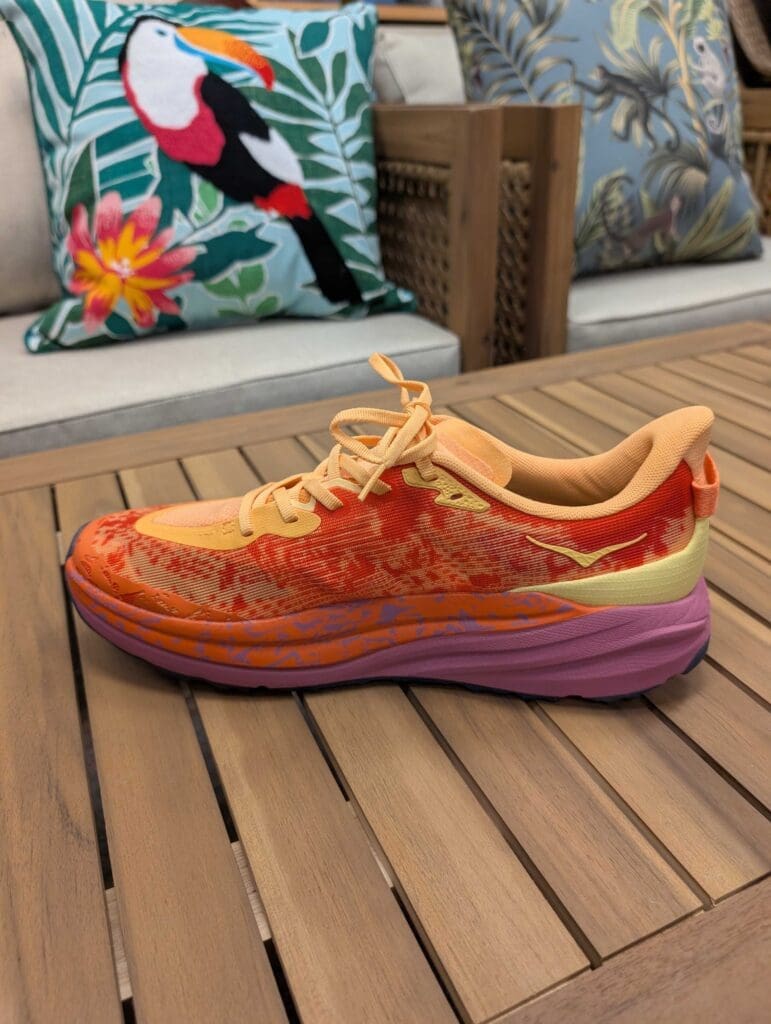
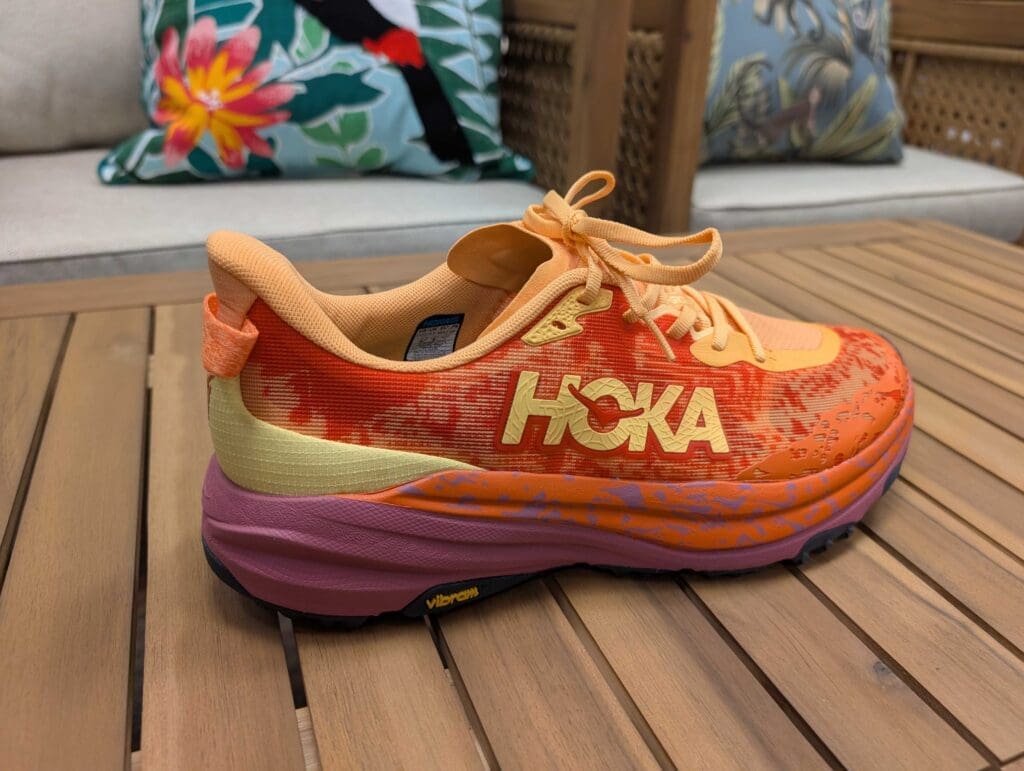
The most vocal complaint about the Speedgoat 6 is its thin, short tongue. HOKA partially addressed this over the Speedgoat 5 by adding some padding, but didn’t go far enough.
The 6 Experience: If you use the top eyelets for a secure fit, the laces create uncomfortable pressure on the top of your foot. “Lace bite” is a common issue, and on longer runs it becomes a legitimate problem, not a minor annoyance.
The Comparison: HOKA essentially admitted this was a mistake by giving the Speedgoat 7 a significantly longer, padded tongue that fixes this irritation entirely. If this issue sounds like a dealbreaker, it’s worth the jump to the newer model.
Traction: The Saving Grace
If there is one area where the 6 doesn’t play second fiddle, it’s the outsole. It features Vibram® Megagrip with an upgraded lug pattern and “Traction Lug” technology—small micro-dots on the lugs that improve bite on rock and mud. HOKA also tweaked the lug orientation slightly from the Speedgoat 5, and the result is elite grip across virtually all terrain: wet rocks, loose dirt, muddy trails, and frozen snow.
The 6 Experience: With 5mm lugs and the internal midfoot cage locking your foot snugly to the midsole, confidence on descents and off-camber sections is tangible. The heavily padded heel collar adds security, and the overall lockdown is noticeably better than the Speedgoat 5.
The Comparison: The Speedgoat 7 uses the same rubber and lug depth, but adds a decoupled heel bevel that makes it feel smoother on descents. The 6 can feel slightly “clunky” when heel-striking on steep terrain, whereas the 7 transitions more naturally.
Speedgoat 6 Trending on Social
Fit: Narrow by Design
The Speedgoat 6 maintains the series’ narrow, “torpedo” shape—particularly in the forefoot. The locked-in fit is intentional and works well for technical terrain, but some runners report a compressing feel that borders on pinching on longer efforts.
The Wide version is highly recommended for most runners, though even that version runs snug compared to brands like Altra or Topo. If you have wide feet or high arches, explore alternatives.
Durability: The Redemption Story
This is where the Speedgoat 6 earns its reputation as a course correction. The engineered woven upper resists the stretching and deterioration that made the Speedgoat 5 feel sloppy after moderate mileage.
The CMEVA midsole maintains its structure significantly longer. Most runners should expect 300–500 miles depending on terrain and body weight—a dramatic improvement over what version 5 delivered.
One caveat: some users have reported Vibram sole delamination, suggesting occasional quality control variation. Keep an eye on it in the early miles. I personally haven’t had any issues.
Speedgoat 6 Technical Specs
Here’s a full look at what the Speedgoat 6 is working with. These specs stayed largely consistent with the rest of the Speedgoat line and the bigger differences between versions are in how the shoe actually feels underfoot.
KEY SPECS
Speedgoat 6 vs. Speedgoat 7: Should You Upgrade?
The Speedgoat 7 addresses virtually every complaint about the 6. It features Supercritical EVA foam for a livelier, bouncier ride. The tongue is finally long enough. The heel collar is reconfigured to sit properly beneath the lace knot. Out-of-the-box comfort is significantly better with no extended break-in.
Unless you find the 6 at a meaningful discount ($30–40 off), the Speedgoat 7 is the better shoe for most runners at full retail. But if you prefer a firmer, more stable platform and can find the 6 on clearance, it’s still a capable trail tool.
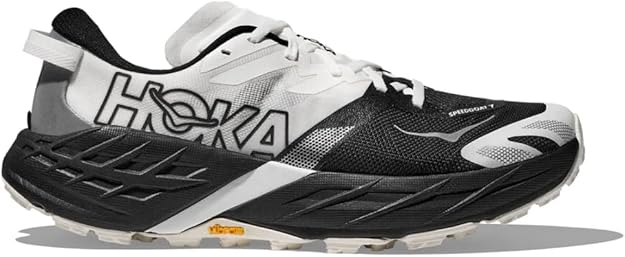
HOKA Speedgoat 7
- ✓The updated Vibram lug pattern maintains aggressive braking control while improving forefoot and wet-surface bite.
- ✓The redesigned heel collar sits properly under the lace knot, fixing the SG6’s infamous fit issues.
- ✓The supercritical EVA midsole delivers a softer, more energetic ride with better shock absorption than the SG6’s stiffer CMEVA.
PROS
- + Bouncier, softer ride
- + Lasting upper lockdown
- + Confidence-inspiring grip
CONS
- – Snug forefoot fit
- – Muted ground feedback
Verdict: Is the Speedgoat 6 Still Worth It?
The Speedgoat 6 is a legitimate redemption story with an asterisk. It fixes the Speedgoat 5’s biggest failures in durability and foot security. The traction and stability remain best-in-class. But it introduced new problems (the tongue, the stiff break-in) while only partially solving others.
Buy the 6 if: You find it at a deep discount, prefer firm midsoles, and mostly run non-technical fire roads or shorter, faster trail efforts.
Buy the 7 if: You want all-day comfort, a bouncier ride, a properly fitting tongue, and a shoe that feels great right out of the box.
Frequently Asked Questions (FAQs)
Is the HOKA Speedgoat 6 firm?
Yes. The Speedgoat 6 uses a single-density CMEVA foam that is significantly firmer and more responsive than both the Speedgoat 5 and the Supercritical foam in the Speedgoat 7. Expect a 50–100 mile break-in period.
What is the main problem with the Speedgoat 6?
Two issues stand out: the firm, “flat” midsole feel in the early miles, and the short, thin tongue that causes lace bite or ankle irritation when using the top eyelets.
How does the Speedgoat 6 compare to the Speedgoat 7?
The Speedgoat 7 offers a livelier Supercritical EVA midsole, a longer padded tongue, better out-of-the-box comfort, and a smoother heel transition. The 6 has a firmer, more stable platform that some runners prefer, and is often available at a significant discount.
Is the Speedgoat 6 good for wide feet?
Not ideally. The standard fit is narrow, and even the Wide version feels snug compared to alternatives like Altra or Topo. The Wide version is still recommended over standard for most runners.
How long do Speedgoat 6 shoes last?
Significantly longer than the Speedgoat 5—most runners should see 300–500 miles. The CMEVA foam and engineered upper hold up well, though occasional sole delamination has been reported.
Can I run on the road in the Speedgoat 6?
You can, but the aggressive lugs will wear down quickly on pavement, and the firm midsole is less comfortable on hard surfaces than a dedicated road shoe. The Hoka Challenger is a better option for mixed terrain.
Does the Speedgoat 6 have a rock plate?
No. It relies on the 40mm heel / 35mm forefoot stack height of the CMEVA foam for underfoot protection.
What is the heel-to-toe drop?
5mm and it is identical to the Speedgoat 7.
When was the HOKA Speedgoat 6 released?
The HOKA Speedgoat 6 was officially released on July 2024.
