

The 2026 running season has started fast. While many runners are still waiting for the traditional spring update cycle, several major brands have already updated their key lineups for the new year.
We have curated a list of the best running shoes of 2026 that you can buy today, plus a live tracker of Black Friday running shoe deals if you’re hunting holiday markdowns. Whether you are looking for maximum cushion, stability, or a speedier daily trainer, these are the winners from the most recent models.
At a Glance: The 2026 Winners
- Best Daily Trainer: New Balance 1080 v15
- Best Max Cushion: ASICS Gel-Nimbus 28
- Best Stability: Brooks Adrenaline GTS 25
- Best Premium Cushion: Brooks Glycerin Max 2
- Best Versatile Daily: Adidas Supernova Rise 3
- Best Trail: Saucony Peregrine 16
- Best Carbon Racer: Hoka Cielo X1 3.0
- Best for Beginners: Brooks Glycerin 23
Best Overall Daily Trainer
New Balance 1080 v15

New Balance 1080 V15
- ✓Infinion technology for premium underfoot cushioning and energy return.
- ✓Cushioned tongue and heel tab for added comfort.
- ✓Contoured, perforated mesh upper.
Pros
- + Finally fixes the “wobbly” feeling of the previous soft versions.
- + A rare “do-it-all” shoe that doesn’t feel boring.
- + The upper is roomy without feeling baggy—a hard balance to strike.
Cons
- – The price creep is getting harder to ignore.
- – Exposed foam on the outsole still gets chewed up by gravel too easily.
Let’s be honest: the previous 1080 was comfortable, but it was a little unrefined. New Balance clearly heard the feedback, because the 1080 v15 feels like a redemption arc. They’ve tightened up the ship, delivering a shoe that finally balances that famous plush comfort with actual runnability. It’s no longer just a soft pillow; it has a newfound snap to it.
Why It Wins
This is the shoe you grab when you don’t know what kind of run you’re doing. The “mushiness” is gone, replaced by a refined, mature ride that feels just as good at mile 10 as it does at mile 1.
Key Update
The midsole geometry has been completely reworked to stop the foam from collapsing inward, making this the most stable neutral shoe they’ve arguably ever made for the 1080.
Best For
The runner who refuses to own a shoe rotation and just wants one shoe that works 99% of the time.
Our Take
This went viral for a reason. The fit is incredible!
Best Max Cushion
ASICS Gel-Nimbus 28

ASICS Gel-Nimbus 28
- ✓Lightweight, breathable engineered knit upper material that reduces the need for additional overlays.
- ✓FF BLAST PLUS cushioning: Midsole foam that provides a blend of cloud like cushioning and a responsive ride that is lighter than FF BLAST.
- ✓Premium sockliner that provides cushioning performance and moisture management for a cooler, dryer environment.
Pros
- + The gold standard for protecting your legs from impact.
- + Your feet finally won’t overheat thanks to the new upper.
- + The interior lining feels more expensive than most luxury cars.
Cons
- – It’s still a boat; don’t try to run fast intervals in this.
- – The stack height is so high that cornering on uneven sidewalks can get dicey.
The Nimbus used to be a clunky tank, but the Nimbus 28 proves that “max cushion” doesn’t have to mean “heavy brick.” ASICS has somehow kept the absurd stack height while trimming the fat, resulting in a shoe that feels deceptively light for how massive it looks. Running in this feels like cheating on your recovery days; it isolates you from the pavement so effectively you almost forget you’re on concrete.
Why It Wins
It’s not fast—don’t let anyone tell you it is—but when your legs are trashed from a hard workout, this is the only shoe that feels like an apology to your joints.
Key Update
They finally fixed the oven-like heat retention of the Nimbus 27 with a much airier, breathable upper mesh.
Best For
Sunday recovery plods, bigger runners, and anyone who treats running as therapy rather than a race.
Our Take
There’s a reason people keep turning to Asics. The Nimbus 28 is the perfect balance of comfort and agility.
Best Stability Shoe
Brooks Adrenaline GTS 25

Brooks Adrenaline GTS 25
- ✓ Even more premium nitrogen-infused DNA Loft v3 cushioning delivers lightweight softness, and feel-good comfort mile after mile.
- ✓Certified PDAC A5500 Diabetic shoe and has been granted the APMA Seal of Acceptance
- ✓Guiderails holistic support system provides go to support for your body in its natural motion path while keeping excess movement in check.
Pros
- + Guiderails support is effective but unobtrusive (the “invisible hand”).
- + Lighter weight makes it surprisingly runnable for a stability shoe.
- + The outsole will likely outlast the apocalypse.
Cons
- – The 12mm drop feels very steep if you’re used to modern, lower-drop shoes.
- – The ride is decidedly firm compared to the plush Ghost or Glycerin.
The Adrenaline GTS 25 is the reliable accountant of the running world: it’s not flashy, it’s not trying to go viral, but it gets the job done every single time. Brooks has smartly resisted the urge to reinvent the wheel, instead refining their shoe lineup to perfection. It manages to disappear on foot unlike the stiff, intrusive stability shoes of the past.
Why It Wins
It acts like an invisible safety net. You don’t feel the support pushing into your arch until your form falls apart and then it gently nudges you back into line.
Key Update
The new DNA LOFT formulation sheds some much-needed weight, making the shoe feel less bottom-heavy than the GTS 24.
Best For
Overpronators who are tired of stiff, clunky stability shoes.
Our Take
Brooks has successfully modernized its flagship stability trainer by adding plusher DNA Loft v3 foam without sacrificing the predictable, locked-in feel essential for daily high-mileage training.
Best Premium “Super” Cushion
Brooks Glycerin Max 2

Brooks Glycerin Max 2
- ✓Nitrogen-infused DNA TUNED midsole uses zoned cell geometry, larger in the heel for airy, soft landings.
- ✓Full-body protection from impact, helping legs stay fresher, longer.
- ✓Triple jacquard air mesh upper wraps your foot in softness while allowing for midfoot adjustability and targeted support
Pros
- + Delivers a unique “gliding” sensation that keeps you moving forward.
- + Durability is vastly improved thanks to the new rubber placement.
- + The rocker geometry makes long, slow miles feel effortless.
Cons
- – It comes with a premium price tag that might hurt the wallet.
- – The platform is incredibly high, making it feel “tippy” on tight turns.
If the standard Glycerin is a sedan, the Glycerin Max 2 is a hovercraft. Brooks took a swing with the first version, but the v2 is where the concept fully matures. This is a massive slab of nitrogen-infused foam that manages to roll rather than slap against the ground. It’s big, it’s bold, and it uses its sheer size to create momentum.
Why It Wins
Instead of a bouncy, vertical pop, the Max 2 offers a relentless forward gliding sensation. It smooths out the road so effectively that long miles feel easier than they should.
Key Update
They fixed the fatal flaw of the v1 by adding strategic rubber to the outsole, so you aren’t shredding expensive foam on your first run.
Best For
Marathon training blocks where you need to log huge mileage without beating up your body.
Our Take
Brooks leans into the “Max” name by delivering a protective, high-volume cruiser with a premium triple jacquard upper, making it a solid choice for runners who prioritize a stable, predictable platform over a soft, squishy feel.
Best Versatile Daily
Adidas Supernova Rise 3

Adidas Supernova Rise 3
- ✓Primeweave engineered upper with precisely designed laser perforations delivers breathability and a truly premium fit.
- ✓The Dreamstrike+ midsole offers an optimized blend of soft and stable cushioning to meet your needs.
- ✓The lightweight Lighttraxion outsole provides dependable grip without adding bulk allowing you to run across surfaces.
Pros
- + Snappier and more responsive than its competitors.
- + Excellent heel lock addresses the main complaint of the v2.
- + Offers “super shoe” foam tech at a much more approachable price.
Cons
- – It lacks that “ahhh” step-in comfort of the Nimbus.
- – Adidas sizing remains tricky; it can run narrow in the midfoot.
Adidas spent years being confusing in the daily trainer space, but the Supernova Rise 3 cements their comeback. It’s the anti-max-cushion shoe. While everyone else is fighting to be the softest, the Rise 3 is happy being the snappiest. It doesn’t want to be a marshmallow; it wants to be a running shoe.
Why It Wins
It’s the sleeper hit of 2026. It uses Dreamstrike+ foam to give you a responsive, grounded feel that reminds us of why we run in the first place—to feel fast. It’s a no-nonsense workhorse with a secret wild side.
Key Update
The heel counter, which was a bit loosey-goosey in the previous version, is now locked down and secure.
Best For
The runner who hates the “sinking in” feeling of soft foam and wants some pop in their step.
Our Take
Adidas has successfully bridged the gap between daily comfort and speed, delivering a versatile trainer with a lower drop and a more sculpted geometry that finally gives the Nike Pegasus some serious competition.
Best Trail Shoe
Saucony Peregrine 16

Saucony Peregrine 16
- ✓Specialized highstrength mesh with added lightweight protection in the high abrasion areas.
- ✓VIBRAM MegaGrip outsole delivers superior durability and traction on a variety of terrain types.
- ✓Increased PWRRUN foam provides a more cushioned ride for long days on uneven terrain.
Pros
- + A full coverage Vibram Megagrip outsole.
- + Drains water instantly, making stream crossings a non-issue.
- + A high strength mesh upper resists abrasion.
Cons
- – The low stack height means you’ll feel the sharp rocks eventually.
- – The ride is harsh on pavement—keep this one on the dirt.
The Saucony Peregrine 16 is the best trail running shoe and doesn’t care about your road pace; it wants to eat mud. In an era of towering trail shoes that look like moon boots, Saucony keeps this one low, mean, and agile. It connects you to the trail in a way that builds trust, rather than isolating you from the terrain.
Why It Wins
Grip is king here. When you’re bombing down a technical descent in the rain, this is the only shoe you want on your feet because it refuses to let go of the ground.
Key Update
A new debris-resistant upper mesh that actually drains water instantly, rather than holding it like a bucket.
Best For
Technical trails, mud, and runners who prioritize agility over stack height.
Our Take
Saucony has successfully modernized its flagship trail shoe by balancing a more durable, roomier upper with a lighter overall weight, making it the most versatile and value-driven all-mountain trainer on the market.
Best Carbon Plated Racer
Hoka Cielo X1 3.0
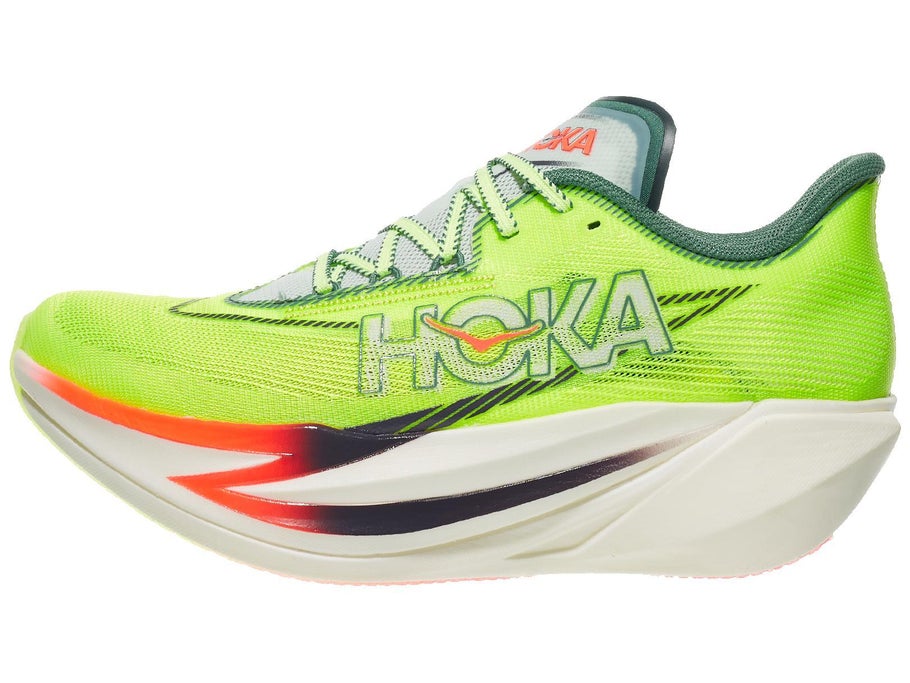
Hoka Cielo X1 3.0
- ✓ Refined the heel geometry for enhanced stability and a more secure ride.
- ✓Winged carbon plate helps provide a bit of structure to an otherwise very soft, squishy foam, preventing the shoe from feeling too “wobbly” when taking corners at high speeds.
Pros
- + Inherently stable geometry is a lifesaver for runners with weak ankles.
- + The rocker sensation is aggressive and effortless.
- + More durable than most fragile “super shoes.”
Cons
- – The fit can be tricky; the “knit” tongue is polarizing.
- – It’s still heavier than the Alphafly or Metaspeed Sky.
Hoka has finally nailed the super shoe formula. Released late January, the Cielo X1 3.0 takes the aggressive rocker of the previous version and stabilizes it. This is not a subtle shoe—it is a maximalist rocket ship designed to roll you forward with every step. Unlike the narrower Nike options, the Cielo offers a wider base that feels surprisingly planted, even when your form degrades late in a race.
Why It Wins
It’s the “fun” racer. The winged carbon plate and massive stack of foam create a trampoline-like effect that feels bouncier than almost anything else on the market. It doesn’t ask you to have perfect mechanics; it just pushes you forward.
Key Update
A significant weight reduction in the upper. The 2.0 was a bit heavy for a racer; the 3.0 strips that away, making it a viable contender for 5Ks and 10Ks, not just marathons.
Best For
Runners who want maximum energy return and a stable platform, even if it sacrifices a tiny bit of agility.
Our Take
By refining the heel geometry and removing the awkward “backward-rock” sensation of version 2.0, the 3.0 delivers a much more stable and natural transition that feels efficient at both race pace and slower cruising speeds.
Best For Beginners
Brooks Glycerin 23

Brooks Glycerin 23
- ✓An APMA-certified daily trainer featuring a breathable, secure-fit upper designed for maximum comfort over any distance.
- ✓Upgraded DNA Tuned midsole with 2mm extra forefoot foam for softer landings and more responsive toe-offs.
- ✓A wider platform and sculpted midsole work together to provide a balanced, seamless heel-to-toe ride.
Pros
- + Extremely comfortable “step-in” feel; zero break-in period required.
- + Available in multiple widths (Medium, Wide, Extra Wide).
- + Durable outsole can handle sloppy form and rough roads.
Cons
- – It’s a bit boring compared to the exciting new “super trainers.”
- – Not as responsive for speed work or intervals.
Just hitting shelves now, the Glycerin 23 is not going to win a beauty contest, but it will never let you down. Brooks has resisted the urge to make this shoe weird or complicated. It is simply a slab of high-quality cushioning with a plush upper that fits 99% of feet perfectly right out of the box.
Why It Wins
It removes the guesswork. There are no carbon plates, no rocker geometries, and no weird foams to learn. It is just a comfortable, stable, neutral shoe that lets you focus on building your fitness without worrying about your gear.
Key Update
The nitrogen-infused DNA Tuned foam has been tweaked to be slightly more durable, meaning this shoe will stay soft for 400+ miles.
Best For
New runners, walkers, and anyone who wants a “safe” shoe that just works.
Our Take
Brooks has successfully refined its flagship neutral trainer with a broader platform and improved outsole traction, delivering a smoother, more stable ride that feels high-end from the first mile to the last.
Wrapping Up Our Best Running Shoe Picks
Picking the right daily trainer comes down to how your feet and joints feel during your normal weekly mileage. If you want effortless, pillowy protection for long pavement sessions, a max-cushioned cruiser like the New Balance 1080 v15 or Brooks Glycerin 23 takes the sting out of concrete. If you prefer a livelier, energetic bounce that transitions smoothly into uptempo workouts, the ASICS Novablast 5 or HOKA Mach 6 will keep your turnover feeling snappy without needing a rigid carbon plate.
Runners who prefer an anatomical, foot-shaped toe box should also check out our roundup of Altra running shoes for zero-drop comfort, or read our Topo Athletic Specter 3 review if you want a low-drop super trainer with room for natural toe splay. Pay attention to the outsole wear on your current pair using our Shoe Wear Pattern Analysis Tool, rotate your trainers if you run more than four days a week, and trust the pair that disappears on your feet.
Frequently Asked Questions
What is the best overall running shoe in 2026?
The New Balance 1080 v15 and Brooks Glycerin 23 stand out as the most versatile everyday road running shoes for most runners in 2026. Both deliver generous impact protection, smooth heel-to-toe transitions, and breathable uppers that handle everything from short recovery jogs to weekend long runs.
How do I know if I need a neutral or stability running shoe?
Check the rubber outsole of a worn pair of running shoes. Even wear across the outer heel and center forefoot usually points to a neutral stride, whereas heavy wear concentrated along the inner (medial) edge of the heel and big toe indicates overpronation that benefits from a stability shoe like the Brooks Adrenaline GTS 25 or ASICS Gel-Kayano 32.
How many miles do running shoes last before you should replace them?
Most modern running shoes last between 300 and 500 miles depending on your body weight, foot strike, and the surfaces you run on. When the midsole foam stops rebounding overnight, feels flat after 20 minutes on the road, or leaves your calves and knees unusually sore, it’s time to retire the pair.
Should you size up when buying running shoes?
Yes, most runners should go up half a size from their casual street shoe size. Your feet naturally swell and lengthen during a run, so leaving a thumb’s width of space between your longest toe and the front of the shoe prevents bruised toenails and forefoot blisters on downhills.
What heel-to-toe drop is best for everyday running?
A moderate 8mm to 10mm heel-to-toe drop works well for most runners and helps reduce strain on the calves and Achilles tendon. Lower drops (0mm to 5mm) shift more workload toward the lower legs and midfoot, while higher drops (10mm to 12mm) favor heel strikers and runners managing tight calves.
Do beginners need carbon-plated running shoes?
No, beginners should skip carbon-plated racing shoes for daily training. Carbon plates are stiff and aggressive, which can overwork developing foot and ankle stabilizers at easy paces. A comfortable, non-plated daily trainer builds lower-leg durability safely and lasts twice as many miles.
