

When you’re shopping for new running gear, you’ll notice one spec that stands out: stack height. Measured in millimeters, stack height represents the total amount of material between your foot and the pavement. While running shoe brands once kept stack heights thin and low-profile, it’s clear that the modern market’s dominated by towering platforms, making max cushion running shoes the new industry standard.
Lacing up a shoe with the wrong stack height can lead to joint soreness or foot instability. Understanding how these measurements affect your running mechanics isn’t just for gear heads; it’s a practical way to stay healthy and comfortable. This guide breaks down exactly what stack height is, how it affects your body, and how to select the right stack profile for your unique running stride.
Running Shoe Stack Height: What You Need to Know
- Cushioning and Joint Mechanics: How sole thickness impacts knees, hips, and ankles.
- Finding Your Ideal Height: Guidelines for picking your stack profile.
- Shoe recommendations by stack category:
- Max Cushion (40mm+): HOKA Bondi 9
- Moderate Cushion (30-39mm): Brooks Ghost 18
- Low Profile (Under 30mm): Altra Escalante 5
Cushioning and Joint Mechanics: How Stack Height Affects Your Body
Proprioception vs. Shock Absorption
It’s known that stack height directly influences how landing shock is absorbed and distributed throughout your body. Thick midsoles dampen the vertical forces of road impact, protecting joints like your knees and hips. However, they don’t help with proprioception (your brain’s ability to sense the ground), which can make you land less precisely. Thin stack heights transfer more impact to your lower leg muscles, requiring active stabilization but providing excellent ground feel.
The Maximalist Shift: Stability in Towering Soles
As midsoles have grown taller, brands have had to widen the base of the shoe to keep runners from rolling their ankles. While a thick foam block absorbs impact nicely, it acts like a platform shoe, making ankle stability a key concern. If you’ve got weaker ankles, a towering stack height without a wide footprint can lead to joint strain.
How to Determine Your Ideal Stack Height Profile
When to Choose High Stack Heights (35mm+)
If you’ve got sensitive joints, are returning from a knee injury, or want plush comfort on long weekly training runs, a high stack height’s a great choice. It’s built to isolate your feet from hard road shock, though you won’t feel the road underfoot.
When to Choose Moderate Stack Heights (30mm to 34mm)
A moderate stack height’s the sweet spot for the vast majority of runners. It’s great because it balances protective cushioning with a stable, natural connection to the pavement, making it a highly versatile choice for daily runs.
When to Choose Low Stack Heights (Under 30mm)
Choose a low stack height if you’re looking to build foot strength, run speed intervals, or prefer direct ground feedback. It’s going to force your foot and lower leg muscles to actively manage landing forces.
Max Cushioning (40mm+): Plush Shock Absorption
For runners who’re looking to minimize impact forces above all else, it’s clear that maximalist running shoes offer a substantial barrier between the foot and the pavement. These models focus entirely on softening your landing on hard concrete.
We recommend the HOKA Bondi 9 as a premier max cushion example:

- ✓Towering 43mm stack height absorbs maximum ground force for premium joint relief.
- ✓Supercritical EVA midsole provides a soft, springy ride without packing out.
- ✓Wide outsole geometry delivers a stable, planted landing zone on hard concrete.
When you’re looking to maximize landing protection and reducing joint strain, a maximalist shoe like the HOKA Bondi 9 illustrates the high end of the stack height spectrum. Standing on a towering 43mm of supercritical EVA foam in the heel and 38mm in the forefoot, it’s designed to provide a massive barrier that absorbs road shock before it can travel up your legs. The thick midsole delivers a plush, soft roll, though it isolates your foot completely from the ground. This high platform behaves like a hovercraft on concrete; it protects your joints on easy recovery days, though it doesn’t feel very responsive when you try to run fast intervals. As highlighted in our roundup of the best HOKA running shoes, it remains the ultimate benchmark for pure underfoot protection.
Moderate Cushioning (30mm to 39mm): Versatile Protection
It’s clear they provide enough underfoot protection for double-digit long runs while keeping your foot close enough to the pavement to feel stable and responsive.
We recommend the Brooks Ghost 18 as a moderate stack Daily Trainer:

- ✓Moderate 36mm heel stack height balances underfoot softness with stable ground feel.
- ✓Nitrogen-infused DNA LOFT v3 foam offers a light, responsive daily trainer ride.
- ✓Traditional 10mm drop relieves calf strain by shifting load to knees.
For runners who want a daily trainer that balances protective cushioning with a natural, stable connection to the pavement, the Brooks Ghost 18 serves as the ideal moderate benchmark. With a 36mm heel stack and a 26mm forefoot stack, it’s designed to provide enough nitrogen-infused DNA LOFT v3 foam to absorb impact while keeping your foot close enough to the ground to feel centered and agile. This mid-level platform acts like a reliable daily driver; it doesn’t isolate you from the road like a Bondi, but it protects you far better than a thin, low-profile shoe. It’s a highly versatile daily trainer that behaves predictably across easy runs and long workouts alike, which is why it earned such high marks in our hands-on Brooks Ghost 18 review.
Low-Profile Cushioning (Under 30mm): Natural Ground Feel
It’s well known that low stack height shoes prioritize ground feel, agility, and foot muscle engagement. By keeping your feet close to the road, these shoes encourage natural stabilization and ankle strength.
We recommend the Topo Athletic Magnifly 5 for low-profile ground feedback:
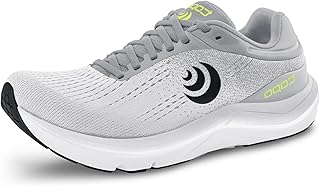
- ✓Low 25mm stack height provides superb ground feel and direct ankle stability.
- ✓Zero-drop geometry aligns heel and forefoot naturally to encourage midfoot strikes.
- ✓Anatomical toe box allows toes to splay naturally under impact loads.
When you’re trying to feel the road and build natural foot strength, the Topo Athletic Magnifly 5 represents the low-profile stack height category. With a thin 25mm heel and forefoot stack, it’s designed to keep your feet close to the ground, offering immediate tactile feedback with every step. Rather than relying on thick foam blocks to stabilize your stride, this zero-drop shoe forces your feet, ankles, and calves to actively manage landing impact. It behaves like a sports car on pavement; it’s incredibly light, nimble, and fast-feeling, though it provides a firmer ride compared to Altra’s lineup. It’s an excellent secondary trainer for runners looking to strengthen their arches, and stands as one of our top-rated zero drop running shoes for a natural midfoot strike.
The Bottom Line: Trust Your Stride
It’s clear that stack height is a critical spec for customizing your underfoot experience. A maximalist platform like the HOKA Bondi 9 isolates you from impact, a moderate trainer like the Brooks Ghost 18 offers balanced versatility, and the Topo Athletic Magnifly 5 keeps your feet close to the road.
For runners who overpronate, pairing the right cushion height with structured arch support in stability running shoes is essential to keep landing forces aligned. Ultimately, choose the cushion height that feels most natural and keeps you moving pain-free.
Frequently Asked Questions (FAQs)
What is stack height in running shoes?
It’s the thickness of the sole, measured from the bottom of the outsole rubber to the top of the footbed. It determines how much foam cushioning stands between your foot and the ground.
Does higher stack height prevent injuries?
Higher stack height can reduce impact pressure on your knees and hips, but it doesn’t automatically prevent injuries. It’s going to shift the load to your ankle stabilizers, which can lead to fatigue if you’re not used to a high platform.
Is stack height different from drop?
Yes. Stack height is the absolute thickness of the shoe. Drop (heel-to-toe drop) is the difference between the heel stack and the forefoot stack. Even if you’ve got a shoe with a high stack (e.g. 40mm heel / 36mm forefoot), it’s possible to still have a low drop (4mm). You can learn more about how this offset affects your joint load in our guide to running shoe drop.
How long do high stack shoes last?
High stack shoes typically last 300 to 500 miles. While they’ve got more foam, it’s common for soft foams to pack out over time. To learn how to spot the warning signs of foam fatigue, check out our guide on when to replace running shoes before you end up running on completely dead midsoles.
Can you run fast in high stack shoes?
Yes, many modern carbon-plated marathon racers feature high stack heights of 40mm. However, if you’re wearing daily trainers with high stacks, they don’t feel fast and responsive for short track workouts compared to low-profile flats.
