

From the outside, your old running shoes might look perfectly fine. But lacing up a worn-out pair is a fast track to knee aches, shin splints, and plantar fasciitis.
While brands suggest replacing trainers every 300 to 500 miles, that threshold isn’t set in stone. The actual lifespan of your footwear depends on:
- Your stride and weight: Heavier landing styles compress foams faster.
- The midsole material: Soft, springy racing PEBA foams lose energy return much quicker than dense daily training EVA foams.
- Where you run: Rough concrete acts like sandpaper compared to smooth treadmills.
Spotting the warning signs of shoe fatigue early isn’t just about gear maintenance; it’s the easiest way to prevent running injuries. This guide walks you through the exact warning signs, including:
- Midsole foam compression and stiffness.
- Physical joint fatigue and aches.
- Outsole rubber wear and tread erosion.
If you’re already experiencing these warning signs and need a fresh pair, check out our curated breakdown of the best running shoes available today.
Running Shoe Durability: What You Need to Know
- How Foam Packs Out: Learn how midsole materials degrade.
- Physical vs. Mechanical Wear: Spotting both body and shoe warning signals.
- Factors Influencing Lifespan: What makes shoes wear out faster.
- Shoe Durability Recommendations:
- High-Durability Daily Trainer: Brooks Ghost 18
- Performance Racing Shoes: Nike Vaporfly 4
- Trail Shield Shoes: Saucony Peregrine 16
- Extending Shoe Lifespan: Best practices to save your footwear.
- Transitioning to a New Pair: Guidelines for safely switching shoes.
How Running Shoe Foam Packs Out: The Warning Signs
The Science of Foam Compression
At the heart of every modern running shoe is the midsole, usually made of Ethylene-Vinyl Acetate (EVA) or Polyether Block Amide (PEBA). These foams consist of microscopic, gas-filled cells that compress to absorb shock and rebound to push you forward.
Over time, the constant pounding of running causes these cell walls to rupture and collapse permanently. Once this occurs, the foam “packs out” (meaning it loses its cushioning, flattens, and stops springing back).
Different foams degrade at different rates:
- Standard EVA: Holds its physical structure longer but doesn’t offer as much energy return.
- Premium PEBA (like Nike’s ZoomX): Delivers elite, bouncy springiness but compresses much faster under pressure.
Visual Warnings: Compression Wrinkles and Creases
You don’t need a lab to check for foam degradation. Just look at the sides of your midsoles.
While light cosmetic creasing is normal after a few runs, deep, permanent horizontal creases are a red flag. If those wrinkles remain deep even when you aren’t wearing the shoes, it’s a sign the foam cells have fully collapsed and can no longer rebound.
Midsole Flex: The Noodle Test
Another quick test is checking the shoe’s longitudinal bending stiffness. A fresh daily trainer has a stiff, snappy platform that only bends where your toes naturally flex.
To run the test:
- Hold the heel and the toe of your shoe.
- Try to fold the shoe in half.
- Observe where it bends. If it folds easily in the middle under the arch (acting like a wet noodle), the structural integrity is gone, and the shoe is ready for retirement.
Physical vs. Mechanical Wear Signs
The Mechanical Signs Under Your Feet
Mechanical wear is what you can see on the shoe itself.
To inspect your outsoles, look for:
- Smooth, bald patches: Areas where the textured lugs have completely worn away, compromising traction.
- Exposed midsole foam: Places where the outer rubber has worn through entirely. When you run on exposed foam, it’ll shred rapidly and ruin your landing stability.
The Physical Signs in Your Joints
Often, you’ll know your shoes are dead before they look worn out.
Pay close attention to your body. Worn-out cushioning usually presents as:
- Sudden, unexplained tightness in your calves or Achilles tendons.
- Dull, nagging aches in your knees or hips after easy runs.
- Shin splints or foot arch soreness.
When the foam stops absorbing impact, those landing forces are redirected straight into your joints, bones, and tendons instead.
Key Factors That Influence Shoe Lifespan
Runner Weight and Impact Style
Heavier runners compress midsole foams more forcefully on every step, which accelerates foam degradation.
Your landing style also plays a huge role:
- Heel strikers: They wear down rear cushioning and outsole heel rubber rapidly.
- Midfoot strikers: They distribute forces more evenly, extending foam lifespan.
Training Surfaces and Outsole Wear
Running exclusively on rough concrete or asphalt acts like sandpaper on your outsoles, eating through rubber far faster than it’ll wear down on soft dirt trails or treadmills.
Be mindful of surface matching:
- Road shoes on roads: The flat rubber layout resists asphalt abrasion.
- Trail shoes on roads: The soft rubber lugs won’t last long on concrete; they will chew up and wear down in a matter of weeks. Keep them off concrete to preserve their depth.
Rest Cycles and Shoe Rotation
Midsole foams need time to recover. When compressed, they take 24 to 48 hours to fully decompress and dry out.
If you’re running in the same shoe every day, the foam won’t fully rebound, which packs it out much faster. Rotating between at least two pairs extends the effective lifespan of both shoes by giving the foam cells time to rest.
Durability Categories and Shoe Recommendations
High-Durability Daily Trainers: Built for Miles
When you need a daily training partner that will survive hundreds of concrete miles, a traditional daily trainer like the Brooks Ghost 18 is the ideal durability benchmark.
- The Materials: It uses a thick, high-abrasion RoadTack outsole rubber and dense DNA LOFT v3 midsole foam.
- The Lifespan: While soft racing models compress and lose rebound within a few months, the Ghost doesn’t lose its structure and maintains its cushioning consistency for 450 to 500 miles.
- The Trade-off: It’s a highly reliable cruiser that protects your stride, though the focus on long-wearing materials makes it heavier than lightweight racers.
To see how it performed in our testing cycles, view our detailed Brooks Ghost 18 review.

- ✓Thick RoadTack outsole rubber resists abrasion for over 450 to 500 miles.
- ✓Nitrogen-infused DNA LOFT v3 midsole foam preserves underfoot spring longer.
- ✓Reinforced heel counter and double air mesh upper prevent premature wear.
Performance Racing Shoes: Lightweight but Short-Lived
If you’re targeting a personal record on race day, the Nike Vaporfly 4 is a blistering carbon racer that trades long-term durability for peak efficiency.
- The Materials: It pairs a thin web rubber outsole with soft, low-density PEBA-based ZoomX foam.
- The Lifespan: This foam behaves like a racing tire; it will deliver elite speed but compresses and loses its elastic rebound within 150 to 200 miles.
- The Trade-off: Once the foam is packed out, impact protection declines rapidly. It’s a specialized speed tool for race days, and it doesn’t belong in your daily rotation.
To explore other race-day models, view our list of the best marathon running shoes.
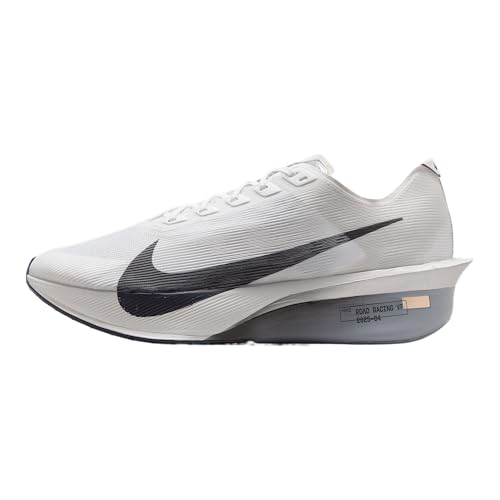
- ✓Redesigned ZoomX midsole removes excess weight for maximum racing efficiency.
- ✓A full-length carbon fiber Flyplate stabilizes the lightweight platform transition.
- ✓Ultra-thin web rubber outsole preserves grip while reducing overall shoe weight.
Trail Shield Shoes: Built to Withstand the Elements
For trail runners seeking maximum durability and confidence on technical singletrack, the Saucony Peregrine 16 is a highly protective off-road cruiser.
Trail shoes face different wear mechanics than road trainers:
- Outsole Durability: The Peregrine features a sticky Vibram Megagrip rubber outsole with deep 5mm lugs to resist tearing and lug erosion.
- The Lifespan: It easily survives over 400 miles on dirt and gravel, protected underfoot by a built-in rock plate.
- The Trade-off: Running on hard asphalt will wear down the soft lugs rapidly. Keep them off concrete to preserve their depth.
To see how it performed in our trail tests, view our detailed Saucony Peregrine 16 review.

- ✓Vibram Megagrip outsole with 5mm lugs delivers elite traction on wet, technical rock.
- ✓PWRRUN foam midsole provides a soft, protective, and responsive off-road ride.
- ✓Durable engineered mesh upper with protective overlays keeps trail debris out.
How to Extend the Lifespan of Your Running Shoes
Restrict Usage to Running Only
Avoid wearing your running shoes for yard work, grocery shopping, or casual walking, as it will load the shoe differently.
- Why it matters: Walking mechanics load the shoe differently.
- The result: Non-running usage adds unnecessary compression miles to the foam before you even step on a run.
Proper Drying and Storage
If they’re wet, let them dry naturally in a well-ventilated area away from direct heat or sunlight.
- Avoid the dryer: You’ll want to avoid the dryer; never put running shoes in a dryer.
- The danger: High heat will melt the midsole adhesives and dry out the foam cells, making them brittle and stiff.
Transitioning Safely to Your Next Pair
The Break-in Period
When you purchase a new pair of shoes, even if it’s the exact same model, the fresh foam will feel firmer and more structured than your old, broken-in pair.
Give your body and feet a week or two to adapt to the new support profile before you’ll want to run long distances in them.
Overlapping Old and New Pairs
Don’t make a sudden, 100% switch to your new shoes. Instead, overlap them:
- First week: Wear the new shoes on short recovery runs to break them in.
- Next two weeks: Use your old pair for easy base miles.
- The benefit: This gradual transition prevents sudden changes in joint loading, so you’ll stay injury-free.
The Bottom Line: Listen to Your Body
Replacing your running shoes at the right time is how you’ll keep your training healthy and pain-free:
- Brooks Ghost 18: Offers a predictable 500-mile daily training lifespan.
- Nike Vaporfly 4: Prioritizes lightweight speed for 150 race-day miles.
- Saucony Peregrine 16: Handles rugged, off-road elements with Vibram traction and rock protection.
If you’ve got flat arches and want to ensure proper support for your next pair, read our guide to the best running shoes for flat feet. Ultimately, don’t rely strictly on mileage trackers; trust how your joints feel after a run.
Frequently Asked Questions (FAQs)
How many miles do running shoes last?
Most daily running shoes last between 300 to 500 miles. However, lightweight racing flats and carbon-plated shoes with soft PEBA foams can lose their responsive feel and cushion in as little as 150 to 200 miles.
Can you wear running shoes after the foam packs out?
You can wear them for casual walking or gym work, but running in packed-out shoes significantly increases the impact forces on your knees, shins, and ankles, raising the risk of repetitive stress injuries.
Does rotating running shoes make them last longer?
Yes. Midsole foams take time to decompress after absorbing impact. Giving your shoes 24 to 48 hours to rest between runs allows the foam cells to rebound, prolonging their cushioning properties.
Should you replace shoes if the outsole looks fine?
Yes. Midsole foam loses its resilience and structural support long before the outsole rubber wears away. If the foam feels stiff and dead, or you notice shin aches, replace them regardless of outsole appearance.
How do you extend the life of running shoes?
Only wear your running shoes for running. Avoid wearing them for yard work, grocery shopping, or casual walking. Let them dry naturally away from direct heat if they get wet, and never put them in a dryer.
