
The 10k is one of my absolute favorite races. Sadly, it often gets overshadowed by the 5k or the marathon. But for distance runners wanting to push their limits, it forms the perfect middle ground. This race demands a massive aerobic engine. Yet, it remains short enough to sustain a quick pace. Ultimately, the distance offers both true endurance and exhilarating speed.
So, what does this mean for your gear? A 5k is basically an all-out sprint (see our Best 5k Running Shoes guide). In contrast, the 10k requires expertly balancing speed with protection. Your shoes need enough pop to hold a fast pace. Plus, you need ample cushion to keep those legs fresh for the final kick.
You might notice a little overlap in the picks below. Several of these shoes look incredibly similar on paper. But we included each model for a very specific reason. One might perfectly support a high cadence. Meanwhile, another purely focuses on massive energy return.
Here are the latest releases that actually deliver real results deep into a 10k, right when the burn sets in.
What Is The Best 10k Running Shoe? Our Top Picks:
- Best for Setting a PR: Nike Vaporfly 4
- Best for High Cadence: On Cloudboom Volt
- Best Fast Non-Plated Option: Hoka Mach 7
- Best for Energy Return: Adidas Adizero Boston 13
- Best for Stability: Saucony Guide 19
- Best for Beginners: New Balance 1080 v15
Best for Setting a PR
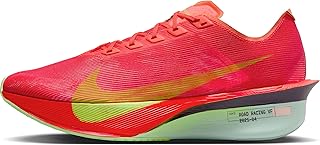
Nike Vaporfly 4
- ✓Ultra-light construction minimizes runner fatigue during intense road races
- ✓Full-length ZoomX foam midsole provides exceptional cushioning and impact absorption
- ✓Embedded carbon fiber FlyPlate delivers a highly propulsive ride
PROS
- + Excellent traction
- + Best for 5ks/10ks
- + Highly breathable
- + Responsive ZoomX foam
CONS
- – Low durability
- – Narrow midfoot
- – Expensive price
The Nike Vaporfly 4 brings you back to the ground. If previous versions felt a little wobbly, you’ll love this update. The ride is distinctly more mature and nimble. Nike shaved the heel down to 35mm and the forefoot to 29mm. So, that 6mm drop means you finally feel connected to the road again.
It is incredibly light at under 7 ounces. You still get that signature, bouncy ZoomX foam underfoot. But this time, the reshaped carbon FlyPlate has a sharper curve. The result? A snappy, responsive turnover that begs to go fast. It is a neutral road shoe perfectly tuned for short to moderate races like the 10k.
Who its for: Competitive runners chasing a PR. It delivers a lightweight, snappy ride for 5k to half-marathon distances.
Who should avoid it: Heel strikers who need a wide, stable base, or runners looking for a high-mileage training shoe.
- Ideal Pace Range: 35 to 50 minutes (5:38 to 8:02 per mile).
- Best Course Type: Fast, out-and-back road courses.
- Release Date: March 2025.
Nike Vaporfly 4 Key Specs
| Weight | 190g (6.7 oz) |
|---|---|
| Heel Stack | 35 mm |
| Forefoot Stack | 29 mm |
| Heel-to-Toe Drop | 6 mm |
| Midsole Material | Nike ZoomX Foam |
| Plate Type | Carbon Fiber Flyplate |
| Support Type | Neutral |
| Surface | Road |
Best for High Cadence
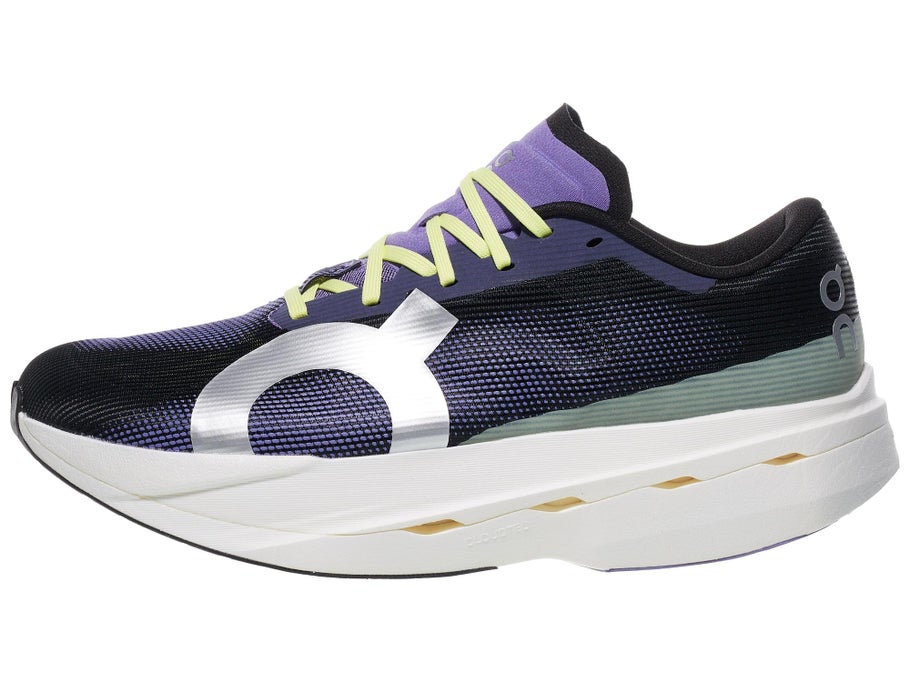
On Cloudboom Volt
- ✓Dual-layer Helion HF superfoam provides high-performance responsive energy return
- ✓Full-length carbon fiber Speedboard enhances propulsion for efficient forward momentum
- ✓Lightweight breathable mesh upper ensures secure midfoot lockdown during racing
PROS
- + Extremely lightweight
- + Explosive propulsion
- + Secure fit
- + Versatile performance
CONS
- – Firmer ride
- – Niche sizing
The Cloudboom Volt is On’s newest carbon-plated racer. It features a dual-layer Helion HF foam. Consequently, you get a highly responsive ride. But the stiff carbon Speedboard is the real star. This rigid setup practically forces your foot right through the gait cycle. If you run with a quick step and stay on your toes, this shoe is perfect.
Who its for: Competitive runners who want a high-propulsion rocker. It is the ideal choice if you maintain a rapid cadence.
Who should avoid it: Heel strikers. Also, avoid this shoe if you prefer a flexible ride. The rigid geometry feels completely awkward at slower paces.
- Ideal Pace Range: 35 to 45 minutes (5:38 to 7:14 per mile).
- Best Course Type: Flat, straight roads. The sharp rocker favors straight-line speed over tight turns.
- Release Date: February 2026.
On Cloudboom Volt Shoe Specs
| Weight | 210g (7.4 oz) |
|---|---|
| Heel Stack | 39 mm |
| Forefoot Stack | 34 mm |
| Heel-to-Toe Drop | 5 mm |
| Midsole | Helion™ HF hyper foam |
| Plate Type | Carbon-infused Speedboard |
Best Fast Non-Plated Option
Hoka Mach 7

- ✓Supercritical EVA midsole for responsive and energetic cushioning
- ✓Breathable creel jacquard mesh ensures lightweight, secure lockdown
- ✓Dual-compound rubber outsole enhances grip and long-term durability
PROS
- + Extremely lightweight and fast
- + Versatile performance
- + Excellent traction
CONS
- – Narrow fit
- – Minimalist comfort
The Hoka Mach 7 is a performance-oriented lightweight trainer that builds on the success of the Hoka Mach 6 . It features a 37mm heel and 32mm forefoot stack of Supercritical EVA foam, providing a ride that is protective but not numbing. Hoka also added a better rubber forefoot outsole, drastically improving the grip for fast cornering. It is a shoe for runners who want a snappy, plateless option that can handle both daily miles and race day.
Who its for: Runners who hate the rigid feel of carbon plates but still want a lightweight, responsive shoe for 10k race day.
Who should avoid it: Runners who prefer a plush, sink-in soft ride. The Supercritical EVA is medium-firm to prioritize energy return over pure comfort.
- Ideal Pace Range: 45 to 65 minutes (7:15 to 10:27 per mile).
- Best Course Type: Winding road courses or wet pavement, thanks to the new sticky rubber forefoot.
- Release Date: March 2026.
Hoka Mach 7 Shoe Specs
| Weight | 237g (8.4 oz) Men’s / 203g (7.15 oz) Women’s |
|---|---|
| Heel-to-Toe Drop | 5 mm |
| Heel Stack | 37 mm |
| Forefoot Stack | 32 mm |
| Midsole Material | Supercritical EVA |
| Stability | Neutral |
Best for Energy Return
Adidas Adizero Boston 13

- ✓Increased Lightstrike Pro foam for softer, more responsive energy return
- ✓EnergyRods 2.0 system provides snappy, propulsive transitions during toe-off
- ✓Lighttraxion outsole with Continental rubber ensures lightweight, reliable grip
PROS
- + Excellent traction
- + Snappy ride
- + Improved comfort
CONS
- – Narrow fit
- – Difficult to get a good lockdown
If you want a shoe that gives back every single ounce of effort you put in, meet the Adidas Adizero Boston 13. It perfectly bridges the gap between a daily trainer and a race shoe. It features a thick slab of bouncy Lightstrike Pro foam. It also uses glass-fiber EnergyRods 2.0. These rods actually mimic your foot’s bones to give you a snappy, mechanical pop. As a result, this setup keeps your legs feeling incredibly fresh during those tough final miles.
(Note: The Boston 14 is rumored to drop in September 2026. Until we get our hands on it, the 13 remains our absolute top pick for reliable bounce.)
Who it’s for: Runners who want a durable shoe with massive energy return. It easily handles both aggressive track workouts and full 10k races.
Who should skip it: Runners looking for an ultralight, minimal racing flat. The Boston line prioritizes tough durability over absolute weight savings.
- Ideal Pace Range: 45 to 60 minutes (7:15 to 9:40 per mile).
- Best Course Type: Any road course. The Continental rubber outsole on this shoe is very grippy and reliable.
- Release Date: June 2025 (Boston 14 rumored for September 2026).
Adidas Boston 13 Shoe Specs
| Weight | 260g (9.17 oz) |
|---|---|
| Heel Stack | 36 mm |
| Forefoot Stack | 30 mm |
| Heel-to-Toe Drop | 6 mm |
| Midsole Material | Lightstrike Pro and Lightstrike EVA foam |
| Plate Type | ENERGYRODS 2.0 (Glass fiber-infused) |
| Surface | Road |
Best for Stability
Saucony Guide 19

- ✓Refined CenterPath technology for balanced, non-intrusive gait guidance
- ✓Softened PWRRUN midsole foam for enhanced impact-dampening comfort
- ✓Extended XT-900 carbon rubber outsole for superior long-term durability
PROS
- + Stable ride
- + Plush comfort
- + Durable outsole
- + Accommodating fit
CONS
- – Not super responsive
- – Slightly heavier
Stability shoes used to feel like heavy bricks. But the Saucony Guide 19 officially kills the clunky stability shoe. It uses Saucony’s clever CenterPath Technology. This means you get a wonderfully wide base and high sidewalls. Instead of a stiff medial post jabbing your arch, it gently steers your foot forward.
The updated PWRRUN foam is also incredibly soft. It features a 35mm heel and a 29mm forefoot stack. So, you get the essential support you need alongside a flexible, smooth ride for your entire 10k.
Who its for: Overpronators who want a modern stability trainer that feels natural and comfortable.
Who should avoid it: Neutral runners who prefer a highly responsive, bouncy race shoe. The Guide 19 is built for steady miles, not explosive speed.
- Ideal Pace Range: 50 to 70+ minutes (8:00 to 11:15+ per mile).
- Best Course Type: Flat road courses where maintaining consistent form and alignment is the priority.
- Release Date: March 2026.
Saucony Guide 19 Shoe Specs
| Weight | 275g (9.7 oz) Men’s / 252g (8.9 oz) Women’s |
|---|---|
| Heel Stack | 35 mm |
| Forefoot Stack | 29 mm |
| Heel-to-Toe Drop | 6 mm |
| Midsole Material | PWRRUN (EVA-based) |
| Support Type | CenterPath Stability |
| Surface | Road |
Best for Beginners
New Balance 1080 v15

- ✓Infinion midsole foam for responsive, durable energy return
- ✓Lightweight, perforated mesh upper provides advanced foot breathability
- ✓Maximized stack height delivers soft, plush long-distance comfort
PROS
- + Exceptional cushion
- + Reduced weight
- + Great for beginners
- + Multiple widths
CONS
- – Expensive
- – Slower than other 10k racers
Starting your 10k journey should feel exciting, not punishing. If you want a shoe that makes those early miles feel plush and forgiving, meet the New Balance 1080 v15. New Balance completely overhauled the midsole with brand-new Infinion foam. This bouncy Supercritical TPEE/EVA blend works absolute wonders.
It drops the weight down to just 9.2 ounces. Plus, they beefed up the heel cushion to a massive 40mm. The forefoot also gets a generous 34mm stack. The result? A highly cushioned, welcoming shoe. It easily tackles easy long runs, recovery days, and your very first 10k finish line.
Who its for: Beginners who prioritize maximum comfort, impact absorption, and a lively bounce.
Who should avoid it: Runners looking for a firm, aggressive ground feel or a narrow fit. The 1080 v15 has a high-volume, roomy upper (it’s also a great option for runners with wide feet).
- Ideal Pace Range: 55 to 75+ minutes (8:50 to 12:00+ per mile).
- Best Course Type: Paved roads and concrete paths. It shines exactly where you need maximum impact protection.
- Release Date: January 2026.
New Balance 1080 v15 Shoe Specs
| Weight | 261g (9.2 oz) (Men’s US 9) |
|---|---|
| Heel Stack | 40 mm |
| Forefoot Stack | 34 mm |
| Heel-to-Toe Drop | 6 mm |
| Midsole Material | Infinion Supercritical Foam |
| Support Type | Neutral |
| Surface | Road |
10k Race Tactics & Tips
Running a fast 10k requires discipline. You cannot just go out hard and hope to hang on.
Chase Down Your Next PR
Whether you’re hunting for a sub-20 minute 5K or grinding toward a 3:30 marathon finish, get a personalized roadmap that adapts to you. Generate a custom 5K, 10K, Half, or Marathon training plan in seconds—completely free.
1. Micro-Manage the First 800 Meters
The advice to “not go out too fast” is common, but rarely comes with instructions on how to do it when the starting gun fires and adrenaline spikes.
- The Action: Don’t wait for the first mile marker to check your pace—by then, the damage is done. Check your watch at the 400m and 800m marks. If you are even 5 seconds ahead of your goal pace, intentionally pull back and reserve your energy for the final push.
2. Attack the “Dead Zone” (Miles 3 and 4)
Adrenaline easily handles your first two miles. The finish line fuels the final two. But miles three and four create a brutal “dead zone.” The starting excitement is gone, and the discomfort is very real. Because the end still feels so far away, this middle stretch is exactly where most runners lose their 10k PR.
- The Action: Stop looking inward and start playing games. Dedicate Mile 3 to “reeling in” other runners—pick a person in a bright shirt 50 yards ahead and slowly close the gap. Dedicate Mile 4 to a strict form-check: drop your shoulders, relax your jaw, and increase your cadence. Give your brain a specific job to distract it from the fatigue.
3. Stop Running a 10.2k (Run the Tangents)
Telling a runner to “dial in their splits” is useless if they are weaving through crowds and taking wide turns. A GPS watch might say you ran an 8:00/mile pace, but if you ran 6.4 miles because of a sloppy racing line, your official time will be disappointing.
- The Action: Race courses are measured along the shortest possible route. To match it, you need to run the tangents. Look ahead to the next turn and run a straight line straight toward its apex. Stop blindly following the pack in front of you, as crowds tend to drift to the middle of the road.
4. The 5-Mile Gear Shift
Telling someone to “finish strong” isn’t a strategy. When your legs feel like lead with 1.2 miles left, you need a mechanical cue to increase your speed, not just willpower.
- The Action: At the 5-mile (8km) mark, stop focusing on your tired legs and shift your attention entirely to your arms. Drive your elbows straight back and increase your arm-swing tempo. Because of the neural connection between your upper and lower body, your legs will automatically naturally match the faster cadence of your arms.
The Final Word on 10k Gear
Your 10k shoe choice comes down to your personal biomechanics and race day goals. If you are hunting down a strict PR and have the form to handle an aggressive rocker, a carbon-plated option like the Vaporfly 4 or On Cloudboom Volt will give you a distinct mechanical advantage.
But if you are a beginner looking for a reliable, comfortable ride, the New Balance 1080 v15 provides the best blend of protection and weight savings to get you across the finish line.
Frequently Asked Questions (FAQs)
Do I need carbon plates for a 10k?
No, carbon plates are not required for a good finish time. While they can improve running economy, a lightweight non-plated shoe like the Hoka Mach 7 is often enough for 6.2 miles.
What is a good 10k pace?
A good pace depends on your fitness. Competitive amateurs target 35 to 45 minutes, while beginners should aim to finish comfortably around 65 to 75+ minutes.
What is the difference between a 5k and 10k shoe?
Impact protection is the main difference. 10k shoes need more foam to prevent leg fatigue during the final miles compared to minimal 5k flats (like the Nike Streakfly).
How long do 10k racing shoes last?
Racing shoes typically last 150 to 250 miles. Softer foams and thin outsoles wear down faster than standard training shoes.
Is a 10k considered a long distance run?
Yes, officially. At 6.2 miles, it is classified as a long-distance road running event that requires a strong aerobic base.
What happens if I wear “5k shoes” for a 10k?
You can, but you might feel it more. Minimalist 5k shoes often lack the cushioning needed for the final two miles of a 10k, which can lead to premature leg fatigue. The great thing about shoes though is there isn’t a one size fits all, and often times the shoes that work well at the 5k distance also work well at the 10k.
Are these 10k shoes good for walking?
Generally, no. Performance racing shoes are designed for forward propulsion and can feel unstable or awkward at walking speeds. Stick to generalist trainers or hybrid race day options like the 1080 v15 for walking.
