
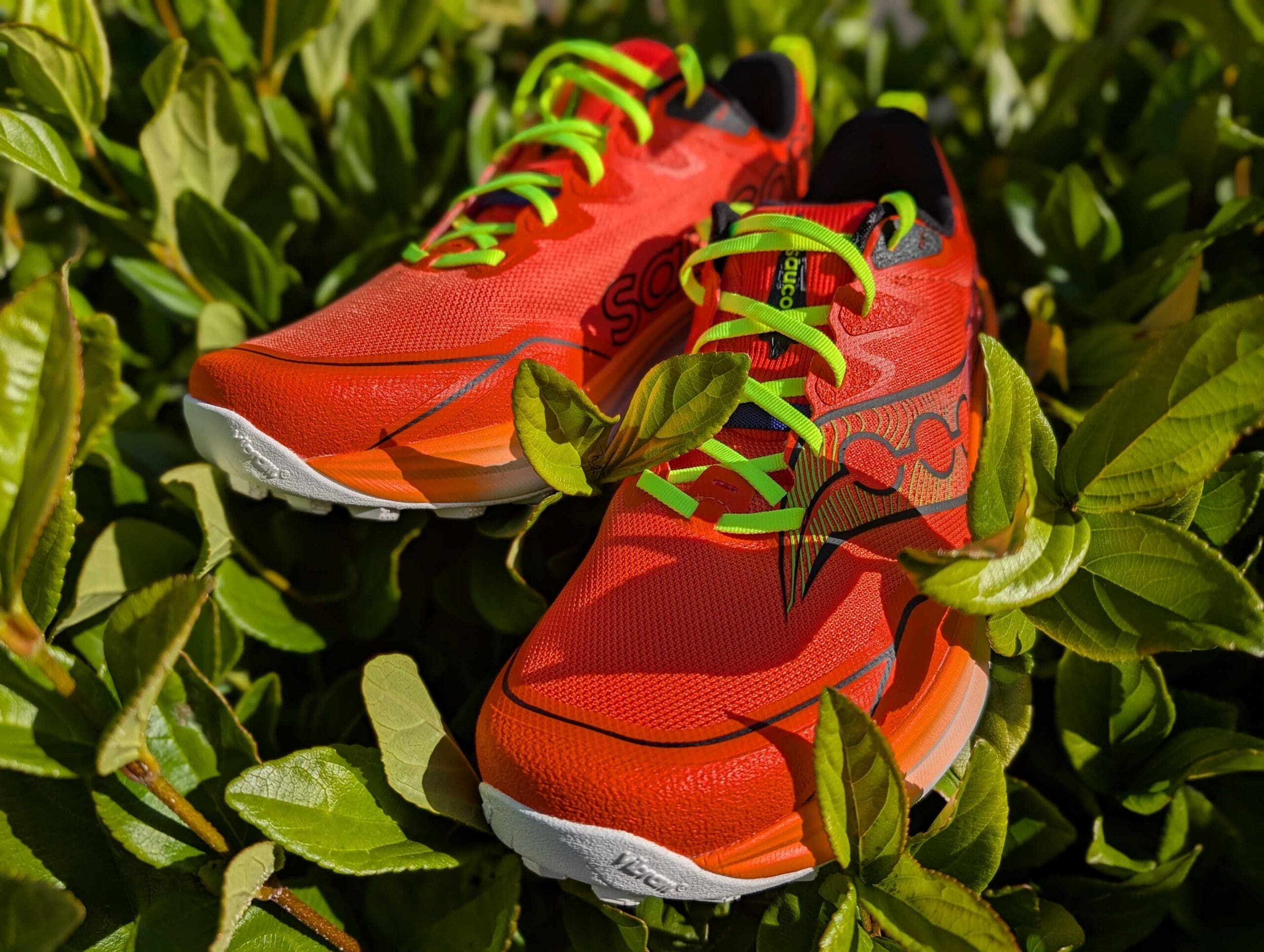
Verdict: It’s the best trail running shoe of 2026.
There’s a specific feeling when you stop worrying about your feet and start focusing on the trail ahead that’s just awesome. I recently took the Saucony Peregrine 16 out for a spin, and let’s just say it’s been a while since a shoe made me feel this secure on all different types of terrain.
For years, the Peregrine has been the reliable workhorse of trail shoes—solid, but occasionally plagued by durability issues or just “okay” grip in wet conditions. With the 16, Saucony seems to have finally fixed those gripes and found a real winner.
Performance Review: The Saucony Peregrine 16 Dominates Trails
I’ll be honest: I am primarily a pavement runner. For a long time, I thought trail running just meant “running slower and being careful not to trip.” I used to take my older road shoes onto light trails, sliding around on mud and tiptoeing over roots, thinking that anxiety was just part of the sport.
The Peregrine 16 changed that instantly.
Taking these out was a genuine wake-up call. I realized I hadn’t disliked trail running; I just hadn’t trusted my gear.
- The Shift: On a damp forest trail with slick leaves and mud, I found myself instinctively bracing for a slip that never came.
- The Result: Once I realized the grip was locked in, my stride opened up. I wasn’t “picking my way” through the trail anymore; I was actually running. It made me want to get out there and do it again immediately.

Saucony Peregrine 16
- ✓Full coverage, innovative VIBRAM MegaGrip outsole delivers superior durability and traction.
- ✓PWRRUN foam provides more cushion and comfort.
- ✓Specialized highstrength mesh upper with added lightweight protection from debris.
PROS
- + Incredible Vibram Grip
- + Zero Break-in Period
- + Stable & Agile Ride
- + Lightweight Feel
CONS
- – Poor Road Durability
- – Not Waterproof
The Saucony Peregrine 16 has a stable ride that’s fun and energetic on pretty much any terrain you throw at it.
The Ride: Stable, Energetic, and Just Right
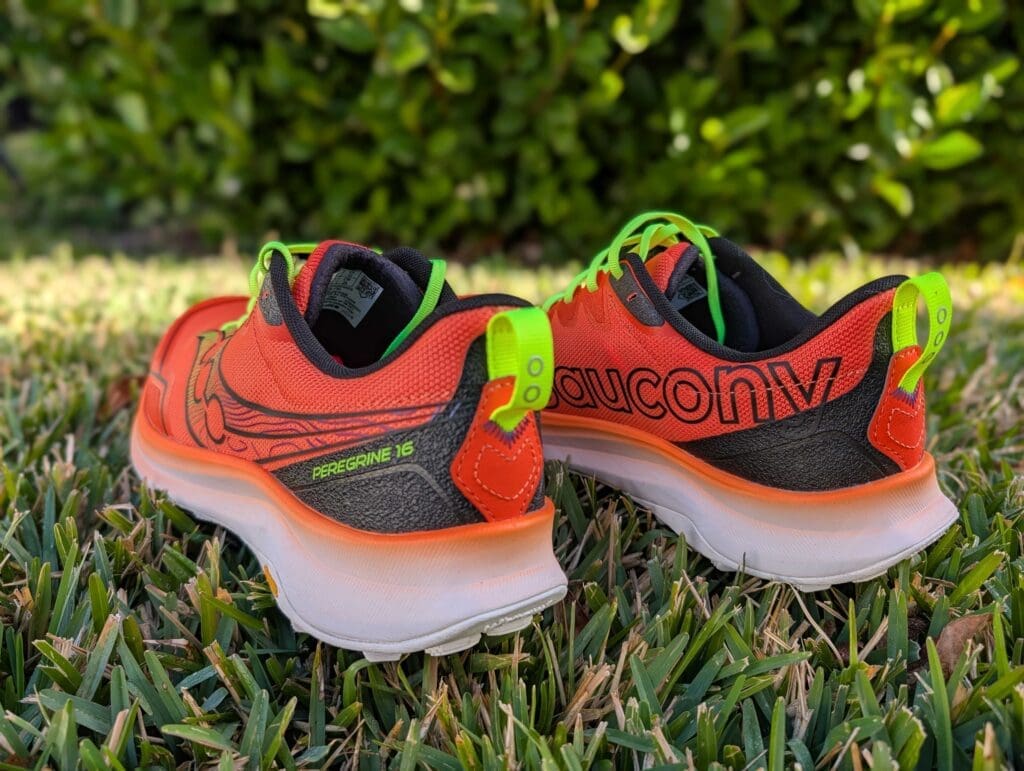
The real headline for the Peregrine 16 is the balance it strikes. This year, Saucony added 4mm of extra stack height (bringing it to 32mm in the heel), yet somehow kept the shoe feeling nimble.
I found the cushioning to be the perfect middle ground. There’s enough PWRRUN foam underfoot to protect you from sharp rocks and fatigue, but not so much that you lose that crucial connection to the ground. It doesn’t feel like a maximalist marshmallow; it feels like you’re connected to the ground in all the best ways.
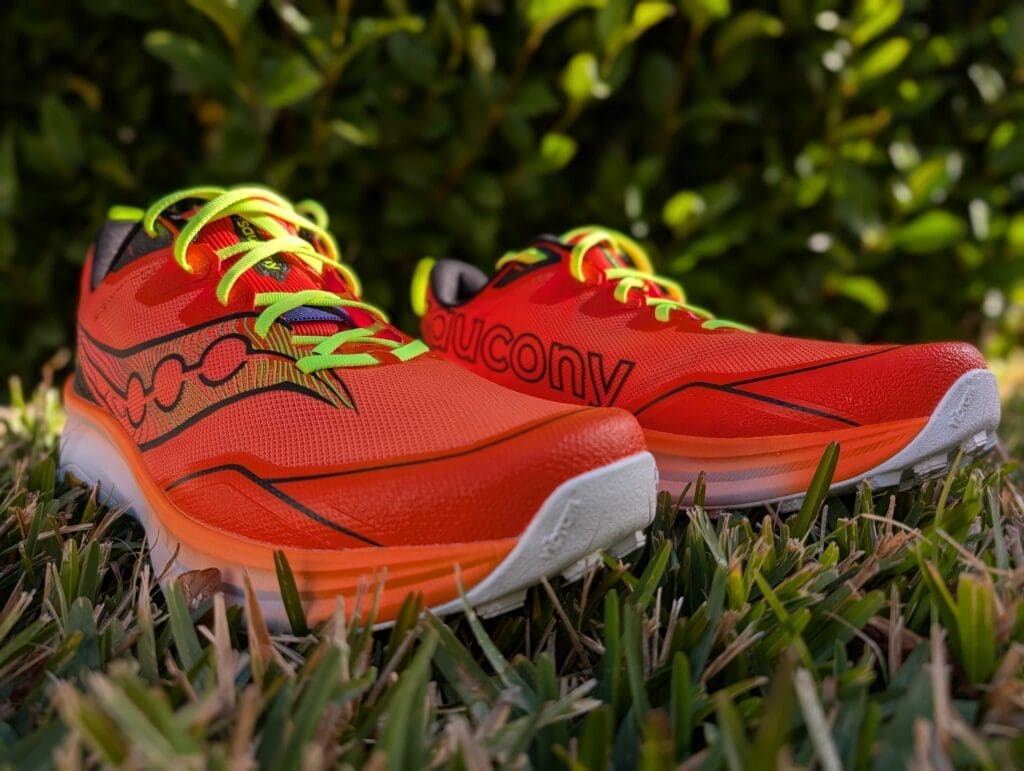
Improved Trail Running Grip
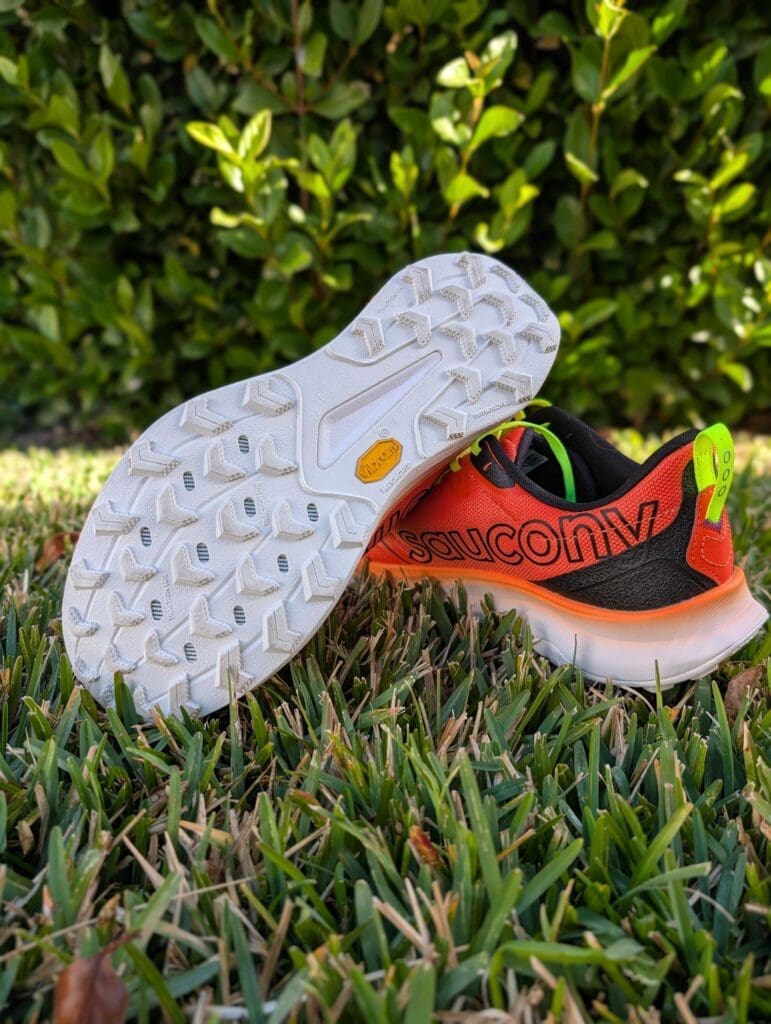
The biggest update on the spec sheet is the switch to a full Vibram Megagrip outsole, and it shows. I put these through the ultimate test: damp forest muddy trails.
Usually, when you combine wet leaves and slick mud you expect at least one heart stopping sliding moment. Not with these. It’s the kind of grip that lets you take corners faster than you probably should.
The Upper: A Locked-In Fit (With One Small Gripe)
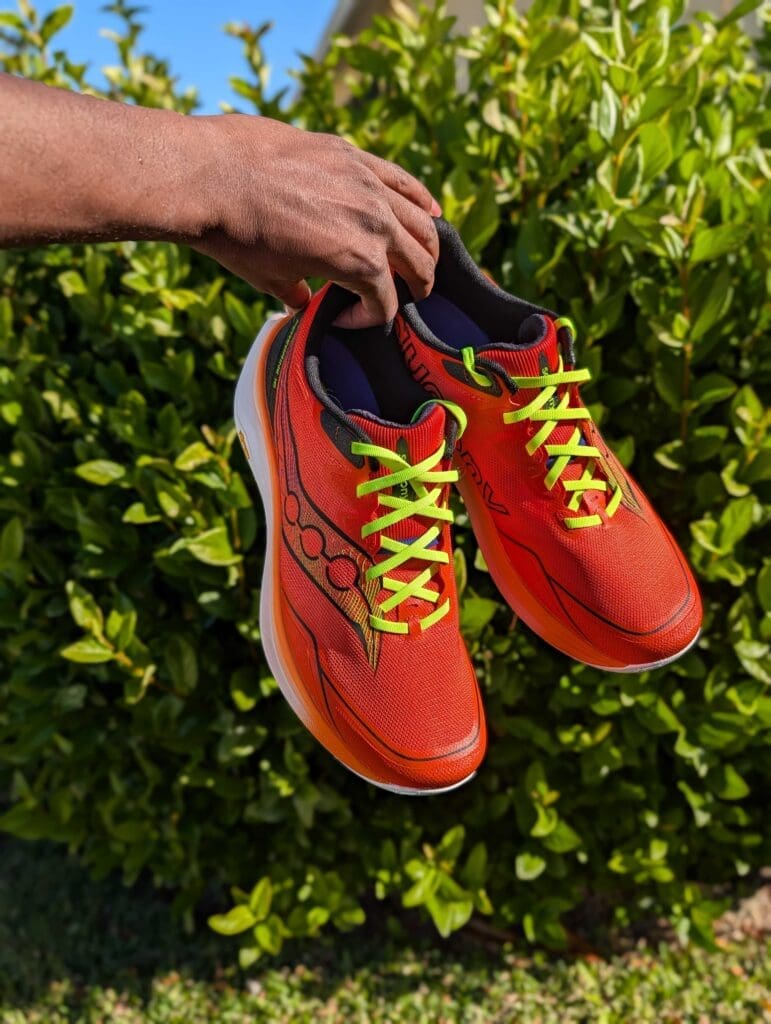
For the most part, the upper construction here is top-tier. The tongue is padded just right, and the laces create a secure lockdown that disappears on your foot—exactly what you want when navigating muddy terrain.
My only complaint is the protective texture around the toe box. It’s surprisingly stiff, and depending on how your foot flexes, that rigid material can sometimes buckle and compress into the side of your foot. It’s definitely not a dealbreaker, but it is a small distraction in a shoe that is otherwise incredibly comfortable.
Weight, Drop, Stack Height, and Specs
Here is the breakdown of what you’re getting with the 2026 model:
Saucony Peregrine 16 Shoe Specs
| Weight | 9.5 oz (269g) Men’s / 8.4 oz (239g) Women’s |
|---|---|
| Heel Stack | 32 mm |
| Forefoot Stack | 28 mm |
| Heel-to-Toe Drop | 4 mm |
| Midsole | PWRRUN foam |
| Outsole | Vibram Megagrip |
| Lug Depth | 4 mm (Vibram Megagrip Traction Lugs) |
| Best For | Technical trails, mud and dirt |
How The Peregrine 16 Stacks Up vs. The Competition
To help you decide if this is the right shoe for you, here is how it stacks up against the other big players in the trail running scene for 2026:
Peregrine 16 vs. Hoka Speedgoat 6
The Speedgoat 6 is still the king of max-cushion, but it can feel disconnected from the trail due to its massive stack height (40mm). If you prefer feeling where your foot lands—especially if you are coming from road shoes and value stability—the Peregrine is better in my opinion. The Peregrine 16 also offers a slightly more accommodating toe box compared to the Speedgoat’s tapered fit.
Peregrine 16 vs. Brooks Cascadia 19
Think of the Cascadia as an SUV and the Peregrine as a rally car. The Cascadia is stable and protective but heavier (approx. 10.7 oz). The Peregrine feels significantly lighter and more agile underfoot. If you want to run fast through technical sections, pick the Peregrine. If you want to hike/jog slowly and safely, the Cascadia is a safe bet.
Final Verdict: It’s The Best Trail Running Shoe of 2026
It’s rare that I give a shoe a “no-notes” endorsement, but the Saucony Peregrine 16 earned it. It’s a confidence-inspiring tool that makes the trail feel like a playground rather than an obstacle course.
Would I recommend them? 100%. If you want a shoe that stays out of its own way and lets you run with total freedom, this is the one. It earns our top choice for best trail running shoe of 2026.
Frequently Asked Questions (FAQs)
Is the Peregrine 16 worth the upgrade from the 15?
Absolutely. The move to the Vibram Megagrip outsole alone makes the 16 a significant upgrade over the 15. The grip is noticeably stickier on wet rock, and the added cushioning (without gaining weight) makes it much more forgiving on longer runs.
How far can I run in these? are they ultra-capable?
I’d put the “sweet spot” for these around the 50k (31-mile) mark. The added stack height makes them more viable for ultras than previous versions, but if you are tackling a 100-miler, you might want something with a bit more max-cushion (like the Saucony Xodus Ultra). For anything from a 5k to a 50k, these are golden.
Do they need a “break-in” period?
Honestly, no. I took them straight from the box to a muddy trail run and had zero hot spots or blisters. The upper is flexible enough that it molds to your foot pretty instantly.
Is the rock plate noticeable?
It’s there, but it’s subtle. You don’t feel a stiff board under your foot, but you do notice that sharp roots and jagged rocks don’t hurt when you land on them. It’s flexible protection rather than a rigid shield.
How is the heel lockdown?
Solid. I didn’t experience any heel slippage, even on steep uphill hikes. The lacing system does a good job of securing the midfoot, so you don’t have to crank the laces super tight to keep your heel in place.
Can I use custom orthotics/insoles with these?
Yes, the standard PWRRUN+ sockliner is removable. The shoe has enough depth to accommodate most custom insoles without pushing the top of your foot too high against the laces.
Can I wear these on the road?
You can for short distances (like running from your house to the trailhead), but I wouldn’t recommend them for long road runs. The rubber is soft (for grip) and will wear down faster on asphalt. Plus, the 4mm lugs can feel a bit “cleat-like” on pavement.
Are they waterproof?
The standard model I reviewed is not waterproof, which I actually prefer because it drains water quickly if you step in a stream. Saucony typically releases a GTX (Gore-Tex) version later in the year if you need dry feet for winter running.
