

Running used to be the simplest sport on earth. You laced up whatever beat-up sneakers were sitting by the front door, jogged a quiet loop around the neighborhood by yourself, and came home.
Step outside on a Saturday morning in 2026 and the sport looks a little different. Running has gotten louder, friendlier, slightly ridiculous, and a whole lot more fun. Thirty people are jogging down the sidewalk together at a chatty pace on their way to grab iced coffee. Half the group is wearing cushioned shoes with soles that look three inches thick, people are strapping on marathon water vests just to carry their phone for three miles, and someone’s always filming a post-run recap for TikTok before they’ve even stretched.
At the same time, after a year of sky-high shoe prices, endless watch alerts, and gear overload, you don’t have to look far to feel a counter-wave building for next year. Here are the 9 biggest running trends defining 2026 and 2027, starting with the habits and gear taking over our weekly miles right now, and why we’re betting 2027 won’t look anything like the past two years.
2026 & 2027 Running Trends: What You Need to Know
The 5 Biggest Running Trends Defining 2026
1. Supercritical Daily Trainers & Multi-Shoe Rotations
For a few years, the bounciest nitrogen-infused foams were locked inside $275 carbon-plated marathon racing shoes that felt awkward and stiff if you weren’t sprinting. In 2026, footwear engineers finally brought those bouncy “supercritical” foams into unplated everyday trainers. By infusing gas directly into the midsole foam instead of bolting a rigid carbon plate through the middle, modern daily shoes give you a lively, leg-saving bounce while still letting your foot flex naturally on easy morning runs.
Of course, all that fun midsole chemistry created a hilarious side effect in 2026: it’s almost impossible to find a runner who owns just one pair of running shoes anymore. Ask a friend about their shoe rack today and you’ll hear a full “runner math” justification for why their online shopping cart is packed with a cushioned recovery shoe, a bouncy daily trainer, a speed day shoe, and a backup colorway they’re waiting to buy on payday:
If you want to feel what 2026’s unplated super-foam wave is all about without building a five-shoe pyramid in your hallway, two daily trainers lead the pack right now. The New Balance 1080 v15 swapped traditional foam for nitrogen-infused Infinion supercritical cushioning, giving you a generous 40mm heel and 34mm forefoot stack at a featherlight 9.1 oz.
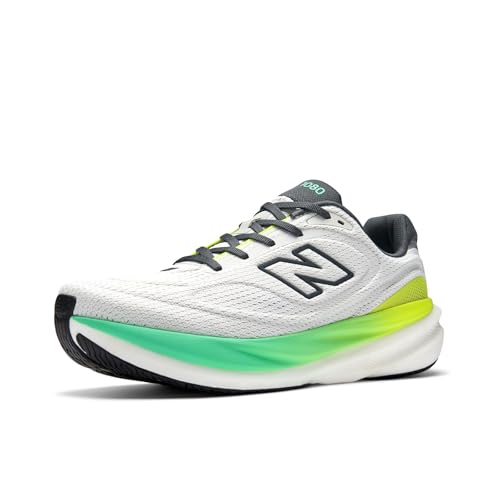
- ✓Infinion supercritical foam midsole delivers bouncy energy return without carbon plate stiffness.
- ✓Protective 40mm heel and 34mm forefoot stack at a featherlight 9.1 oz build.
- ✓Smooth 6mm rocker geometry keeps ankle and calf transitions relaxed at easy paces.
If you’d rather run in a slightly more planted 8mm drop with distinct heel and forefoot feel, the Brooks Glycerin 23 uses dual-cell DNA TUNED nitrogen infusion, placing larger cells in the 38mm heel for soft landings and smaller cells in the 30mm forefoot for a crisp push-off.

- ✓DNA TUNED midsole pairs larger nitrogen cells in the heel with responsive forefoot cells.
- ✓Balanced 38mm heel and 30mm forefoot stack creates a stable 8mm drop.
- ✓Durable RoadTack rubber outsole grips wet city sidewalks and resists early wear.
2. Coffee-Shop Run Clubs as the New Third Place
If you wanted to meet new people in your twenties or thirties a few years ago, you suffered through dating apps or shouted over loud music at a crowded bar on Friday night. In 2026, thousands of runners traded Friday bar tabs for Saturday morning coffee-shop run clubs.
What makes the 2026 run club boom different from old-school track clubs is that it isn’t intimidating. Nobody’s standing on the corner with a clipboard checking 5K qualifying times. Instead, most clubs split into relaxed pace groups, including dedicated “party pace” and run-walk method crews where the whole point is chatting the entire way and grabbing an iced latte or croissant at the finish. Whether you spot yourself in the types of 5K runners who show up purely for the post-run pastry or the ones comparing marathon training plans in the coffee line, social running turned a lonely sport into an actual community.
3. Strava Route Art & Transparent Stats Stickers
Let’s clear up one common misconception right away: Strava art isn’t AI-generated. The entire charm (and slightly unhinged dedication) of Strava GPS art is that real humans look at a neighborhood street map ahead of time, plot out a path through specific blocks and cul-de-sacs, and physically run every single turn so their GPS line sketches a picture on the map.
Now, drawing pictures with a GPS watch isn’t brand new. Creative runners have been turning city grids into giant Etch A Sketches for years. So why did Strava route art have such a massive second wave in 2026? It comes down to two big reasons. First, transparent Strava map stickers became the universal badge of honor on TikTok, Instagram Stories, and run-club group chats. Overlay a normal loop on your post-run iced coffee photo and your friends scroll past; overlay a seven-mile route shaped like a dinosaur or a holiday turkey and everyone stops to ask how you pulled it off.
Second, GPS watches got way smarter at guiding you through complex street drawings. Trying to run a 45-turn neighborhood sketch from memory used to mean stopping at every corner to pull your phone out of your pocket, and one wrong turn could turn your carefully planned shark into a lumpy potato. In 2026, you can sketch a route in Strava Route Builder or Garmin Connect, sync the course to a multi-band GPS watch like the Garmin Forerunner 265, and let wrist vibrations prompt every single turn so you don’t miss a street corner.

- ✓Multi-band SatIQ GPS locks onto tight street corners so Strava route art stays crisp.
- ✓Turn-by-turn course navigation buzzes your wrist before every intersection.
- ✓Bright AMOLED display stays easy to read in direct midday sun or pre-dawn miles.
4. The 5K Hydration Vest & Wearable Pocket Era
Five years ago, wearing a running hydration vest for anything shorter than a 50K mountain ultramarathon would draw raised eyebrows from marathon purists. In 2026, runners unapologetically wear lightweight hydration vests on flat three-mile neighborhood loops, and honestly, they’re onto something.
Phones have gotten huge, car key fobs are bulky, and nobody enjoys the feeling of a heavy smartphone bouncing inside a loose shorts pocket for thirty minutes. Modern running vests work like breathable, zero-bounce wearable pockets that hold your phone, keys, lip balm, and a small flask of cold water right against your sternum so your shorts stay exactly where they belong.
5. Open-Ear Audio & Romanticizing Easy Miles
Another refreshing shift in 2026 is how everyday runners stopped treating a Tuesday three-miler like a grueling military drill. More people are intentionally romanticizing their running routine, queuing up a favorite playlist, slowing down to watch the sunrise, or ending an easy loop with a ten-minute fart walk through the neighborhood to cool down and help digestion.
That social, comfort-first mindset also made open-ear headphones the unofficial uniform of 2026 run culture. Shoving silicone earbuds into sweaty ear canals makes it impossible to chat at a run club or hear a cyclist coming up behind you on a shared path. Open-ear headphones like the Shokz OpenRun Pro 2 leave your ears completely uncovered while blending bone conduction with small air-conduction bass speakers right in front of your ear.

- ✓Open-ear design leaves your ear canals completely uncovered for run club chats and traffic awareness.
- ✓DualPitch technology combines bone conduction mids with dedicated air-conduction bass drivers.
- ✓Featherlight titanium wraparound frame stays bounce-free with 12-hour USB-C battery life.
4 Running Trends We Predict Will Take Over in 2027
Every big cultural wave eventually sparks a counter-wave. After watching where footwear labs, run clubs, and everyday runners are heading right now, here’s what we predict will define 2027 running trends.
6. Going Back to Basics: Lower Stacks & Honest Road Feel
If 2025 and 2026 were the years of “more foam and more plates,” our biggest gear prediction for 2027 is a major back-to-basics reset across the shoe wall.
For the last few seasons, brands have been locked in an arms race to build the tallest midsole in the store, pushing everyday trainers past 42mm and 45mm of foam while creeping price tags toward $200 and beyond. While mega-stack shoes feel great on beat-up legs, a lot of runners are starting to miss actually feeling the ground underneath their feet. When you’re standing on nearly two inches of ultra-soft foam, your ankle stabilizers have to work overtime on uneven sidewalks, and every run starts to feel numb and disconnected.
In 2027, we’re betting footwear brands will swing the pendulum back toward simpler, lower-profile, plate-free daily trainers that prioritize natural flexibility, ground feel, and honest durability:
- The Return of the 28mm to 33mm Daily Trainer: Look for major brands to spotlight lighter, lower-to-the-ground shoes that let your toes and arch bend naturally at push-off instead of rocking you forward on a stiff platform.
- Classic Heritage Silhouettes With Modern Foam: Instead of spaceship heels that stick out three inches behind your Achilles, 2027 lineups are leaning into clean, classic running silhouettes that use modern lightweight foams in thinner, more nimble packages.
- No-Nonsense $130 to $140 Durability: Runners are tired of paying $190 for a daily shoe that loses its pop or shreds its exposed midsole foam after 220 miles. Simpler single-density midsoles with generous rubber outsole coverage aren’t flashy, but they’re poised for a big comeback.
Curious when the next wave of 2026 and 2027 daily trainers, super shoes, and back-to-basics updates officially hit shelves? Track upcoming footwear launches by brand, release window, and category on our live calendar.
View the Release Calendar →7. Unplugged, Watch-Free Miles
We expect the exact same back-to-basics shift in how people run in 2027. After years of letting a watch grade our sleep score before we’ve even had coffee, dictate our pace every quarter mile, and scold us for “unproductive” training statuses, runners are hitting data fatigue.
In 2027, expect to see a lot more runners embracing unplugged, watch-free runs once or twice a week. Leaving the GPS watch in a drawer on an easy recovery morning, or flipping it to a simple time-only screen and running purely by breath and feel, is going to be one of the healthiest mental resets in the sport.
8. Hybrid Strength-Meets-Running Training
In 2027, the old badge of honor of grinding out 55 miles of slow, exhausted pavement pounding every week is giving way to hybrid durability. Everyday runners are borrowing a page from sports physical therapy and trading one or two “junk mile” days for heavy lower-body strength training, single-leg calf raises, and hip mobility work. As guidance from the American College of Sports Medicine consistently highlights, pairing aerobic running with progressive resistance training builds stronger tendons, improves running economy, and keeps overuse injuries on the sidelines. You can also spot mechanical imbalances early by checking the tread on your current trainers with our Shoe Wear Pattern Analysis Tool.
9. Small-Town “Runcations” & Scenic Half Marathons
Try entering a major world marathon lottery for 2027 and you’ll face acceptance odds under 2% or 3%, with race-weekend hotel rooms costing more than a flight to Europe. Instead of refreshing lottery rejection emails, groups of friends are booking micro-destination “runcations” built around scenic half marathons, coastal 10-milers, and boutique trail relays in smaller food and mountain towns. A half marathon gives you the full race-morning goosebumps and finish-line celebration without leaving you too wrecked to walk around town and enjoy dinner that evening.
Keep What Makes You Lace Up
What makes the shift from 2026 into 2027 so exciting is that running finally has room for both sides of the coin. You can enjoy 2026’s bouncy supercritical foams, open-ear playlists, and Saturday morning coffee clubs while also welcoming 2027’s return to simpler, grounded shoes and unplugged miles.
Test new trends against your own legs rather than your social feed. If a tall cushioned shoe keeps your knees fresh on Sunday long runs, don’t let anyone talk you out of it; if a lower-profile, flexible trainer makes your stride feel light and connected, lean into 2027’s back-to-basics wave early. Take the habits that make your daily miles happier, leave the rest on the shelf, and we’ll see you out on the road.
Frequently Asked Questions
What is the biggest running trend of 2026?
On the gear side, 2026 was defined by supercritical nitrogen foams moving out of $275 race shoes and into unplated daily trainers. Culturally, coffee-shop social run clubs, transparent Strava stats overlays on social media, and low-pressure ‘party pace’ miles turned running into a shared third place.
Is Strava GPS art generated by AI, or do runners actually run those paths?
Strava art is 100% human-powered! Runners map out an image on a real neighborhood street grid ahead of time and physically run or walk every single block and turn so their GPS trace sketches the drawing. While GPS route art has been a beloved runner tradition for years, it hit a huge second wave in 2026 thanks to group holiday routes, multi-band GPS watches with turn-by-turn course alerts, and transparent Strava map stickers on TikTok and Instagram.
Why do we predict running brands will go ‘back to basics’ in 2027?
After several years of midsoles ballooning past 45mm, carbon plates getting stuffed into everyday trainers, and price tags creeping past $220, both runners and footwear designers are hitting max-stack fatigue. In 2027, expect a strong counter-swing toward lower-profile, flexible daily trainers that let you actually feel the road, classic heritage silhouettes, and honest $130 to $140 shoes built for simple durability.
Are carbon-plated super shoes good for everyday training?
Most coaches and sports physical therapists advise saving rigid carbon-plated racing shoes for race day and key speed sessions. For daily mileage, unplated trainers, including both bouncy supercritical cushions and traditional flexible daily shoes, allow your feet, ankles, and calves to move and strengthen naturally.
Why are runners wearing hydration vests on short 5K runs?
Modern running vests have evolved into lightweight, breathable wearable pockets rather than extreme ultramarathon packs. Many runners wear a low-profile vest on 3-to-5-mile runs simply to carry a phone, keys, lip balm, and a small flask of water without waistbands bouncing or heavy pockets pulling down their shorts.
Do I need expensive gear or a fast pace to join a social run club?
Not at all. While you’ll spot plenty of trendy trainers and GPS watches at any Saturday meetup, modern social run clubs are built around conversational paces, run-walk intervals, and post-run coffee. Any comfortable pair of running shoes and a willingness to say hello are all you need.
