Distance Converter
Miles • Kilometers • Race Distances
Miles to Kilometers Converter
Convert miles to kilometers (mi to km) and kilometers to miles instantly. Accurate, two-way conversion for everyday measurements, track laps, and certified running race distances.
Instant Two-Way Conversion
Certified Race Benchmarks
400m & 200m Track Laps
Pace & Finish Time Estimates
Race Distance Shortcuts:
1 Mile
3 Miles
5 Miles
10 Miles
13.1 Miles (Half)
20 Miles
26.2 Miles (Marathon)
1K
3K
5K
10K
15K
Half Marathon (21.1K)
Marathon (42.2K)
50K Ultra
Use stepper or slider below
mi
4.83
Kilometers
Certified Race Distance Conversion Table
Official road and track race distances with certified conversions and 400-meter track lap equivalents.
| Race Event | Miles | Kilometers | 400m Track Laps |
|---|---|---|---|
| 1 Mile | 1.00 mi | 1.61 km | 4.0 laps |
| 3K (3,000m) | 1.86 mi | 3.00 km | 7.5 laps |
| 2 Miles | 2.00 mi | 3.22 km | 8.0 laps |
| 5K (5,000m) | 3.11 mi | 5.00 km | 12.5 laps |
| 5 Miles | 5.00 mi | 8.05 km | 20.1 laps |
| 8K (8,000m) | 4.97 mi | 8.00 km | 20.0 laps |
| 10K (10,000m) | 6.21 mi | 10.00 km | 25.0 laps |
| 15K (15,000m) | 9.32 mi | 15.00 km | 37.5 laps |
| 10 Miles | 10.00 mi | 16.09 km | 40.2 laps |
| Half Marathon | 13.11 mi | 21.10 km | 52.7 laps |
| 20 Miles | 20.00 mi | 32.19 km | 80.5 laps |
| Marathon | 26.22 mi | 42.20 km (Official: 42.195 km) | 105.5 laps |
| 50K Ultra | 31.07 mi | 50.00 km | 125.0 laps |
| 50 Miles | 50.00 mi | 80.47 km | 201.2 laps |
| 100K Ultra | 62.14 mi | 100.00 km | 250.0 laps |
| 100 Miles | 100.00 mi | 160.93 km | 402.3 laps |
Footwear Matching
Our Shoe Reviews
Best Running Shoes for Every Race Distance
Different race distances demand completely different footwear engineering. While short 5K and 10K events favor featherweight agility and rapid cadence, half and full marathons require max-cushion super foams and carbon plates to ward off muscular breakdown. Explore our shoe reviews for each distance milestone:
 5K Race Day
5 Best 5K Running Shoes to Smash Your PR
Ultra-light, aggressive racers designed for snappy toe-off, fast cadence, and quick 5K cornering.
Explore 5K Shoes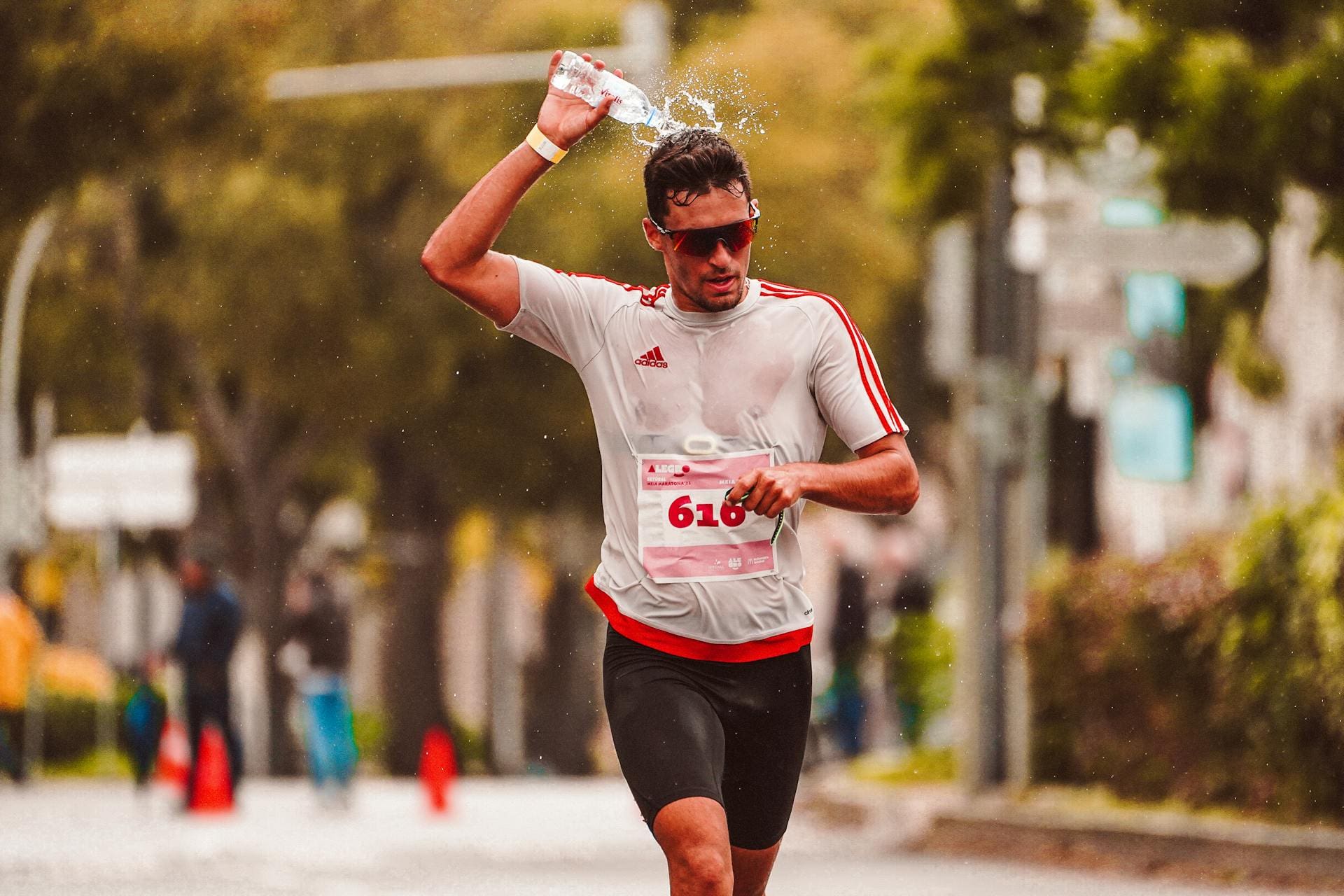 10K Threshold
6 Best 10K Running Shoes for Race Day
The ideal balance of featherweight agility and responsive foam to sustain hard lactate threshold pacing.
Explore 10K Shoes Half Marathon
7 Best Half Marathon Running Shoes
High-efficiency speed trainers engineered with resilient energy return to protect legs over 13.1 miles.
Explore Half Marathon Shoes Marathon
7 Best Marathon Running Shoes (2026)
Maximum stack PEBA super foams and carbon fiber plates built to minimize fatigue and preserve form over 26.2 miles.
Explore Marathon Shoes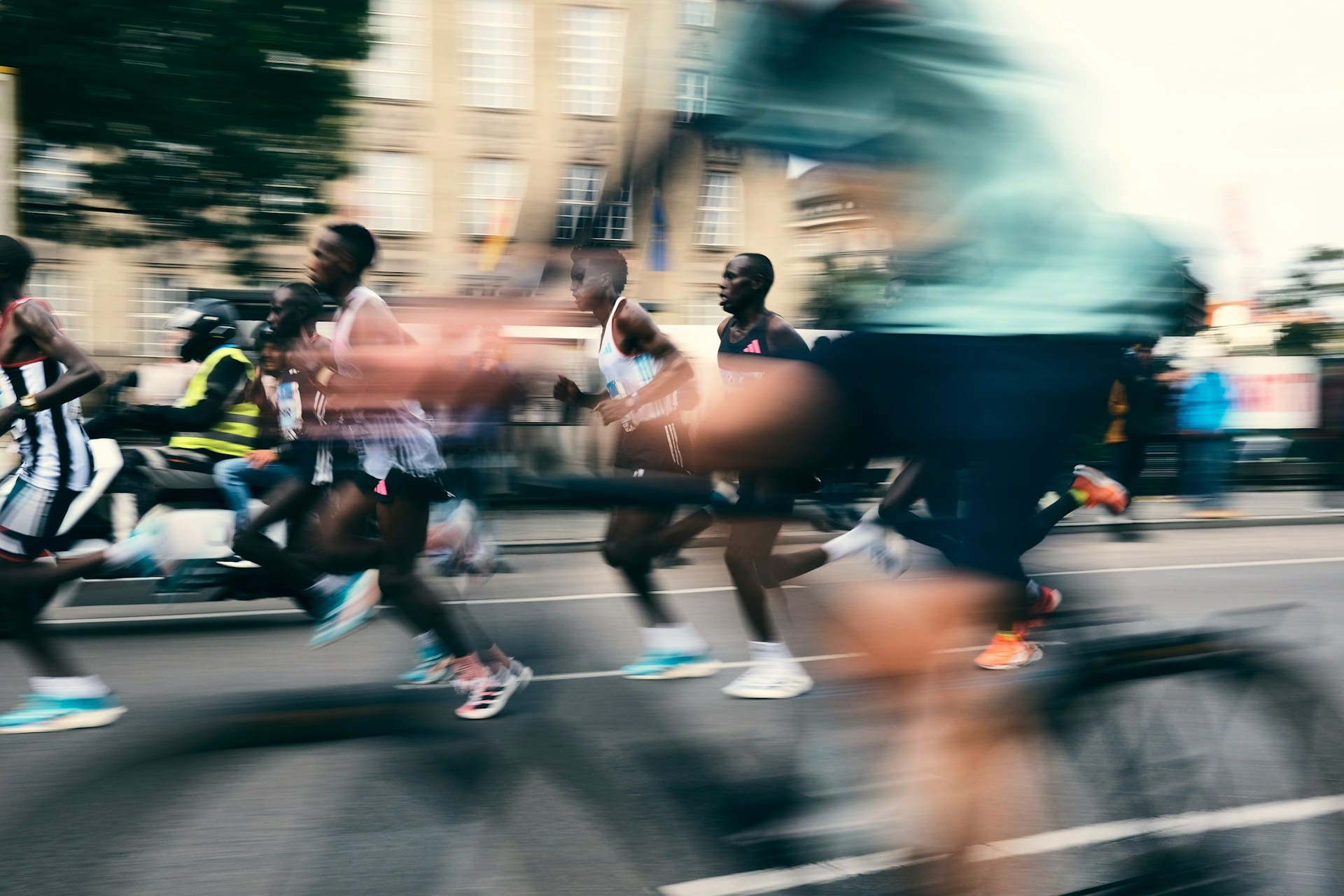 All Distances
7 Best Carbon Plated Running Shoes
Lab-tested super shoes delivering up to 4% running economy improvements through rigid plate propulsion.
Explore Carbon Racers Trail & Ultra
4 Best Trail Running Shoes of 2026
Grippy multi-directional lugs, protective rock plates, and durable upper meshes for grueling off-road endurance.
Explore Trail ShoesHow Distance Changes Your Target Pace
As your race distance doubles, physiological endurance dictates a roughly 5% to 6% decrease in sustainable speed (about 15 to 45 seconds per mile). Use the pace conversion matrix below to calibrate your mile-by-mile targets with metric kilometer splits.
Running Pace Conversion Matrix (Min/Mile ↔ Min/KM)
Standard runner training velocity benchmarks converted between imperial and metric pace systems with equivalent treadmill speeds.
| Mile Pace (min/mi) | Kilometer Pace (min/km) | Treadmill Speed (mph) | Metric Speed (km/h) |
|---|---|---|---|
| 5:00 /mi | 3:06 /km | 12.0 mph | 19.3 km/h |
| 5:30 /mi | 3:25 /km | 10.9 mph | 17.6 km/h |
| 6:00 /mi | 3:44 /km | 10.0 mph | 16.1 km/h |
| 6:30 /mi | 4:02 /km | 9.2 mph | 14.9 km/h |
| 7:00 /mi | 4:21 /km | 8.6 mph | 13.8 km/h |
| 7:30 /mi | 4:40 /km | 8.0 mph | 12.9 km/h |
| 8:00 /mi | 4:58 /km | 7.5 mph | 12.1 km/h |
| 8:30 /mi | 5:17 /km | 7.1 mph | 11.4 km/h |
| 9:00 /mi | 5:36 /km | 6.7 mph | 10.7 km/h |
| 9:30 /mi | 5:54 /km | 6.3 mph | 10.2 km/h |
| 10:00 /mi | 6:13 /km | 6.0 mph | 9.7 km/h |
| 10:30 /mi | 6:31 /km | 5.7 mph | 9.2 km/h |
| 11:00 /mi | 6:50 /km | 5.5 mph | 8.8 km/h |
| 12:00 /mi | 7:27 /km | 5.0 mph | 8.0 km/h |
Course Measurement Science
The Science of Running Distance Measurement
Why certified road race courses rarely match your GPS watch, how track lane geometry changes your distance, and the mathematical rules governing running measurement.
1. The Short Course Prevention Factor (+0.1%)
Under World Athletics and USATF standards, course certifiers measure road races using a calibrated bicycle fitted with a mechanical Jones-Oerth Counter. To guarantee that no runner ever sets an invalid personal record or record-setting time on a course that turns out to be even one centimeter short, certifiers deliberately apply the Short Course Prevention Factor (SCPF). Every certified kilometer is measured as exactly 1,001.0 meters (+0.1%). Consequently, an official marathon course is certified to be at least 42.237 km long.
2. Why GPS Watches Always Measure Longer
It is extremely common for a runner's GPS watch to log 3.13–3.18 miles during a certified 5K, or 26.4–26.6 miles during a certified marathon. This discrepancy is not a course defect. Certified courses are measured along the mathematical tangent line (the absolute tightest racing arc around every corner). In real-world racing, weaving through crowds, swinging wide to reach fluid aid stations, and standard satellite signal drift (15–20 foot radius error) cause runners to cover extra ground.
3. Track Lane Geometry: The Penalty of Lane 2
A standard 400-meter running track is only exactly 400 meters around the perimeter when running in Lane 1 (measured 30 cm outward from the inner curb). Running in outer lanes substantially increases the lap distance:
• Lane 1: 400.00 meters
• Lane 2: 407.04 meters (+7.04 m/lap)
• Lane 4: 421.49 meters (+21.49 m/lap)
• Lane 8: 453.66 meters (+53.66 m/lap)
Running 12 laps in Lane 4 adds over 250 extra meters to your workout!
4. Mental Conversion Shortcuts on the Run
When pacing yourself without a watch conversion screen, two mental math tricks help:
• The 8/5 Rule: 1 mile is approximately 8/5 km (1.6). To convert miles to km, multiply by 8 and divide by 5 (e.g. 10 mi × 8 = 80; 80 / 5 = 16 km).
• The Fibonacci Sequence: Nature's golden ratio sequence (1, 2, 3, 5, 8, 13, 21, 34, 55, 89) mirrors the conversion: 3 mi ~ 5 km, 5 mi ~ 8 km, 8 mi ~ 13 km, 13.1 mi ~ 21.1 km (Half Marathon), and 55 mi ~ 89 km.
Frequently Asked Questions
Common runner questions regarding race distances, track laps, conversion math, and course accuracy.
Exactly how many miles is a 5K race?
Why is an official marathon 26.22 miles (42.195 km)?
How many laps around a standard track make 1 mile?
Why did my GPS watch say I ran 3.15 miles in a certified 5K race?
How can I easily convert miles to kilometers in my head during a run?
How many miles is a 10K race?
What is the difference between a 50K ultramarathon and a marathon?
How many kilometers is a 100-mile ultramarathon?
How do you convert running pace between minutes per mile and minutes per kilometer?
Is 1 kilometer exactly 0.62 miles?
Explore the Runner's Cove Interactive Tools Suite
Explore our comprehensive ecosystem of free physiological predictors, pacing calculators, and training tools.