
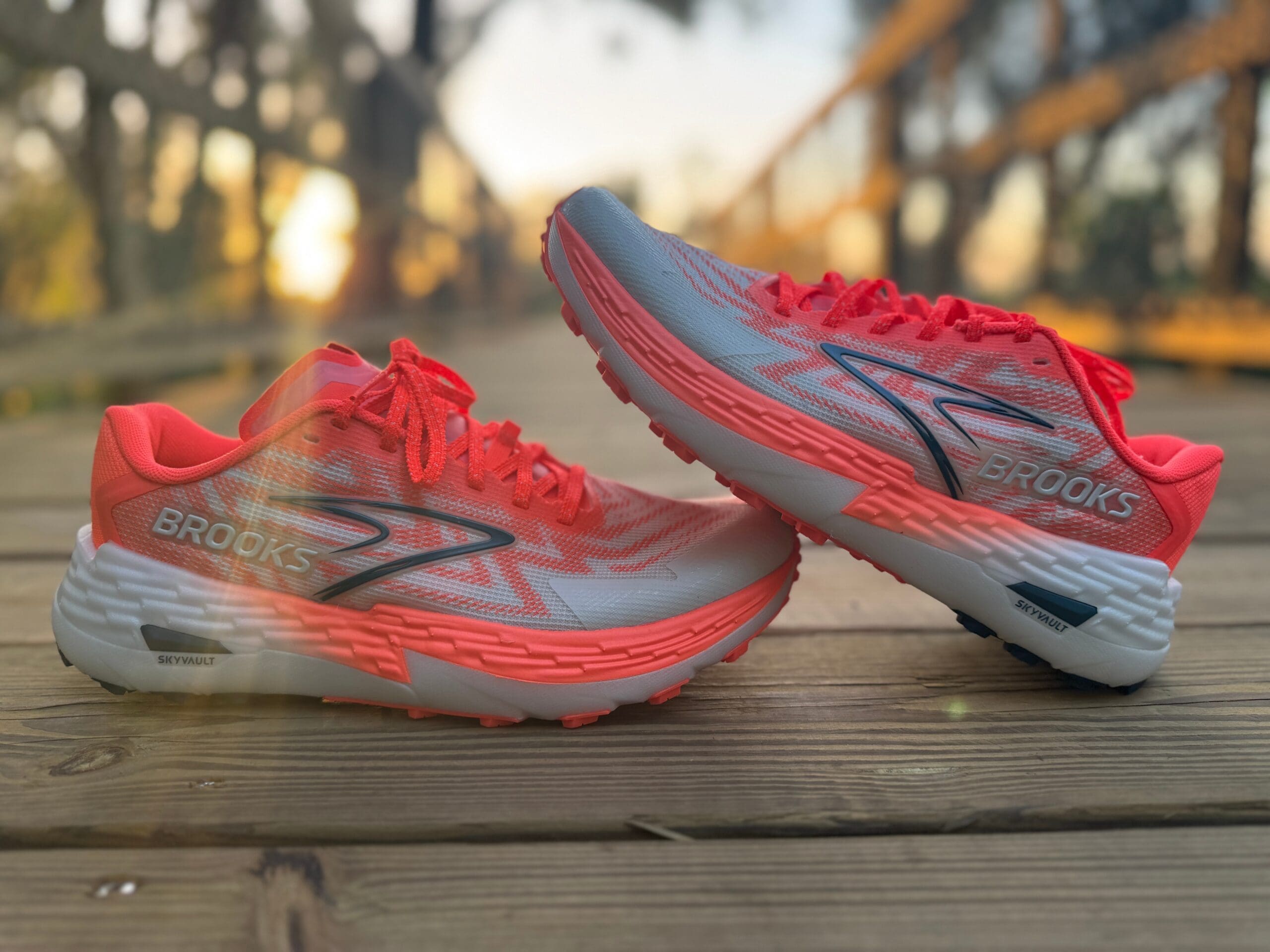
The Brooks Catamount has always been the outlier in the Brooks lineup. While the Cascadia is built for a slow, steady pace and the Caldera offers a massive bed of foam for the long haul, the Catamount was designed for speed. However, older versions often felt a little too close to the ground for rocky terrain.
When I first laced up the Catamount 4, it was obvious Brooks finally gave this shoe a backbone. Instead of just making a lightweight trainer, they built a legitimate racer. This isn’t a shoe that disappears on your foot; it’s a firm, aggressive ride that pushes back. It makes no apologies for being stiff, and I found it perfectly built for trail runners who want to carry their momentum into climbs and maintain a high turnover on hard-packed dirt.
Who Is The Brooks Catamount 4 For?
- The “Yes” List: Runners who prioritize uphill speed, short-course racers (10k to 25k), and anyone who wants a stable feel without the “sink-in” of modern max-cushion foams.
- The “No” List: Wide-foot runners, fans of a flexible “natural” feel, or anyone frequently running in deep, loose mud.
Brooks Catamount 4 Performance Review
Brooks Catamount 4
- ✓Nitrogen-infused midsole and propulsion plate deliver an energetic, fast-paced trail experience
- ✓Thin, highly breathable mesh upper safely anchors your foot during technical descents
- ✓Firm, planted underfoot feel provides agile and efficient turnover for steep climbs
PROS
- + Excellent uphill traction
- + Lightweight and nimble
- + Great ground feel
- + Durable outsole rubber
CONS
- – Stiff on flats
- – Slightly narrow fit
- – Premium price tag
Aesthetics & Fit: A Fast Profile and a Snug Shell
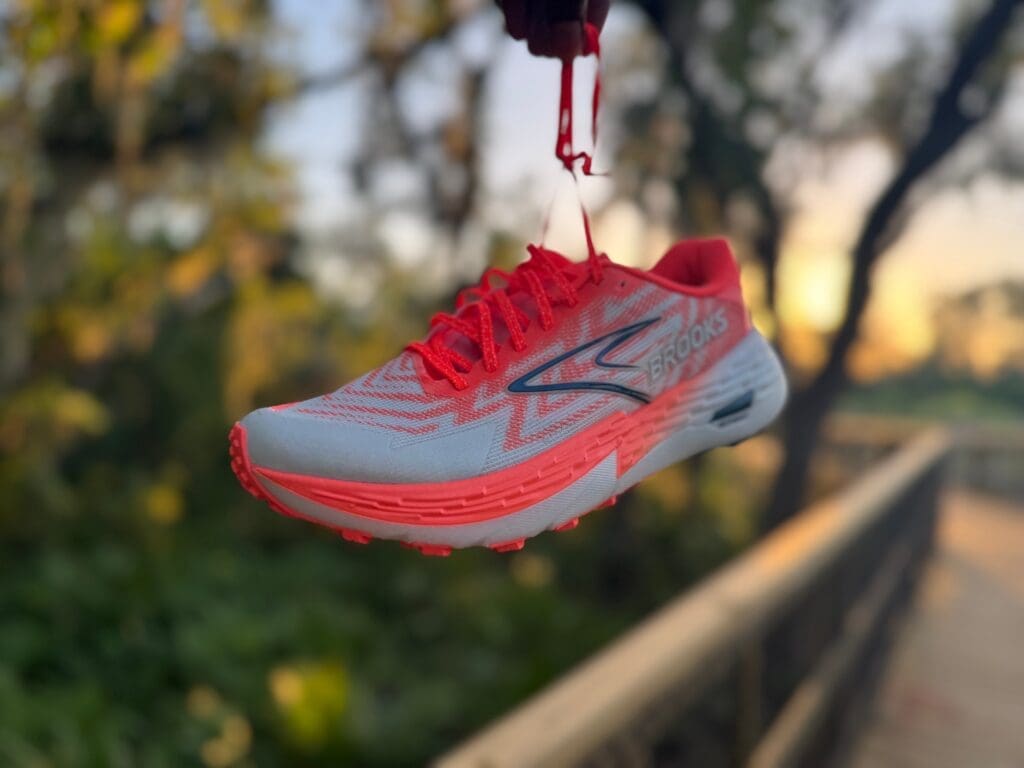
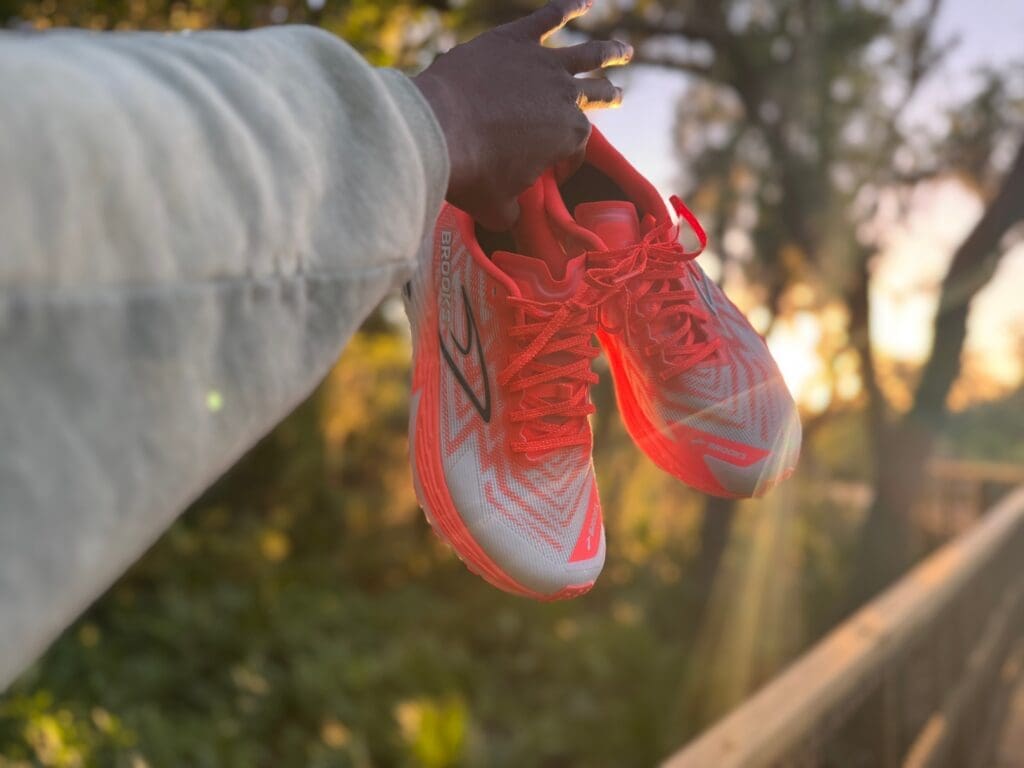
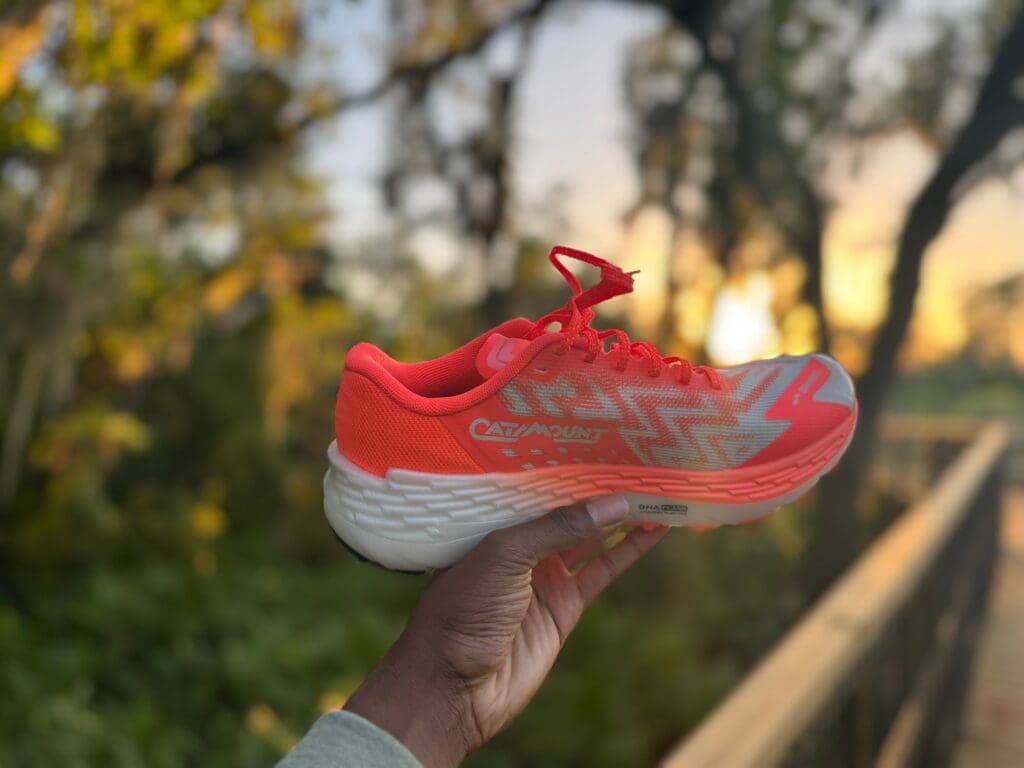
Brooks absolutely nailed the design on this update. The Catamount 4 has an aggressive, sleek profile with clean lines that scream race day before you even put it on. It doesn’t look like a clunky hiking boot—it looks incredibly fast, and the performance actually backs up the aesthetics.
The upper uses a dense mesh that acts more like a protective shell than a traditional fabric. It deflects rocks and trail debris easily without fraying, which gave me a lot of confidence on the trail. Where I found it really excels is breathability and moisture management. I purposely took these through deep puddles and creek crossings, and the water cleared out almost immediately. The material refuses to hold onto liquid, keeping the shoe incredibly light throughout the race.
Just keep in mind that the fit is noticeably narrow. It’s a low-volume setup designed to keep your foot from sliding on steep descents. If you have a wide foot, you’ll definitely feel the squeeze in the midfoot. But for my foot, this translated to a secure sensation where my heel absolutely stayed put without needing to strangle the laces.
The Midsole: Stiff, Snappy, and Built to Climb
This is where the Catamount 4 really separates itself from the rest of the Brooks lineup. Even though they added a bit more foam underfoot, the shoe never feels disconnected. I found that it gave me the exact protection I needed for longer runs without muting my sense of the trail.
Just don’t go in expecting a plush ride. The combination of nitrogen-infused foam and an internal propulsion plate creates a decidedly firm platform. On my slower warm-up miles, it actually felt a bit dead. I realized quickly that you have to put real power into the ground to wake it up.
However, once you pick up the pace, that stiffness pays off. The plate delivers a snappy, efficient return that I noticed the most on steep climbs. Instead of wasting energy sinking into a soft foam, the rigidity helped me maintain my rhythm and pop right off the ground.
Brooks Catamount 4 Shoe Specs
| Weight | 8.5 oz (226 g) Women’s / 9.5 oz (269 g) Men’s |
|---|---|
| Heel Stack Height | 34 mm |
| Forefoot Stack Height | 28 mm |
| Heel-to-Toe Drop | 6 mm |
| Midsole material | DNA Flash v2 |
Grip & Outsole: Built for Speed, Not for Mud
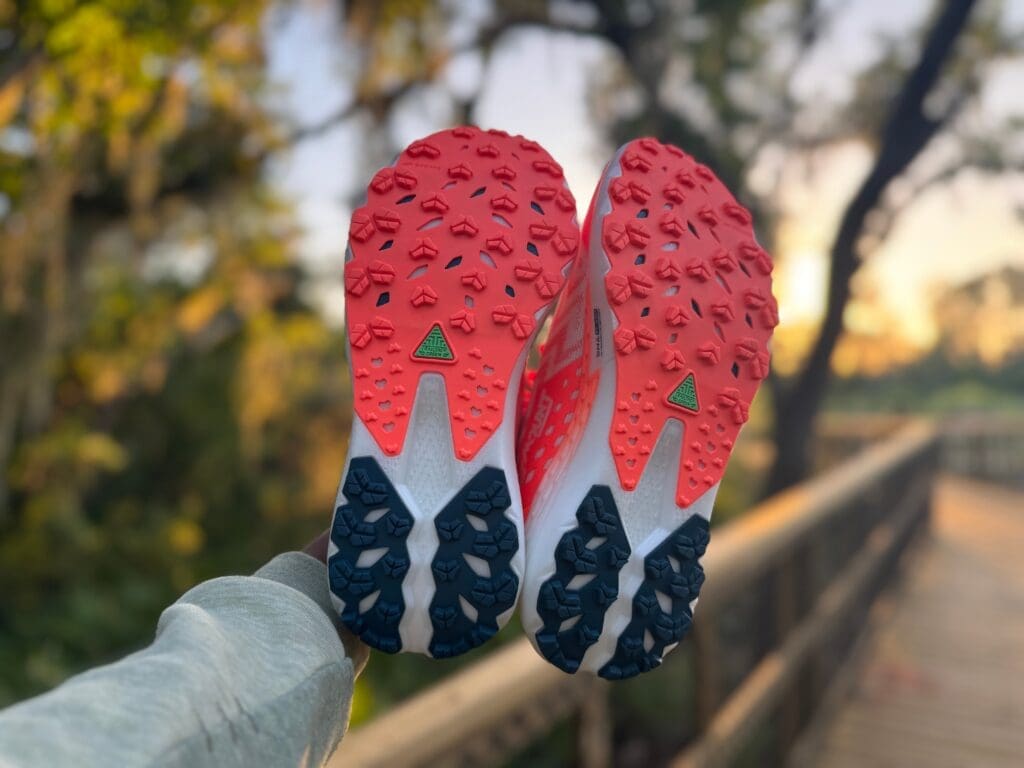
The TrailTack rubber hits a perfect sweet spot for firm ground. If you have to grind out a mile of pavement just to reach the dirt, shoes with massive lugs usually feel like you’re running in cleats. The Catamount 4 avoids that trap entirely, rolling smoothly over transitions without feeling clunky. Once you hit solid trail, those shallower lugs become a massive advantage. You get more surface area gripping the ground, which means when you lean into a turn or drive hard off your toes, the shoe stays completely planted. All your power goes straight into forward momentum.
But that speed has a strict limit. The second the ground gets soft or muddy, that locked-in confidence vanishes. I found myself sliding backward on push-off when the dirt turned loose, wasting all the energy the propulsion plate was trying to provide. The lugs just aren’t long enough to dig down and find traction when the surface gives way. If you’re dealing with thick muck, you’re going to spin out. But if you have a fast, firm course ahead of you, this outsole absolutely rips.
Final Thoughts: Not a Daily Trainer, but a Great Trail Racer
The Catamount 4 knows exactly what it is. It isn’t a flexible, do-it-all daily driver like the Saucony Peregrine 16; it’s a plated racer built strictly for efficiency.
While it has enough protection to handle a 50k, it truly shines at shorter, faster distances. It keeps your feet protected from the ground without the disconnected feel of a high-stack trail running shoe (like the Hoka Challenger). If you want a firm, fast ride that helps you snap off the ground faster on steep climbs, the Catamount 4 is exactly what you need.
Find Your Uphill Rhythm
Steep climbs require a completely different kind of power. The Catamount 4 helps you carry momentum uphill without wasting your energy in soft foam. Use our pace tool to see exactly how your uphill effort translates when you’re fighting gravity.
Common Questions About the Brooks Catamount 4
Can I take these on a 50k or an ultra?
You can, because the foam stack is high enough to protect your legs from the impact. However, the firm ride is better suited for shorter, aggressive efforts. If you want a softer feel for your feet by mile 20, you should look at a max-cushion trail shoe instead.
Should I buy this or the Brooks Cascadia?
It depends entirely on your pace and goals. The Cascadia is your reliable, heavily protected daily cruiser for hiking and slow miles. The Catamount is the stiff, aggressive racer you pull out when you want to run fast.
Is it as bouncy as a carbon-plated road shoe?
No. Trail plates are built differently. Instead of giving you a massive trampoline effect, the internal plate adds rigidity so you don’t waste energy sinking into the dirt when you are grinding up a steep hill.
Does the Brooks Catamount 4 fit true to size?
It runs true to size for length, but the volume is very low and narrow to keep you locked in on technical turns. If you have a wide foot, you will probably need to pass on this one.
Does the plate actually protect your feet from rocks?
Yes. While it’s primarily there to make you faster, that stiffness doubles as an excellent barrier against sharp roots and jagged stones.
