
You step out your front door, log two miles on pavement, hit the local dirt path, and run back home. Finding the right running shoes for these mixed routes is incredibly tough.
You just want one shoe that handles it all without feeling like you strapped cinder blocks to your feet. For years, the Hoka Challenger was exactly that shoe. Runners lovingly called it the “Clifton of the trails” because it offered a perfect blend of road comfort and off-road trail running capability.
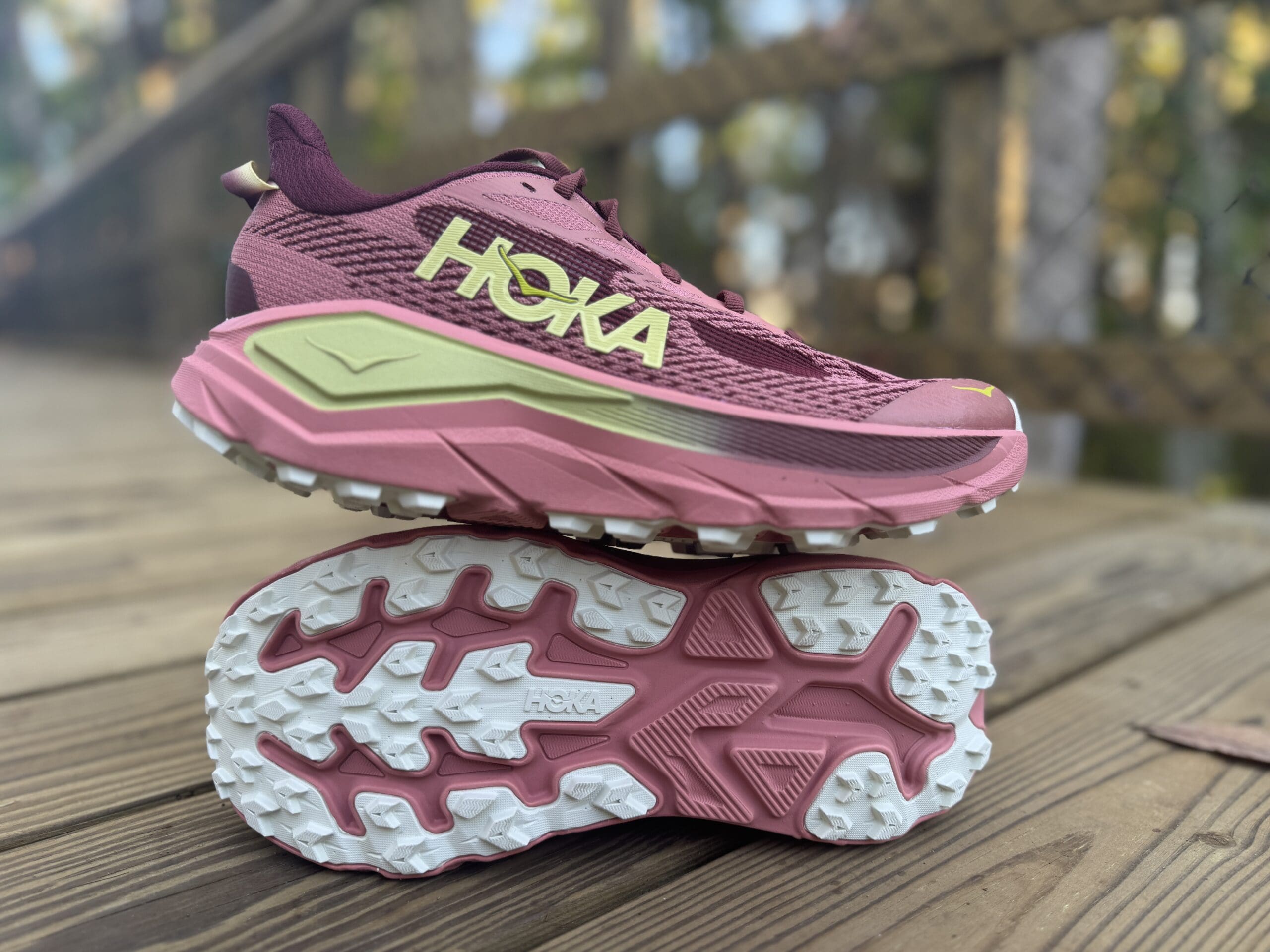
But the Challenger 8 is a different beast entirely. Hoka threw out the old playbook for this update, completely changing the shape and feel of the shoe to make it taller and softer than ever before.
It definitely looks incredible. The shoe feels extremely comfortable when you first lace up. But what happens when you actually start running? Things quickly get a little complicated. The new, towering platform feels quite awkward underfoot. It sacrifices the smooth, natural ride we expect from premium hybrid road-to-trail shoes.
Here is the honest truth about the Hoka Challenger 8.
Who This Is For
- Die-Hard Hoka Loyalists: If you absolutely refuse to run in anything other than Hoka and demand maximum cushioning, this remains your default hybrid trail option.
- Recovery Day Joggers: The sheer volume of foam provides excellent impact absorption for slow, flat recovery miles on flat trails or pavement.
- Runners Needing Extra Volume: Hoka finally widened the forefoot compared to the Challenger 7. It also comes in wide sizing.
Who Should Avoid It
- Runners Seeking Ground Feel: With so much foam under your heel, you have almost zero ground feel. You cannot feel the trail under your feet.
- Technical Trail Runners: The high center of gravity makes this shoe unstable on cambered or root-heavy terrain. For technical routes, you need a dedicated option from our best trail running shoes guide.
- Fans of the Challenger 7: The drastic change in geometry completely alters the ride profile. It does not feel like the older models.
Hoka Challenger 8 Performance Review

Hoka Challenger 8
- ✓Increased stack height provides ultra-plush, fatigue-fighting impact protection
- ✓Multi-directional lug pattern ensures reliable traction across mixed surfaces
- ✓Updated mesh upper offers breathable, reinforced durability for varied terrain
PROS
- + Exceptionally comfortable
- + Versatile hybrid
- + Breathable upper
CONS
- – Increased weight
- – Reduced ground-feel
- – Unstable across technical terrain
Upper Fit & Aesthetics
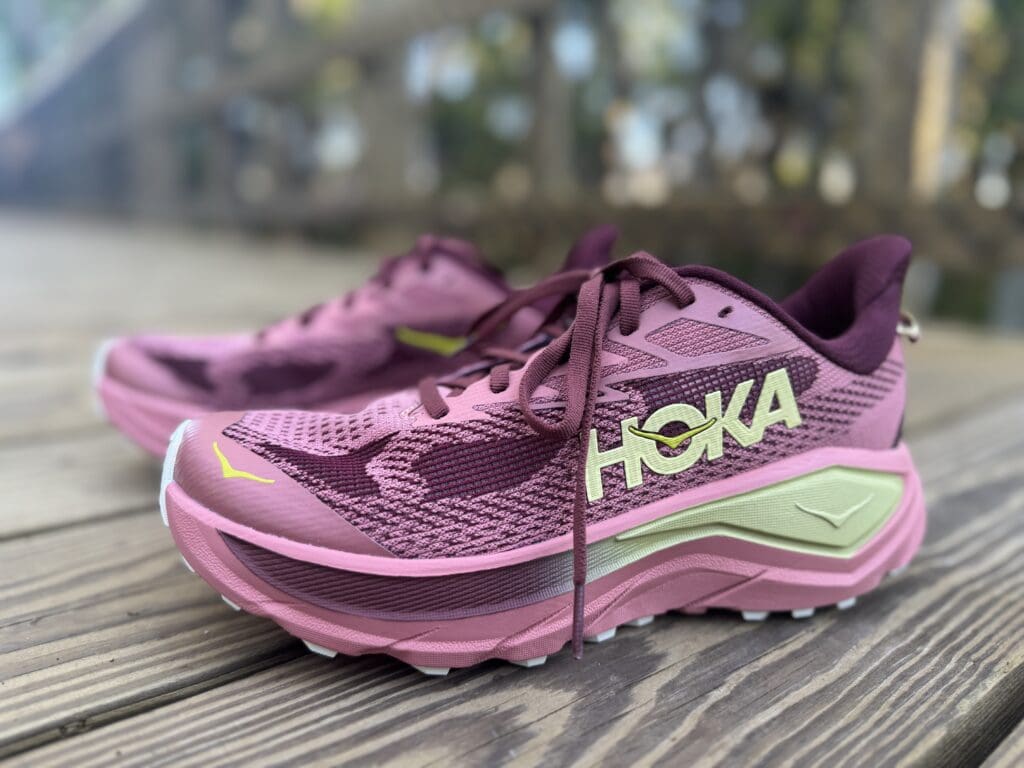
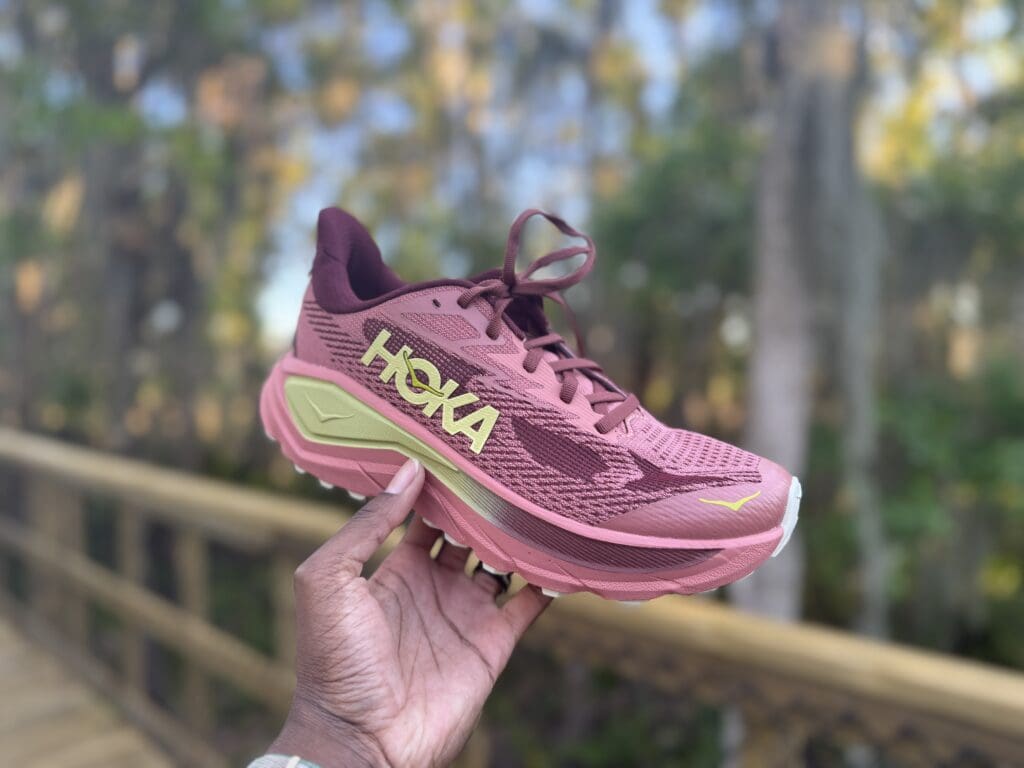
Let’s talk about what Hoka nailed. Aesthetically, the Challenger 8 is a stunner. It leans hard into the chunky, maximalist vibe that dominates run clubs right now. Hoka released it in several vibrant, modern colorways, meaning you can finish a dusty trail run, brush off the upper, and walk right into a coffee shop without missing a beat.
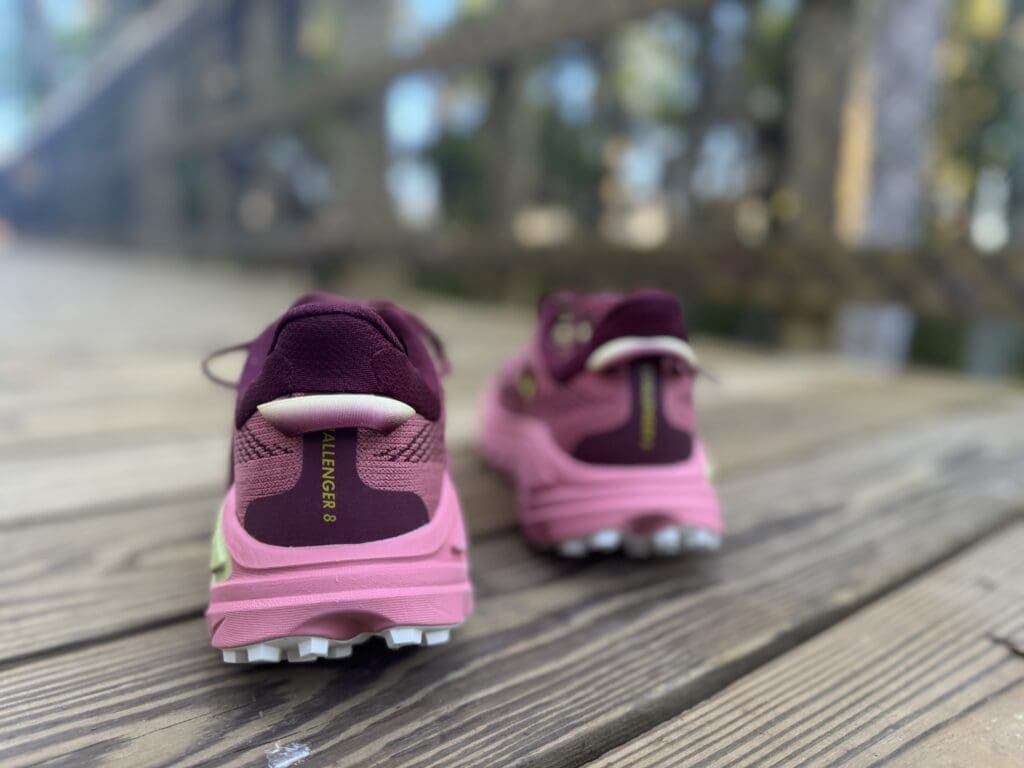
The step-in comfort matches the looks. Hoka used a 100% recycled engineered mesh upper that feels incredibly plush against the foot. The padded heel collar wraps your ankle securely, and the lockdown is decent for straight-line running. However, because the platform sits so high, the upper occasionally struggles to keep your foot from sliding if you take a sharp corner at speed.
Midsole & Ride: Why More Foam Isn’t Always Better
Now let’s get into the technical details. Running is a dynamic movement, and a hybrid shoe needs to flow seamlessly across different surfaces. Historically, Hoka relies on a lower 4 mm to 5 mm drop paired with their early-stage Meta-Rocker to create a smooth, rolling transition.
For the Challenger 8, Hoka bumped the drop to 8 mm and increased the heel stack to a towering 42 mm. You are sitting very high off the ground.
When you run on flat, predictable pavement, the shoe absorbs impact beautifully. It easily rivals any of the best max cushion running shoes for pure shock absorption. But the moment you hit uneven dirt, the ride feels surprisingly awkward.
Because the compression-molded EVA foam is so soft and thick, your foot has to constantly micro-adjust to find stability over rocks and roots. You lose all ground feel. Instead of a fluid roll, the transition feels slightly clunky (at least from what I found with my testing). It isn’t terrible, but it lacks the nimble, effortless glide you want when dodging roots and other types of terrain.
Outsole & Traction
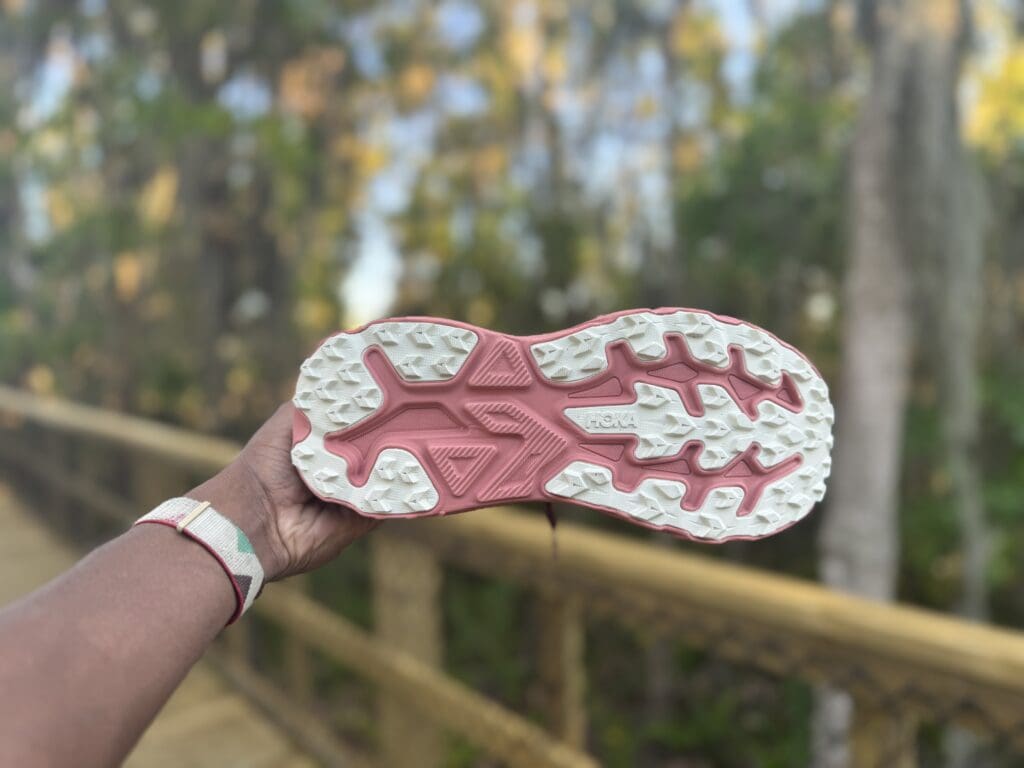
The outsole uses 4 mm lugs packed tightly together. This is a smart design for a hybrid shoe because the lugs do not slap loudly or wear down instantly on asphalt.
On dry dirt and light gravel, the grip is perfectly adequate. But do not take this shoe into the mud. If your local trails get sloppy, you need a dedicated option like the Saucony Peregrine 16 which comes equipped with Vibram for much better traction.
Hoka Challenger 8 Shoe Specs
| Weight | 275g (9.7 oz) Men’s / 232g (8.2 oz) Women’s |
|---|---|
| Heel-to-Toe Drop | 8 mm |
| Heel Stack | 42 mm |
| Forefoot Stack | 34 mm |
| Outsole | Durabrasion Rubber with 4 mm lugs |
| Support Type | Neutral |
| Surface | Road-to-Trail |
| Midsole Material | CMEVA |
The Bottom Line: Max Cushion vs. Trail Control
Ultimately, the Hoka Challenger 8 is a highly specific shoe. It absolutely nails the maximalist aesthetic. The massive foam stack delivers incredible impact absorption. If you stick to flat trails or pavement, it offers a wonderfully plush ride. It serves as a fantastic choice for easy recovery days.
But that towering cushion comes with a serious tradeoff. The heel simply sits too high for technical terrain. You completely lose your ground feel. Because of this, navigating roots and sharp corners feels surprisingly awkward. It sacrifices natural stability for the sake of pure softness.
So, what should you buy? If you crave a massive, cloud-like bounce, grab the Challenger 8. However, if you prefer a natural ride, check out the Brooks Ghost Trail.
Frequently Asked Questions (FAQs)
Is the Hoka Challenger 8 true to size?
Yes, the Challenger 8 fits true to size for most runners. It features a slightly wider forefoot than the previous version and also comes in wide (EE) options for those who need extra volume.
Is the Hoka Challenger 8 good for road running?
Yes, it handles road running exceptionally well. The massive 42mm heel stack provides incredible shock absorption on pavement. In fact, it often feels exactly like a premium max-cushion road shoe. However, it struggles on technical trails due to that exact same height.
What is the difference between the Hoka Challenger 8 and the Challenger 7?
The Challenger 8 features a massive increase in stack height (up to 42 mm in the heel for men) and shifts from a 5 mm drop to an 8 mm drop. This makes the 8 significantly taller, slightly heavier, and much more cushioned than the 7.
Is the Hoka Challenger 8 good for technical trails?
No. The extremely high stack height and soft midsole make the shoe unstable on roots, rocks, and steep, off-camber terrain. It is strictly built for mild gravel, fire roads, and pavement.
Is the Hoka Challenger 8 waterproof?
The standard version is not waterproof at all. The breathable mesh upper easily lets water in, but it also drains very quickly. If you frequently run in rain, mud, or snow, Hoka does sell a specific GTX (Gore-Tex) version of this exact shoe.
How many miles will the Hoka Challenger 8 last?
You can expect around 300 to 400 miles from a pair. The tightly packed outsole lugs handle pavement surprisingly well without wearing down instantly. However, the ultra-soft EVA foam will likely compress and lose its bounce before the rubber tread completely dies.
When was the Hoka Challenger 8 released?
The Hoka Challenger 8 was officially released July 2025.
