
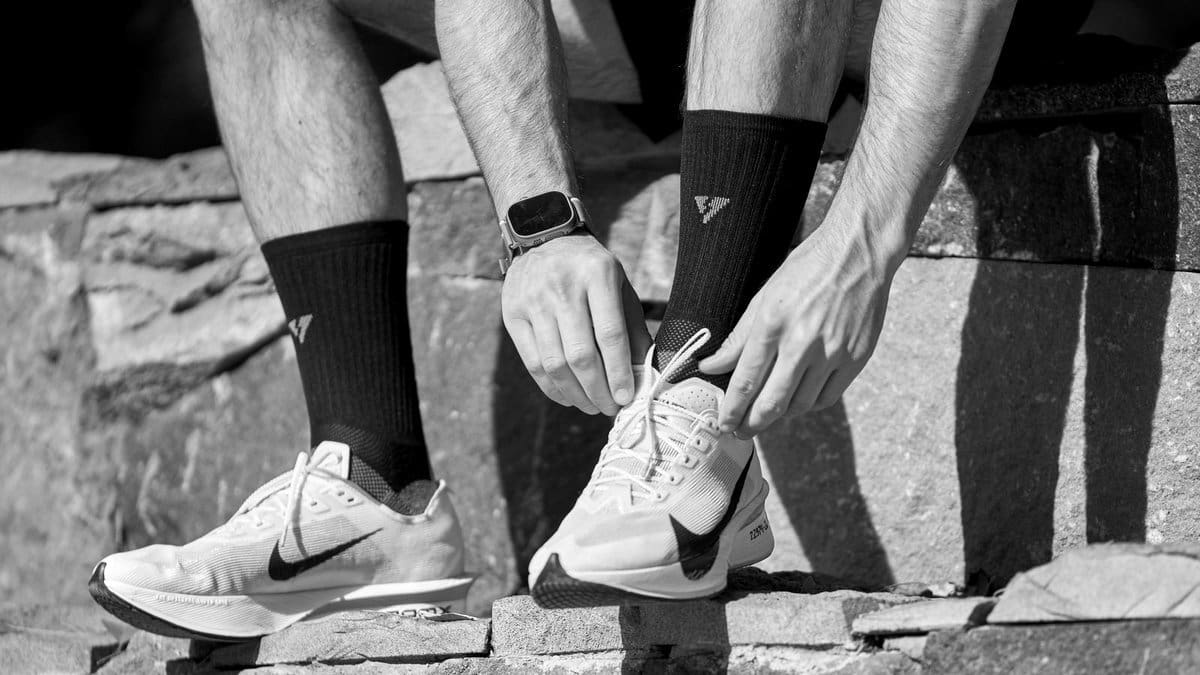
Walk up to the starting coral of any local 5K or Saturday morning coffee-shop run club, look straight down at the pavement, and you can read the crowd like a palm reader. Before anyone says a word about their pace or their training plan, their shoes have already given them away.
Over the years, every major running shoe company has built its own distinct engineering philosophy, from towering pillowy midsoles and foot-shaped toe boxes to spring-loaded nitrogen foams. Naturally, runners with matching personalities have sorted themselves into fiercely loyal camps around each logo. Some of us want a shoe that feels like a dependable old friend at 6:00 AM, while others want a neon rocket ship that makes a casual Tuesday loop feel like the Olympic Trials.
Below, you can take our interactive Running Shoe Brand Matcher Quiz to see which brand actually fits your stride and personality, or scroll through all nine running shoe brand stereotypes (complete with flagship models) to see if we nailed your go-to pair.
Running Shoe Brand Personalities: What You Need to Know
- Take the Interactive Running Shoe Brand Matcher Quiz
- The Everyday Daily Trainers & Cushion Cruisers
- The Speed Chasers, Style Icons & Foot-Shaped Evangelists
Take the Interactive Running Shoe Brand Matcher Quiz
Aren’t sure which brand’s midsole foam, heel-to-toe drop, and fit philosophy actually match the way you run? Tap through four quick questions below and we’ll match you with your #1 running shoe brand, flagship shoe photo, and tested buyer’s guide.
What’s your ideal Saturday morning run?
Tap an option to continue automatically
 Brooks Ghost 18
Your #1 Running Shoe Brand Match
Brooks: The Dependable Planner
You want a shoe that shows up at 6:00 AM without drama. Brooks builds planted, calf-friendly trainers that don’t quit early.
Or Browse All 9 Running Shoe Brands & Flagship Photos Directly


The Everyday Daily Trainers & Cushion Cruisers
1. Brooks: The Dependable Planner Who Never Misses a Tuesday
The Stereotype: If you run in Brooks, there’s a 95 percent chance you own a high-visibility vest, keep an extra hair tie or band-aid in your car console, and actually do the dynamic leg swings your physical therapist gave you in 2021. You don’t care about TikTok hype or neon carbon-plated experiments. You found a shoe that kept your knees happy three versions ago, and you’re going to keep buying the new version every 400 miles until the sun burns out.
The Underfoot Reality: There’s a reason Brooks running shoes inspire that kind of devotion. Brooks builds its flagship neutral and stability trainers around higher 8mm to 12mm heel-to-toe drops that take mechanical strain off tight calves and Achilles tendons. When you’re lacing up the plush Brooks Glycerin 23 or their classic daily staple, you’re getting a planted heel counter, generous width options (including true 2E and 4E sizing), and nitrogen-infused midsoles that feel predictable from mile one to mile four hundred.
- ✓10mm heel-to-toe drop keeps calves and Achilles tendons relaxed on daily road runs.
- ✓36mm heel and 26mm forefoot stack of nitrogen-infused DNA LOFT v3 absorbs pavement shock.
- ✓High-coverage RoadTack rubber outsole shrugs off hundreds of miles of rough asphalt.
2. Hoka: The Max-Cushion Convert Who Refuses to Feel a Pebble
The Stereotype: You used to think running was supposed to hurt your shins, and then someone talked you into trying on a pair of Hokas. Now you’re floating down the sidewalk two inches taller than everyone else, evangelical about joint protection, and mildly offended by thin-soled shoes. You’ve probably bought a second pair strictly for walking the dog and standing in airport security lines.
The Underfoot Reality: Long before every other brand started stacking midsoles past 40mm, Hoka running shoes pioneered the combination of a thick cushion block, a deep “bucket seat” heel frame that cradles your foot inside the foam walls, and an early-stage rocker that rolls you forward. Recent updates have made their daily lineup even friendlier for heel strikers by shifting toward a more relaxed 8mm drop while keeping the pillowy impact protection that made them famous.
- ✓42mm heel and 34mm forefoot stack isolates your feet from harsh concrete and asphalt.
- ✓Updated 8mm heel-to-toe drop eases Achilles tension while preserving Hoka’s rolling transition.
- ✓Deep active foot frame cradles the heel on long, unhurried recovery loops.
3. New Balance: The Easygoing All-Rounder Who Just Wants Happy Feet
The Stereotype: You’re the chillest runner in the group chat. You’ll happily show up for a slow five-mile recovery loop, a last-minute Turkey Trot, or a post-run bagel run without checking your watch once. While your friends complain about black toenails and narrow racing uppers, you’re cruising along in blissful comfort because you picked the brand that actually remembers human feet have width.
The Underfoot Reality: Over the past two years, New Balance running shoes have quietly become the gold standard for runners who want next-generation bouncy foam without a suffocating fit. By pairing stretchy, forgiving engineered uppers and wide sizing with ultra-soft Fresh Foam X and nitrogen-infused Infinion supercritical midsoles, New Balance makes daily mileage feel effortless on tired legs.
- ✓Infinion supercritical foam midsole provides soft landings with a lively, unplated rebound.
- ✓Generous 40mm heel and 34mm forefoot stack (6mm drop) at a remarkably light 9.1 oz.
- ✓Accommodating two-layer mesh upper comes in multiple width options for a pressure-free fit.
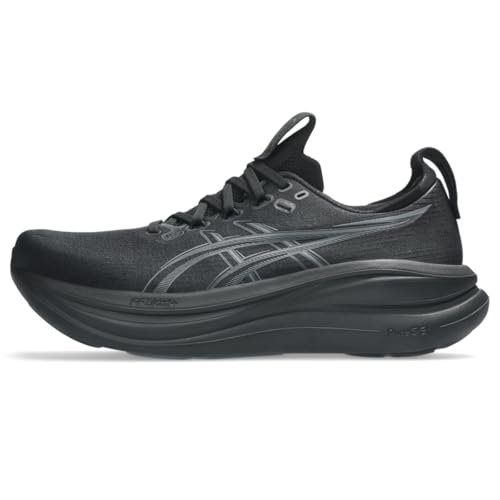
4. ASICS: The Quiet Technician Who Trusts Biomechanics Over Hype
The Stereotype: You don’t brag at run club, you don’t post dramatic motivational quotes on Instagram, and you’ve definitely read the full specification chart before buying a shoe. When a flashy runner in brand-new gear starts fading at mile nine of a half marathon, you’re the runner in ASICS who quietly glides past them at the exact same split you’ve held since mile one.
The Underfoot Reality: Engineered out of the ASICS Institute of Sport Science in Kobe, Japan, ASICS running shoes have undergone a massive renaissance. Gone are the heavy, clunky plastic stability posts of the past. Modern ASICS staples pair bouncy FF BLAST foams and rearfoot PureGEL inserts with wide, flared midsole bases and outsole rubber that won’t quit early.
- ✓Rearfoot PureGEL insert softens initial heel impact on unforgiving concrete sidewalks.
- ✓Tall 43.5mm heel and 35.5mm forefoot stack (8mm drop) shields joints during marathon build-ups.
- ✓HYBRID ASICSGRIP outsole rubber delivers confident traction and long-haul durability.
The Speed Chasers, Style Icons & Foot-Shaped Evangelists
5. Saucony: The “If You Know, You Know” Gear Nerd
The Stereotype: If someone asks you for a shoe recommendation at a party, your eyes light up because you’re about to explain the difference between beaded PEBA foam and compression-molded EVA. You don’t care which logo is trending on social media; you care about weight-to-cushion ratios, snappy toe-offs, and having a shoe rotation where every pair has a specific job.
The Underfoot Reality: Saucony running shoes have earned cult status among veteran runners because their SpeedRoll geometry and PWRRUN PB super-foams punch way above their weight class. In particular, their winged-nylon-plated Endorphin Speed line created an entire category of “super trainers” that feel forgiving enough for a Sunday long run and snappy enough when you’re chasing a 10K personal best.
- ✓PWRRUN PB beaded super-foam delivers high energy return at a featherlight 8.4 oz weight.
- ✓Winged nylon plate adds snappy toe-off stability without the harsh stiffness of carbon fiber.
- ✓36mm heel and 28mm forefoot stack (8mm drop) transitions cleanly from easy warm-ups to race pace.
6. Nike: The Main-Character Racer Chasing Fast Splits
The Stereotype: You treat the last quarter-mile of an easy neighborhood jog like the finishing straight in Eugene. You know your exact 5K, 10K, and half-marathon PRs to the second, you own at least one pair of loud neon racing shoes that live in a special box in your closet, and you’ve definitely turned a casual Tuesday run into an unannounced tempo workout because someone passed you at a crosswalk.
The Underfoot Reality: Nike ignited the modern super-shoe era with ZoomX foam, and speed is still baked into the DNA of Nike running shoes. While their classic Pegasus daily staple and max-stacked Vomero lineup handle everyday road miles with a traditional 10mm drop, Nike’s uppers still lean sleek and locked-in around the midfoot for runners who like an aggressive, forward-tipping ride.
- ✓Full-length ZoomX midsole delivers race-foam rebound without a stiff carbon plate.
- ✓45mm heel and 35mm forefoot stack (10mm drop) cushions tired legs over long road miles.
- ✓Full-coverage waffle rubber outsole handles daily asphalt wear far better than race flats.
7. On: The Run-Club Aesthetic Pro Heading Straight to Brunch
The Stereotype: Your running kit is color-coordinated in muted earth tones, your sunglasses cost more than your race registration, and you know the exact pastry schedule of every specialty coffee shop within a three-mile radius. Five years ago, purists teased you for wearing “airport sneakers” to run club. Now you’re logging 12-mile Sunday long runs in them and having the last laugh.
The Underfoot Reality: Early On shoes really were firm gym and travel sneakers whose hollow rubber pods caught gravel on dirt paths. Today’s purpose-built On Cloud running shoes, led by the max-cushioned On Cloudmonster 3 and supportive Cloudrunner series, pack thick slabs of Helion superfoam and closed outsole channels so you’ll get a legitimately lively, protective road ride while keeping that unmistakable Swiss aesthetic.
- ✓Helion Superfoam midsole softens road landings while keeping a stable, grounded feel.
- ✓Supportive heel clip and wide base keep tired ankles centered on pavement.
- ✓Closed outsole groove design prevents pebbles from getting wedged underfoot.
8. Adidas: The Split-Time Purist Built for Marathon Sunday
The Stereotype: You love structure, intervals on the track, and negative splits. If your training plan says 6 miles at 8:15 pace, you’ll run 6.00 miles at 8:14 pace. You don’t want a marshmallow shoe that feels like a bedroom slipper; you want a firm, propulsive platform that rewards crisp form when you’re hammering through rain on slick city asphalt.
The Underfoot Reality: Backed by their Adizero racing heritage, Adidas running shoes stand out for two mechanical signatures: resilient Lightstrike Pro foam (which feels denser and more controlled than ultra-squishy pillows) and Continental tire rubber outsoles that grip wet pavement better than almost anything else you’ll lace up on the road.
- ✓Full-length Lightstrike Pro midsole provides controlled, propulsive energy return.
- ✓Continental rubber forefoot patch bites into wet asphalt without slipping.
- ✓Featherlight 7.9 oz build with a 39mm heel and 33mm forefoot stack (6mm drop).
9. Altra & Topo Athletic: The Foot-Shaped Evangelists of Toe Splay
The Stereotype: Once you switched to a foot-shaped toe box, you lost the ability to look at normal tapered sneakers without wincing. Within ten minutes of meeting another runner on the trail, you’re wiggling your toes happily inside your shoes and explaining why squeezing five toes into a pointed triangle doesn’t make anatomical sense.
The Underfoot Reality: Honestly, the foot-shaped crowd has a great point. Both Altra and Topo Athletic build their shoes with a snug heel and midfoot that opens into a wide, anatomical forefoot so your big toe stays straight at push-off. While Altra’s famous for its flat 0mm zero-drop running shoes (and now offers a few 4mm-drop road options for easier calf transitions), models like the Topo Athletic Phantom 4 pair that same roomy toe box with a gentle 5mm drop for daily road mileage.
- ✓Anatomical FootShape toe box lets your big toe align straight for natural stability.
- ✓Balanced 28mm heel and 28mm forefoot stack (0mm drop) promotes a midfoot landing.
- ✓Vibram XS DURA outsole rubber provides long-lasting traction on wet roads and paths.
Wrapping Up: Loyalty Is Fun, But Your Feet Love Variety
Stereotypes aside, the best thing about running in 2026 is that almost every brand on the wall is making the best foam in its history. Even better, you don’t actually have to pledge allegiance to a single logo. Many lifelong runners pair a dependable 10mm-drop Brooks or Nike trainer for easy weekday mornings with a bouncy New Balance, Hoka, or Saucony shoe for long weekend miles.
Use the interactive Brand Matcher Quiz above to test out a brand you haven’t laced up yet, listen to what your calves and toes tell you on mile three, and wear whatever makes you excited to get out the door tomorrow morning.
Wondering when Brooks, Hoka, Saucony, New Balance, or Nike are dropping the next version of your go-to trainer? Filter upcoming shoe launches by brand, category, and release month on our live calendar.
View the Release Calendar →Frequently Asked Questions
Do different running shoe brands actually fit that differently?
Yes! Every footwear brand builds its shoes around a specific foot mold, known as a last. Brands like Altra and Topo Athletic use wide, foot-shaped toe boxes with a snugger midfoot. Brooks and New Balance offer generous volume through the arch and forefoot with plenty of Wide (2E) and Extra-Wide (4E) options, while Nike, Puma, and Adidas often use sleeker, narrower racing silhouettes.
Should I stick to one running shoe brand or mix brands in a rotation?
Mixing two different brands or heel-to-toe drops in your weekly rotation is actually great for your lower legs. Alternating between, say, a 10mm-drop Brooks daily trainer and a 6mm-drop New Balance or Hoka shoe shifts the mechanical load slightly between your calves, Achilles, and knees, which helps prevent repetitive overuse aches.
Which running shoe brand is best for beginners?
Beginners usually do best in brands that prioritize step-in comfort and stable, predictable transitions. Brooks (Ghost 18), New Balance (1080 v15), ASICS (Gel-Nimbus 28 or Novablast 6), and Hoka (Clifton 10) are the most popular starting points because their neutral daily trainers forgive tired form.
Why do Hoka and Altra shoes feel so different from traditional sneakers?
Most traditional running shoes from Brooks, Nike, and ASICS use an 8mm to 10mm heel-to-toe drop, meaning the heel sits noticeably higher than the toes. Altra uses a 0mm zero-drop platform where the heel and forefoot sit at the exact same height, which asks your calves and Achilles to do more work. Hoka uses tall foam stacks paired with a curved rocker sole that rolls your foot forward rather than flexing sharply at the toes.
Are On Cloud shoes good for actual road running or just walking and travel?
Years ago, early On models were mostly firm gym and travel sneakers, which earned them a lifestyle reputation. Today, purpose-built road models like the On Cloudmonster 3, Cloudswift 4, and Cloudrunner 3 pack serious Helion foam cushioning that legitimately holds up to half-marathon and marathon training.
Which running shoe brand lasts the longest on asphalt?
Durability comes down to outsole rubber coverage and midsole foam resilience. Brooks (with RoadTack rubber), ASICS (with AHARPLUS rubber), Adidas (with Continental rubber outsoles), and Saucony (with XT-900 carbon rubber) consistently reach 400 to 500 miles before the outsole wears smooth.
