
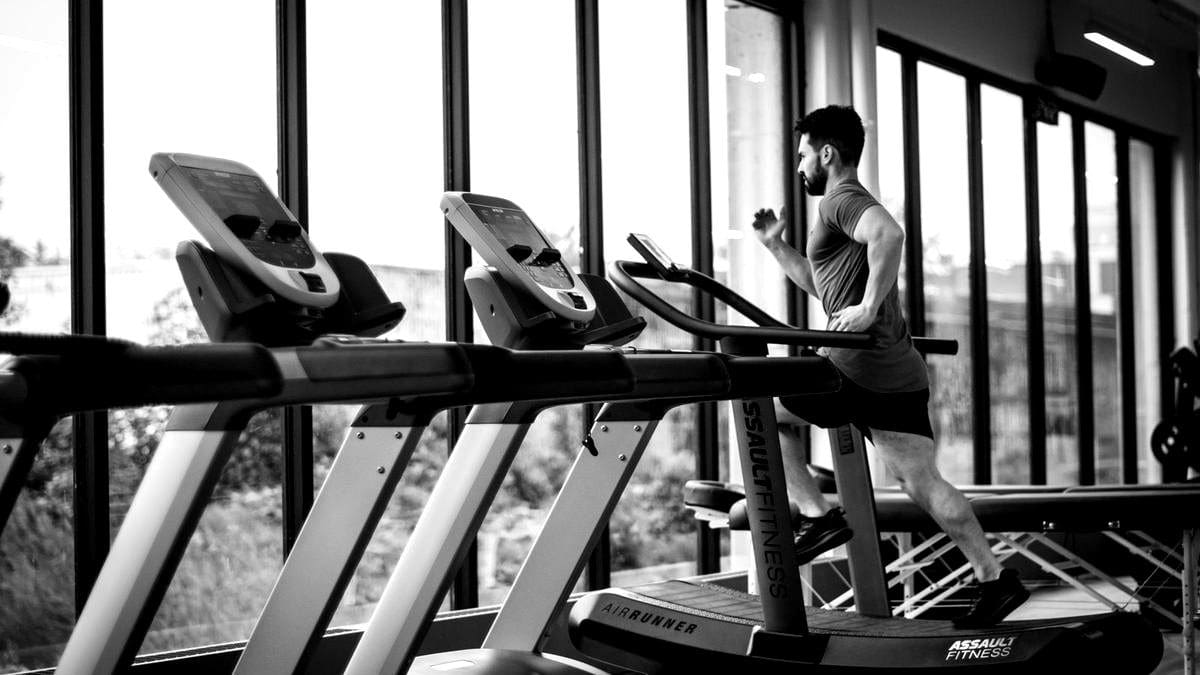
Spend five minutes around a running group and you’ll hear someone call the gym treadmill the “dreadmill,” as if logging three miles on a moving belt somehow counts less than running down a neighborhood sidewalk. Meanwhile, the moment winter darkness sets in at 5:00 PM or summer humidity hits 90%, that same runner is standing in front of a gym console wondering whether indoor miles will actually keep their race fitness intact.
Here’s the honest physiology: your heart, lungs, and mitochondria don’t have tiny GPS receivers. As long as you match your effort level, running on a treadmill and running outside build nearly identical cardiovascular fitness and burn almost the exact same number of calories. What does change between the belt and the pavement is how your joints absorb impact, how your hamstrings and calves propel your body, and how your brain handles pacing.
Below, we’ll break down how effective treadmill and outdoor runs really are, compare the honest pros and cons of each surface, show you which option wins for your specific training goals, and give you an interactive pace and incline converter to translate your speeds between the gym and the road.
Treadmill vs. Outdoor Running: What You Need to Know
- Are Treadmill Miles as Effective as Running Outside?
- Treadmill Speed (MPH) to Running Pace Converter
- The Pros & Cons of Treadmill Running
- The Pros & Cons of Outdoor Running
- Which Is Better for What? A Goal-by-Goal Breakdown
- Why the 1% Incline Rule Only Matters at Faster Speeds
- Matching Your Running Shoes to the Belt vs. the Road
Are Treadmill Miles as Effective as Running Outside?
If we measure workout effectiveness by aerobic conditioning, oxygen uptake (VO2 max), and calorie expenditure, treadmill running and outdoor running are a dead heat. When your heart beats at 145 beats per minute for 40 minutes inside Zone 2 running, your muscle fibers build the exact same capillary networks and aerobic enzymes whether you’re staring at a park trail or a wall-mounted television.
So why do the two surfaces feel so different under your feet? Two mechanical differences explain the gap:
- Wind Resistance vs. Stagnant Indoor Air: When you run outdoors on a calm day, your body has to push through the air in front of you. At moderate to fast speeds, overcoming that air resistance takes roughly 3% to 7% more energy than running in place on a flat 0% belt. However, that outdoor headwind also cools your skin. Inside a warm gym with zero airflow, your body has to pump extra blood to your skin to cool you down, which often drives your indoor heart rate and sweat rate higher even at a flat 0% grade.
- Sprung Belt Mechanics vs. Unyielding Pavement: On an outdoor sidewalk, your glutes and hamstrings have to contract forcefully to pull your body weight forward over fixed concrete. On a motorized treadmill, the moving belt pulls your planted foot backward while a cushioned elastomer deck absorbs 15% to 25% of the landing shock. Your cadence naturally quickens by 2% to 4% on a treadmill, and your knees absorb less peak force, though your tendons go through the exact same repetitive motion on every single step.
If you want to compare how many calories you burn across different distances and body weights on either surface, you can plug your numbers into our Calories Burned Calculator.
Treadmill Speed (MPH) to Running Pace Converter
Treadmill consoles display your speed in miles per hour (`mph`), while outdoor GPS watches track your pace in minutes per mile (`/mi`). Enter your treadmill speed and workout time below (or open our full-screen Pace to Speed Converter) to see your exact mile pace, how far you’ll run, your 5K and 10K finish times at that speed, and the recommended incline to match flat outdoor road effort:
Convert Belt MPH to Mile Pace, Distance Covered & 5K / 10K Times
Tap a speed preset or type any belt setting (like 6.3 mph) to convert it into outdoor GPS watch pace.
| Treadmill Speed | Mile Pace (/mi) | Km Pace (/km) | 5K Time | Suggested Road-Match Incline |
|---|
The Pros & Cons of Treadmill Running
Running on a motorized belt isn’t a consolation prize for bad weather. When you use it strategically, a treadmill solves several of the biggest obstacles that derail outdoor training plans, and it’s one of the easiest ways to stay consistent when daylight disappears.
Where the Treadmill Wins (The Pros)
- 15% to 25% Less Impact on Your Knees and Shins: Unlike poured concrete, which is the hardest, least forgiving surface you’ll ever run on, modern treadmill decks sit on rubber elastomers that flex slightly under every footstrike. According to rehabilitation guidelines from the American Physical Therapy Association (APTA), reducing peak vertical loading is one of the smartest ways to ease back into mileage after a flare-up. If you’re managing tender joints alongside supportive running shoes for knee pain or running shoes for shin splints, the belt gives your lower legs a noticeable break.
- Set-and-Forget Pace Discipline: Outside, it’s remarkably easy to bolt out of your driveway 30 seconds per mile too fast and fade halfway through your run. On a treadmill, you dial in `6.0 mph` or `7.2 mph` and let the motor teach your nervous system what an even rhythm or a progressive negative splits workout actually feels like.
- Zero Weather, Darkness, or Traffic Headaches: You don’t have to dodge distracted drivers at intersections, navigate icy curbs in January, or plan your loop around open park restrooms. Parents can also get a 35-minute workout done in the garage or basement during nap time when they can’t leave the house.
- Custom Hill Workouts on Demand: Even if you live in a pancake-flat neighborhood, pressing the incline button lets you run a continuous 15-minute climb at a 4% grade without ever having to jog down the other side of a steep hill, where eccentric quad braking causes the most muscle soreness.
Where the Treadmill Falls Short (The Cons)
- Stagnant Indoor Air & Faster Overheating: Because you’re running in one spot, there’s no breeze moving across your skin to evaporate sweat. After 20 minutes in a warm gym or spare bedroom, your core temperature rises and your heart rate creeps upward (a phenomenon known as cardiac drift), which is why a normal easy pace often feels harder indoors.
- Repetitive Mechanical Loading: Outdoors, subtle cracks in the sidewalk, gentle turns, and crowned roads make every footstrike slightly different. On a flat treadmill belt, 4,000 steps in a row hit the exact same spot on your Achilles tendon and plantar fascia unless you manually change the speed or incline every few minutes.
- No Downhill Quad Conditioning: A standard treadmill can’t tilt downhill, and it won’t ask your ankles to stabilize around tight corners. If you do 100% of your training on a belt and then show up to a rolling outdoor half marathon, you’ll feel your quads burning by mile nine from the downhill braking forces.
- The Mental Clock-Watching Trap: Staring at a red LED counter ticking up by `0.01` miles at a time can make a 30-minute jog feel like a three-hour layover at the airport if you don’t cover the console display with a towel.
The Pros & Cons of Outdoor Running
Stepping out your front door and covering real ground is still the gold standard for race specificity and mental refreshment, provided the weather and your joints cooperate.
Where Outdoor Running Wins (The Pros)
- Stronger Posterior-Chain Engagement & Proprioception: When you’re running on roads or park paths, your hamstrings, glutes, and calves have to actively push the ground behind you while tiny stabilizer muscles in your feet and ankles adjust to curbs, cambers, and tree roots. That extra stabilization is why outdoor miles build tougher connective tissue for race day.
- Natural Self-Pacing for Race Morning: There’s no motorized belt pulling your feet along at a local 5K or marathon. Running outside forces you to learn how you’ll hold a steady effort through headwinds, rolling hills, and turns without relying on a console motor.
- Bigger Mood Boost & Lower Perceived Effort: Exercise psychology research highlighted by the American College of Sports Medicine (ACSM) consistently shows that “green exercise” in natural daylight lowers cortisol and perceived exertion. Moving past trees, neighborhoods, and storefronts gives your brain visual flow, so 45 minutes outside passes much faster than 45 minutes facing a drywall corner.
- Downhill Braking Resilience: Running down outdoor hills trains your quadriceps to absorb eccentric force, which is the single best insurance policy you’ll find against late-race leg cramps in a 10K, half marathon, or marathon.
Where Outdoor Running Falls Short (The Cons)
- Harsh Concrete & Cambered Road Impact: Concrete sidewalks have virtually zero give, and crowned asphalt roads slope toward the gutter, subtly tilting one hip higher than the other if you don’t alternate which side of the street you run on.
- Weather Extremes & Daylight Limits: Summer heat waves, freezing rain, wildfire smoke, and pitch-black winter evenings can turn a simple 4-mile run into a logistical chore. When temperatures climb, you’ll have to slow down significantly just to keep your heart rate under control, as we break down in our guide to running in heat and humidity.
- Stop-and-Go Interruptions: Catching three red traffic lights in a row during a tempo interval breaks your aerobic rhythm in a way that doesn’t happen on a treadmill.
Which Is Better for What? A Goal-by-Goal Breakdown
Instead of treating indoor and outdoor running like rival teams, use each surface for the specific workouts it handles best:
- Best for Weight Loss & Calorie Burn (Tie, With an Edge to Treadmill Incline Intervals): A flat outdoor run burns roughly 3% to 7% more calories than a 0% treadmill run at the same speed, but the treadmill makes it effortless to mix brisk walking with 3% to 6% incline intervals or the Run-Walk method, which torches calories while keeping impact low.
- Best for Speedwork, Tempo Runs & Interval Pacing (Treadmill): When your training plan calls for 5 × 800 meters or a 20-minute threshold run at an exact pace, the treadmill is tough to beat. You don’t have to stare at your watch every 15 seconds, and you won’t have a sudden headwind ruining your splits.
- Best for Injury Recovery & Joint Protection (Treadmill): Coming back from shin splints, knee irritation, or a stress reaction? The sprung deck of a treadmill lets you test painless 20-minute runs in a controlled setting where you aren’t stranded two miles from home if something feels tight.
- Best for 5K, Half Marathon & Marathon Race Prep (Outdoor Running): Because road races happen on firm asphalt with hills, wind, and turns, your longest weekend runs and race-specific workouts should happen outdoors whenever weather permits so your legs and feet adapt to road pounding.
- Best for Mental Health & Stress Relief (Outdoor Running): Nothing beats fresh air, morning sunlight, and changing scenery when you’re trying to clear your head after sitting at a desk all day.
Why the 1% Incline Rule Only Matters at Faster Speeds
Almost every runner has heard the classic gym rule: “Always set the treadmill to a 1% incline so it matches running outside.” That advice comes from a well-known 1996 sports science study by Andrew Jones and Jonathan Doust that compared oxygen consumption on a motorized belt against an outdoor road.
What most people leave out is the speed caveat in that exact study: air resistance only created a statistically meaningful energy gap once runners moved faster than 7.0 mph (an 8:34 per mile pace). If you aren’t running faster than an 8:30 pace, you don’t need to force a constant hill grade.
Here’s how you’ll want to set your treadmill incline based on your actual running speed:
- Slower Than 9:00/mile (Under 6.6 mph): Air drag at relaxed jogging speeds is tiny. A 0.0% to 0.5% incline already matches the energy cost of flat outdoor running, and it won’t put unnecessary constant stretch on your calves and Achilles tendon.
- 7:00/mile to 8:59/mile (6.7 to 8.5 mph): Set the belt to a 0.5% to 1.0% incline so you’re replicating the wind drag of outdoor road running.
- Faster Than 7:00/mile (Over 8.5 mph): Use a 1.0% to 1.5% incline during tempo or interval sets if you want your indoor splits to match outdoor track effort.
Even better, instead of locking the treadmill at 1.0% for your entire run, toggle the incline between `0.0%`, `0.5%`, and `1.5%` every five to ten minutes. Those tiny adjustments shift the load slightly between your calves, quads, and hamstrings, so your legs don’t absorb the exact same repetitive stress on every stride.
Matching Your Running Shoes to the Belt vs. the Road
Do you need different shoes for the treadmill and the sidewalk? You can certainly wear your everyday road trainers in the gym, though you’ll notice that the two surfaces reward very different shoe traits.
When you’re running indoors without a cooling headwind, thick padded uppers trap sweat and heat around your toes, and a towering, ultra-soft max-cushion midsole on top of a bouncy treadmill deck can feel like standing on two stacked mattresses. That’s why our guide to the best treadmill running shoes prioritizes airy, single-layer mesh uppers and moderate, responsive foam. The Adidas Adizero Evo SL is our favorite all-around indoor trainer because it’s featherlight at 7.9 oz and its plateless midsole flexes naturally with the belt while dumping heat fast:

- ✓Open-weave engineered mesh dumps trapped foot heat quickly when you’re running in a warm gym without a breeze.
- ✓Plateless 39mm heel / 33mm forefoot midsole gives you energetic bounce without fighting the flex of a cushioned treadmill deck.
- ✓Smooth, flat road rubber grips synthetic treadmill belts cleanly without squeaking on every footstrike.
When you head outside onto unforgiving concrete sidewalks and cambered asphalt roads, you don’t have the shock absorption of a sprung treadmill deck beneath you, so you’ll want thicker underfoot protection and durable road rubber. As we detail in our hands-on Brooks Ghost 18 review, its 36mm heel stack and 10mm drop soak up harsh pavement landings while taking strain off your calves on outdoor hills. (If you’re braving icy sidewalks instead of the gym belt, check out our roundup of winter running shoes for cold-weather grip.)

- ✓36mm heel / 26mm forefoot stack absorbs harsh concrete and asphalt landings when you don’t have a sprung deck beneath you.
- ✓10mm heel-to-toe drop reduces strain on your calves and Achilles tendon when tackling outdoor hills and uneven sidewalks.
- ✓Generous outsole rubber coverage resists wear on rough road surfaces and holds traction on damp pavement.
Prefer a lower-profile shoe for indoor speed intervals and short tempo runs so your ankles don’t feel wobbly on the moving belt? The 7.3 oz Saucony Kinvara 16 keeps you close to the deck with a nimble 29mm heel / 25mm forefoot stack and an airy mesh upper:

- ✓Moderate 29mm heel / 25mm forefoot stack prevents the unstable ‘trampoline’ effect of stacking thick foam on top of a bouncy treadmill deck.
- ✓4mm heel-to-toe drop encourages a quick, natural midfoot landing right underneath your hips on a moving belt.
- ✓Ultra-light 7.3 oz build makes indoor tempo runs and incline intervals feel crisp and effortless.
If you switch back and forth between the gym belt and outdoor roads every week, flip your shoes over once a month and check the rubber outsole. Because motorized belts have a fine, sandpaper-like texture that wears down forefoot rubber evenly while road running scuffs the outer heel edge, you can run your trainers through our Shoe Wear Pattern Analysis Tool to see how your indoor and outdoor gait compare. Whenever you’re ready to translate a treadmill workout into outdoor mile splits, bookmark our free pace tool below:
Tired of doing mental division while staring at a treadmill console? Use our free Running Pace Calculator to convert treadmill miles-per-hour (mph) into exact minutes-per-mile and kilometer paces, plus predicted 5K, 10K, half marathon, and marathon finish times.
Open the Running Pace Calculator →The Bottom Line: Mixing Indoor & Outdoor Miles
You don’t have to pick a side in the treadmill versus outdoor running debate. The smartest training plans treat the treadmill as a high-precision tool rather than a punishment, because it’s the easiest way to stay consistent when weather or schedules get in the way.
Use the treadmill on dark weekday evenings, icy winter mornings, or recovery days when your knees and shins appreciate a softer, shock-absorbing deck and locked-in pacing. Save your outdoor runs for daylight miles, mental stress relief, and weekend long runs where rolling hills and firmer pavement prepare your legs for race morning. When you combine the consistency of the belt with the strength of the road, you’ll log healthier, more enjoyable miles all year long.
Frequently Asked Questions
Is running on a treadmill as effective as running outside?
Yes, it’s just as effective for cardiovascular fitness, aerobic endurance, and calorie burn when you match your effort level. Setting a 0.5% to 1% incline on the treadmill belt compensates for the lack of outdoor wind resistance once you’re running at moderate or faster paces.
Does running outside burn more calories than a treadmill?
Running outdoors burns roughly 3% to 7% more calories at the same flat speed because you’re pushing through natural wind resistance, propelling yourself over unyielding pavement, and stabilizing across subtle turns. Raising the treadmill incline by 1% closes almost all of that calorie gap so you don’t lose any training benefit.
Why does running on a treadmill sometimes feel harder than running outside?
Stagnant indoor air is the biggest culprit. Because there’s no natural headwind passing over your skin to evaporate sweat, your core body temperature and heart rate climb faster indoors. Visual monotony and staring at a digital clock every five seconds also make you feel like you’re working harder compared to running through changing outdoor scenery.
Is treadmill running easier on your knees and joints?
Yes, it’s noticeably gentler on your joints. Modern motorized treadmill decks use elastomer shock absorbers that flex slightly on landing, which cuts peak tibial and knee impact forces by roughly 15% to 25% compared to concrete sidewalks. Since every step on a flat treadmill is mechanically identical, varying the incline by 0.5% to 1.5% ensures you don’t overload the exact same spot on your tendons.
Can you train for a 5K, half marathon, or marathon on a treadmill?
You can complete 70% to 85% of a race training plan on a treadmill with great results, especially when it’s dark, icy, or dangerously hot outside. If your goal race takes place on outdoor roads, you’ll still want to run at least two or three of your longer weekend runs outside so your quads, calves, and feet adapt to firmer pavement and downhill braking.
Should you always set a treadmill to a 1% incline?
No, you don’t always need a 1% incline. Sports science research shows that air resistance only creates a meaningful difference once you’re running faster than about 7.0 mph (an 8:34/mile pace). At relaxed paces slower than 9:00/mile, a 0% to 0.5% incline already matches flat outdoor running and won’t put extra strain on your Achilles tendon.
