
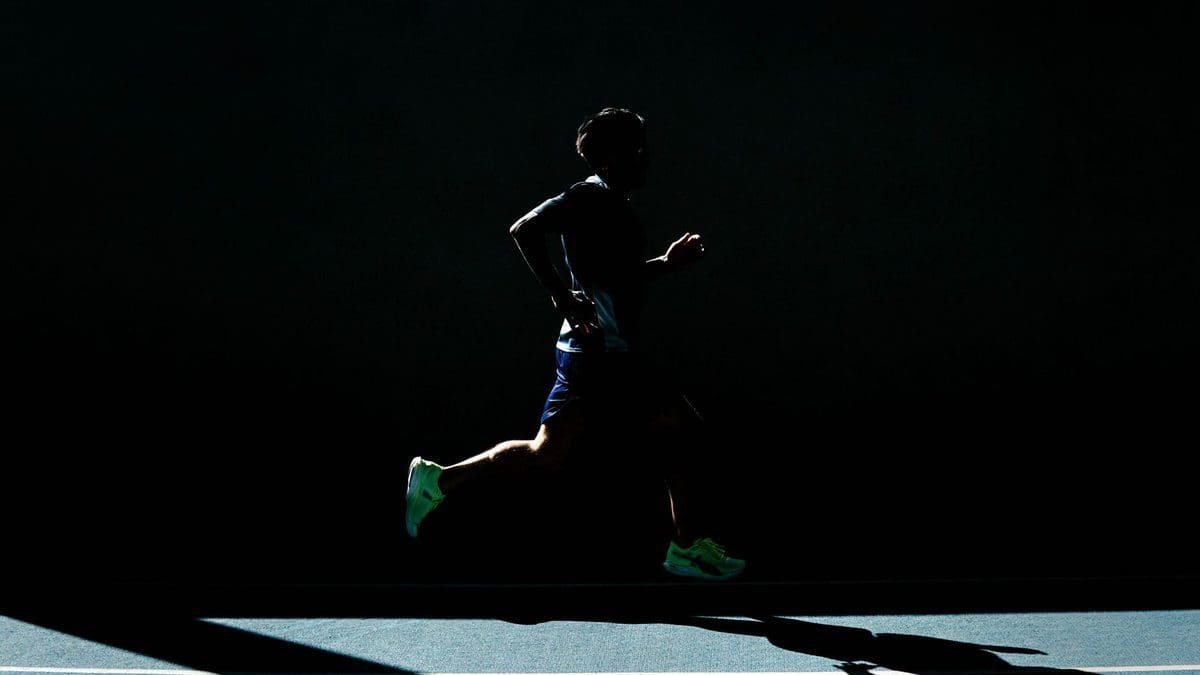
October evenings were practically built for runners. The air finally turns crisp, the sun dips below the horizon before dinner, and every neighborhood block starts glowing with jack-o’-lanterns, purple string lights, and 12-foot yard skeletons. Heading out after dark in late October feels atmospheric and electric, right up until you realize your favorite all-black outfit or Halloween costume makes you nearly invisible to a distracted driver backing out of a driveway.
Most night-running advice sounds like a joyless lecture from a driver’s ed manual: ditch your dark clothes, wrap yourself head-to-toe in neon yellow construction mesh, and avoid every fun street in town. We’re not doing that here. Our motto for October miles is simple: Spooky, Not Invisible. You can keep your black running leggings, rock a festive costume, and lean all the way into the eerie autumn mood while still making yourself much easier for cars, cyclists, and trick-or-treaters to spot.
Halloween Night Running: What You Need to Know
- Keeping Your Black Clothes & Spooky Vibe After Dark
- Reflective Gear vs Running Lights: Being Seen vs Seeing the Road
- Headlamps, Chest Lights & Clip-On Visibility Gear
- Using Halloween-Colored Lights Without Losing Visibility
- DIY Reflective Halloween Details: Skeleton Bones & Spiderwebs
- Costume Check: Clear Vision, Easy Strides & Secure Gear
- Navigating Trick-or-Treaters, Decorations & Halloween Traffic
- Choosing a Route That Is Spooky, Not Sketchy
- Simple Visibility Ideas for Halloween Group Runs
- Quick Halloween Night Pre-Run Checklist
Keeping Your Black Clothes & Spooky Vibe After Dark
Let’s be honest: half of every runner’s closet is already black, charcoal, or deep navy, and nobody wants to trade a skeleton tee or witchy October palette for a lime-green highway flagger vest. The good news is that the base color of your shirt and leggings matters a whole lot less after sunset than most people think.
Once true darkness settles in, even a bright yellow cotton shirt looks dull and gray when it isn’t in direct light. What actually catches a driver’s eye in the dark isn’t your shirt fabric, but contrast and movement.
Reflective details on moving parts of your body, especially your ankles and wrists, can help drivers recognize that they’re seeing a person running. A single static light clipped to your collar can easily blend into a background of glowing porch lamps and Halloween yard inflatables. Wrap two glowing bands around your lower legs or stick reflective bones down your calves, however, and your stride becomes much easier to distinguish from stationary street lights.
That means you can wear your black half-zip, black running leggings, or deep pumpkin-orange layers guilt-free. You’re simply using that dark outfit as a backdrop for lights and reflective details.
Reflective Gear vs Running Lights: Being Seen vs Seeing the Road
One of the easiest mistakes to make on an October night run is assuming that a few factory-printed reflective logos on your shoes or jacket are enough to keep you visible. To build a smart setup without overcomplicating your run, it helps to separate visibility gear into two jobs: being seen by others and seeing where you’re stepping.
Passive Reflectivity: Bouncing Headlights Back
Retroreflective strips, silver piping, and reflective fabric tape are completely passive. They don’t make their own light; instead, tiny glass beads or micro-prisms bounce a car’s headlights straight back toward the driver’s eyes.
- Where it shines: Open residential roads, cross-streets, and intersections where car headlights sweep across your path from a distance.
- Where it falls short: If a car pulls out of a dark driveway with its headlights pointed away from you, or if you’re sharing an unlit sidewalk with a cyclist, dog walker, or group of trick-or-treaters, passive reflective tape stays completely dark. It also won’t help you see a single thing in front of your own shoes.
Active Running Lights: Glowing From Every Angle & Lighting the Pavement
Active lights do two distinct jobs: low-lumen LED running vests, blinking clip-ons, and lighted ankle bands help people see you from multiple angles, while lights that illuminate the path (300- to 500-lumen white beams on your head, chest, or waist) light up the ground 20 to 40 feet ahead.
- Why October demands both: Late autumn sidewalks are an obstacle course of wet fallen leaves, acorns, buckled tree roots, dark extension cords running out to yard inflatables, and plastic tombstones sitting two inches off the concrete. A forward beam helps you avoid rolling an ankle, while wearable LED lights make you much easier for drivers and pedestrians to spot even when no headlights are shining your way.
Headlamps, Chest Lights & Clip-On Visibility Gear
Picking the right lighting setup comes down to what you’re wearing and how much Halloween gear you’re layering on top. What works on a bare-bones Tuesday training run might fight with a witch hat, headband, or themed outfit on October 31.
Headlamps: Look-Where-You-Point Versatility
A lightweight running headlamp is great when you need your beam to follow your eyes, like checking street signs, scanning a dark yard for decorations, or making sure a driver at a four-way stop actually sees you.
- The Halloween catch: Headlamps don’t play nicely with masks, pointy hats, cat ears, or tall hairstyles. On foggy or chilly October nights, a headlamp mounted right above your eyes can also bounce glare off your own exhaled breath (or off a neighborhood fog machine), creating a white wall right in front of your face. Look for a model with a tilting lamp head so you can angle the beam down toward the concrete instead of blinding neighbors on the sidewalk.

- ✓Tilting lamp head lets you aim the beam 15 feet ahead at dark sidewalks instead of blinding oncoming trick-or-treaters.
- ✓Built-in red lighting mode helps preserve your night vision when checking your watch or talking with friends before the run starts.
Chest Lights & LED Vests: Better Shadows & Costume Freedom
Dropping your primary white beam down to your chest or waist avoids some common headlamp annoyances, though the beam stays pointed straight ahead instead of following your gaze. Because the light sits lower to the ground, it hits sidewalk cracks, curbs, and roots at an angle, casting crisp shadows behind obstacles so you can judge their height more easily. Pairing a low beam with a lightweight LED reflective running vest keeps your head completely free for hats, wigs, or sweatbands, and you won’t shine a spotlight into people’s eyes every time you look around.

- ✓Bright front and rear LED light strips combine with reflective bands to keep you visible from multiple angles over dark clothing.
- ✓Lightweight, breathable elastic straps adjust easily over autumn jackets, black running shirts, or Halloween costumes without trapping heat.
Clip-On Lights & Ankle Bands: Highlighting Moving Joints
If you’re wearing festive Halloween running gear or a themed outfit and don’t want straps crossing your chest, small rechargeable clip-on lights and lighted ankle straps do heavy lifting with almost zero bulk. Clip one white light to your waistband or shorts hem, clip a red or orange blinker to your back pocket or collar, and wrap a glowing strap around each ankle.

- ✓Included hook-and-loop straps wrap around moving ankles or wrists to help drivers recognize your movement in low light.
- ✓Spring-loaded clips attach directly to waistbands, dog leashes, or the outer edge of a Halloween costume.
Using Halloween-Colored Lights Without Losing Visibility
Here’s where October night running gets genuinely fun: functional visibility gear doesn’t have to look like safety equipment. Modern LED running vests, fiber-optic harnesses, and clip-on beacons let you trade sterile white-and-yellow setups for glowing pumpkin orange, eerie ultraviolet purple, toxic slime green, and crimson red.
When you’re running past houses decked out in purple and orange string lights, multicolor LED gear makes you look like part of the celebration rather than someone who accidentally wandered off a road crew. To keep those festive colors working as practical visibility equipment, follow a simple three-part color rule:
- Keep a clean white beam facing forward: Colored LEDs (especially purple, red, and deep orange) wash out depth perception on dark asphalt. Use a white chest light, waist lamp, or headlamp to light up the ground directly in front of your feet so you can see cracks and uneven pavement clearly.
- Use orange, green, or purple for 360-degree side glow: Bright green and orange LEDs can stand out against dark surroundings, while purple adds a fun Halloween accent. Wrapping your torso, ankles, or dog leash in glowing green, orange, or purple fiber optics helps your outline stand out against dark trees and parked cars.
- Keep red or amber flashing on your back: Drivers are conditioned to read red and amber lights as the rear of a vehicle or cyclist. A blinking red or orange clip-on light at the back of your waistband or cap helps approaching traffic tell that you’re moving away from them in the same lane direction.
DIY Reflective Halloween Details: Skeleton Bones & Spiderwebs
If you love a project that takes ten minutes at the kitchen table and looks awesome on the road, grab a roll of retroreflective fabric tape. In normal indoor lighting or dim porch light, silver or dark-gray reflective tape looks like a subtle graphic print on black clothing. When a car’s headlights sweep down the street, those cutouts light up brightly against dark fabric.
Instead of slapping boring rectangular strips across your shoulders, grab a pair of scissors and turn that tape into Halloween art on an old black long-sleeve tech shirt, windbreaker, or pair of black running leggings:
- The Retroreflective Skeleton: Cut long, narrow strips with rounded ends for femur and shin bones down the front and back of your leggings, plus five or six curved horizontal ribs across your chest and a stack of small squares down your spine. Because your legs move with every stride, those reflective leg bones help drivers recognize that a runner is up ahead.
- Shoulder & Back Spiderwebs: Cut thin 1/4-inch strips of reflective tape and arrange four intersecting lines across the back of a dark running jacket, then connect them with short angled segments to form a giant spiderweb between your shoulder blades.
- Jack-o’-Lantern Grin & Eyes: Place triangle eyes and a jagged toothy grin onto the front of an orange or black running vest, or stick two glowing cat-eye triangles on the heels of your running shoes.
- Spooky Shoe & Hat Accents: Cut tiny bat silhouettes or lightning bolts and press them onto the firm heel counter of your running shoes, the brim of your running cap, or the battery pack of your headlamp.

- ✓Cuts cleanly with household scissors into custom skeleton ribcages, leg bones, spiderwebs, or jack-o’-lantern grins.
- ✓Looks subtle on black running shirts and leggings in dim porch light, then blazes bright silver when headlights sweep past.
Costume Check: Clear Vision, Easy Strides & Secure Gear
Running in a race-day outfit for a local October 5K, testing out a themed tutu, or throwing on a superhero cape for a neighborhood run club meet-up adds a few extra variables after dark that don’t show up at 8:00 AM on a closed race course.
Before you head out the door at night, run your outfit through a quick four-point check:
Guard Your Peripheral Vision
Full-face masks, mesh eye screens, and heavy hoods shrink your side-to-side field of view right when you need to spot cars turning at intersections or kids stepping off curbs. Even worse, latex and plastic masks trap warm breath that instantly fogs up glasses or eye holes in cool October air. Swap full masks for sweat-resistant face paint, a themed headband, or a hat that sits securely above your eyebrows.
Keep Capes & Tutus Off Your Lights
A waist-mounted clip light or reflective belt does zero good if a flowing cape, ghost sheet, or tulle skirt covers it. Always clip your rear blinker to the outermost layer of your outfit, or shift your visibility gear down to reflective details around your ankles where fabric won’t block the glow.
Pin Down Flapping & Tripping Hazards
Long hems, loose skeleton bones, dangling belt sashes, and prop wands feel fine when you’re standing in front of your hallway mirror. Half a mile into a dark run, anything hanging below mid-thigh becomes a snag risk on bushes, dog leashes, or your own knees. Use heavy-duty safety pins or hook-and-loop tape to tack down loose corners before you start your watch.
Keep Your Ears Open
Between rustling costume fabric, nylon windbreakers, and lively street chatter, it’s already harder to hear approaching cars and bikes on Halloween night. Leave noise-canceling earbuds at home. If you want a spooky playlist or podcast in the background, use open-ear bone-conduction headphones (see our Shokz OpenRun Pro review for a closer look at how bone-conduction audio works on the road) so your ear canals stay completely open to street noise.

- ✓Leaves your ear canals completely unblocked so you hear cars backing out of driveways, cyclists, and trick-or-treaters early.
- ✓Wraparound titanium frame stays locked in place underneath Halloween headbands, witch hats, or cold-weather ear warmers.
Navigating Trick-or-Treaters, Decorations & Halloween Traffic
Late October nights, and Halloween evening in particular, change the rhythm of residential streets completely. According to Safe Kids Worldwide, pedestrian traffic spikes dramatically after sunset on Halloween, and drivers are frequently distracted by looking for addresses, watching yard displays, or navigating narrow streets lined with parked cars on both sides.
When you’re out logging miles alongside neighborhood festivities, a few street-smart habits keep the run fun and stress-free:
- Watch for the “Yard-to-Curb” Cord Trap: Homeowners love running heavy-duty orange or black extension cords from their garage outlets across the sidewalk to power lawn inflatables, animatronic witches, and archway lights. Keep your forward beam angled at the concrete 15 feet ahead so a taped-down cord or garden stake doesn’t catch your toe.
- Assume Pint-Sized Ghosts Will Dart Sideways: Excited kids in bulky costumes have almost zero peripheral vision and only one mission: getting to the next candy bowl as fast as humanly possible. Whenever you pass a family or a cluster of trick-or-treaters, slow down, give them plenty of room, announce a friendly “Passing on your left!” early, and step onto the grass strip rather than squeezing between kids on a narrow sidewalk.
- Beware of Fog Machines & Strobe Displays: A house with a full cemetery fog setup and flashing lightning strobes is awesome to look at, but dense theatrical fog can hide a two-inch sidewalk lip or a sleeping golden retriever in seconds. Ease off the gas whenever your forward beam hits a cloud of artificial fog.
- Scan Every Driveway Apron: During peak October evenings, delivery vans, rideshares, and parents’ SUVs constantly pull into and back out of driveways. Never assume a car with its reverse lights on can see you through tinted rear windows; make eye contact or wait for the vehicle to clear the sidewalk.
Choosing a Route That Is Spooky, Not Sketchy
There’s a massive difference between a route that feels festively spooky and a route that’s genuinely sketchy. A dark, unlit wooded greenway or a high-speed two-lane road with no shoulder isn’t atmospheric in late October; it’s just a twisted ankle or a close call waiting to happen.
As the American Academy of Orthopaedic Surgeons (OrthoInfo) emphasizes for outdoor exercise after dark, sticking to well-lit, familiar routes with level footing is one of the simplest ways to prevent nighttime falls and collisions. Here’s how to build an October night route that maximizes the Halloween vibe while keeping unnecessary risks to a minimum:
- Trade isolated trails for decorated residential loops: Save the root-packed forest trails for daylight hours (check our guide to the best time of day to run if you’re juggling shifting autumn daylight). At night, build a 1- to 1.5-mile loop through a lively neighborhood with continuous sidewalks, regular streetlamps, and plenty of lit-up front porches.
- Use Historic Main Streets & Downtown Corridors: Older town centers and walkable commercial blocks usually combine wide sidewalks, bright storefront windows, lower speed limits, and awesome seasonal window displays.
- Treat Halloween Night as a Social Vibe Run, Not a Workout: If you’re working your way through our 12 Days of Halloween Running Challenge, October nights are made for easy recovery miles, photo stops, and taking in the decorations rather than staring at your GPS watch while trying to hit 5K threshold intervals through a crowd of trick-or-treaters.
Simple Visibility Ideas for Halloween Group Runs
Running with two or three friends, or thirty people from your local run club, is a fun, memorable way to enjoy a Halloween night run. A pack naturally commands more attention from drivers than a solo runner, and you can coordinate your lights so the whole group looks like a moving Halloween parade:
- The “Headlight & Taillight” Pack System: Assign two pace leaders at the very front of the group to wear bright white forward chest or waist beams to spot curbs and obstacles for everyone behind them. Put your brightest red or orange flashing vests on the two “tail-end sweepers” at the back of the pack. That way, nobody in the middle gets blinded by a teammate’s headlamp, and drivers can more easily tell where the group starts and ends.
- Color-Coded Spooky Teams: If everyone in your group owns a multicolor LED vest or slap bands, split the run into themes: Team Pumpkin (solid orange), Team Witch (glowing purple), and Team Franken-Monster (slime green).
- The Synchronized Skeleton Crew: Buy a couple of rolls of reflective fabric tape before the run and spend ten minutes sticking matching reflective ribs onto everyone’s black shirts and ankles. When a car rounds the corner and illuminates twelve glowing skeletons jogging in formation, it’s an instant neighborhood highlight.
Quick Halloween Night Pre-Run Checklist
Before you tap start on your watch and step out into the October night, take 60 seconds to tap through this interactive “Spooky, Not Invisible” Pre-Run Checklist by the front door:
The “Spooky, Not Invisible” Pre-Run Checklist
Wrapping Up Your Spooky Night Miles
Staying visible on an October night run doesn’t mean dressing like a traffic cone or skipping out on the Halloween fun. With a few simple lighting and reflective touches over your favorite dark layers or costume, you can make yourself much easier to spot while still looking like you belong right in the middle of spooky season. Take a quick minute by the front door to check your gear, stay alert on busy neighborhood sidewalks, and enjoy the best atmosphere of the running year.
Frequently Asked Questions
Can I wear black running clothes at night if I add reflective gear or lights?
Yes, you don’t have to give up black shirts or black running leggings to run after dark. Adding lights and reflective trim over dark clothing makes you much easier for drivers to notice than relying on shirt color alone.
Is reflective gear or a running light better for Halloween night runs?
They work best together because they do different jobs. Reflective strips help drivers spot you when headlights shine your way, while active running lights help you see cracks, wet leaves, and cords on dark sidewalks.
Where on my body should I put reflective tape or lights to be most visible?
Focus on moving parts like your ankles, shoes, knees, and wrists. Placing small clip-on lights or reflective details on your joints helps drivers recognize that they’re seeing a runner in motion.
Are orange, purple, and green LED lights safe to use for night running?
Yes, colored LEDs on LED running vests and ankle bands are great for side visibility and Halloween style. Pair them with a white light in front so you can see cracks and uneven pavement ahead, plus a red or amber blinker on your back.
How do I keep a Halloween running costume from becoming a tripping or visibility hazard?
Skip masks that block your side vision, pin down loose hems, and make sure capes or tutus don’t cover your lights. Do a quick hallway jog at home to check that nothing tangles around your legs or blocks your headlamp beam.
Should I run on Halloween night during peak trick-or-treating hours?
If you head out between 6:00 PM and 8:30 PM, treat it as an easy, relaxed run rather than a fast workout. Expect crowded sidewalks, kids darting across driveways, and distracted drivers. Save faster pace workouts for daylight hours or a well-lit path away from residential streets.
