

Every runner has heard passionate arguments about the single best time of day to lace up. Early risers swear that dawn miles build ironclad mental discipline and burn more fat before breakfast. Afternoon athletes point to warmer muscles and faster PRs, while night runners love washing away a stressful workday beneath the streetlights.
The reality is that there isn’t one universal hour when your body magically runs better. Your circadian rhythm, core body temperature, hormone fluctuations, and work commitments all shape how easy or grueling a workout feels. The best time to run is simply the time you can stick to consistently without sacrificing sleep, skipping meals, or risking your personal safety.
Finding your sweet spot comes down to matching your personal training goals with your daily schedule. Understanding how running at different hours influences muscle mechanics and fatigue, how to handle morning stiffness and late-night insomnia, and how to test different time slots to build a routine that actually lasts.
Best Time to Run: What You Need to Know
- Choose Your Running Time by Goal
- Build a Consistent Routine With Morning Runs
- Break Up Your Workday With a Lunchtime Run
- Target Faster Workouts in Late Afternoon or Early Evening
- Protect Sleep Quality and Visibility on Night Runs
- Compare Two Time Slots Before Changing Your Routine
Choose Your Running Time by Goal
Picking the ideal hour on the clock starts with what you’re hoping to achieve from your miles. Different physiological states favor different types of training, meaning your priority changes based on if you’re chasing a 5K personal record or building a healthy daily habit.
Here’s how common runner priorities match up with the clock:
- Beginners & Habit Builders: Early morning is usually best. Completing your miles before the workday starts protects your workout from last-minute meetings, family duties, and evening exhaustion.
- Marathoners & High-Mileage Racers: Match your schedule to race morning. Doing your key weekend workouts near the official gun time prepares your digestion, hydration, and mental focus for race day.
- Speed, Intervals & Tempo Work: Late afternoon to early evening (4:00 PM to 7:00 PM) offers peak muscle temperature, optimal joint mobility, and faster neuromuscular reaction times.
- Stress Relief & Mental Wellness: Midday lunch breaks or early evenings offer a physical transition between a demanding workday and personal downtime.
- Summer Heat Avoidance: Early morning dawn hours present the lowest ambient temperatures of the day, helping you avoid dehydration and blistering pavement.
Remember that life circumstances always override theoretical perfection. If aiming for an afternoon tempo run causes you to miss three workouts a week because of work deadlines, moving those miles to the morning will yield far better fitness gains over the course of a training block.
Build a Consistent Routine With Morning Runs
Stepping outside at dawn provides a sense of calm that afternoon workouts rarely match. The streets are quiet, the air is clean, and knocking out your mileage first thing creates an accomplished mindset that carries through the rest of your day.
Morning running eliminates the scheduling friction that builds up as your afternoon progresses, so you’ll never feel rushed. Unplanned overtime, invitations from friends, and sheer mental exhaustion can easily derail evening plans. When your shoes are unlaced before breakfast, nothing can steal your workout.
Warm Up Until Your Stride Feels Easy
Starting a run immediately after rolling out of bed can feel like moving in slow motion, and that’s completely normal. Your core body temperature drops to its lowest 24-hour baseline right before waking, meaning your calf muscles, hamstrings, and Achilles tendons are physically colder and less pliable than they’re later in the day.
Overnight rest also alters spinal mechanics. While you sleep, the lack of gravitational compression allows your spinal intervertebral discs to absorb surrounding fluid, making you slightly taller and creating noticeable tightness when you bend over to tie your laces. Forcing deep forward bends or aggressive speedwork during your first five minutes puts unnecessary stress on stiff connective tissues.
Taking five to ten minutes for a deliberate dynamic warm-up makes a massive difference, and it’s well worth the extra time. Begin with brisk walking, light glute bridges, ankle circles, and gentle walking lunges to stimulate blood circulation and synovial fluid lubrication. If your calves and arches feel especially tight, gentle percussive therapy can accelerate local blood flow so your opening strides feel natural.

- ✓Compact ergonomic design fits into palm or gym bag for targeted pre-run activation.
- ✓Delivers 12mm percussive reach across three calibrated speed settings.
Once your muscles warm up, ease into your normal training pace. Paying close attention to your breathing rhythm early on helps keep your heart rate steady; you can review our detailed guide on how to breathe while running to master rhythmic diaphragmatic pacing on chilly morning miles.
Fuel the Exact Workout You Planned
Deciding whether to eat before dawn depends entirely on the duration and intensity of your session. If you’re heading out for an easy 30-minute recovery jog at conversational effort, running in a fasted state is perfectly fine for most healthy adults. Your liver and muscle glycogen stores from the previous night’s dinner contain more than enough energy to power low-intensity strides.
Fasted exercise increases the percentage of fat your body oxidizes during that specific run, but researchers have confirmed this doesn’t equate to greater total fat loss over months of training. If your planned session includes steep hill repeats, aggressive track intervals, or a long run exceeding 60 minutes, running on empty will backfire.
Depleted glycogen stores limit your high-end aerobic power, leading to early muscle fatigue, sluggish leg turnover, and elevated perceived exertion. For demanding workouts, eat a small, easily digestible carbohydrate snack 20 to 30 minutes before stepping out, such as a ripe banana, a slice of toast with honey, or an energy gel. If you’re building out an extended weekend endurance route, carrying fluids and electrolyte gels in one of the best running hydration vests ensures you won’t bonk miles away from home.
Protect Your Schedule Without Cutting Sleep
The biggest trap of morning running is robbing your body of restorative rest. Waking up at 5:00 AM sounds admirable, but if you didn’t climb into bed until midnight, you’re training on five hours of sleep. Chronic sleep deprivation elevates resting cortisol, impairs muscle tissue repair, and degrades immune health far more than any running schedule can fix.
Your body naturally experiences a cortisol awakening response, where cortisol levels rise sharply during the first 30 to 45 minutes after waking to promote alertness. This is normal biology, not dangerous stress. However, pairing elevated morning cortisol with chronic exhaustion makes workouts feel heavy and increases your risk of overtraining injuries.
If you want to become a morning runner, you must move your bedtime earlier before you move your alarm clock forward. Set out your running clothes, shoes, and watch the night before to eliminate morning decision fatigue, and head to bed thirty minutes earlier until your sleep schedule stabilizes.
Break Up Your Workday With a Lunchtime Run
Midday miles offer a brilliant antidote to the sedentary slump of desk work, especially when you’ve spent the entire morning glued to a chair. When you’ve spent four straight hours sitting in front of a computer screen with rounded shoulders and tight hip flexors, getting outdoors for 30 to 45 minutes resets your mental focus and gets sluggish blood moving.
Lunch runs split your workday cleanly in half. Stepping away from email notifications and project deadlines allows your brain to decompress, and you’ll return to your desk refreshed with sharper concentration and renewed physical energy.
Leave Enough Time for Food to Settle
Managing your digestion is the trickiest part of running at midday. Blood flow diverts heavily to your stomach and intestines to digest a meal. If you start jogging vigorously with a full stomach, your body redirects that blood flow to working leg muscles, leaving undigested food sloshing around and triggering painful side stitches or nausea.
Use these practical digestion guidelines to plan your lunch miles:
- Large, Balanced Meal: Allow two to four hours between eating and running, especially if the food contained significant fat, protein, or dietary fiber.
- Light Pre-Run Snack: Eat a simple carbohydrate snack (such as a banana, applesauce, or graham crackers) 30 to 60 minutes beforehand to keep blood sugar steady.
- Post-Run Lunch: The most effective strategy for most runners is running first, then eating your actual lunch at your desk afterward to kickstart muscle recovery.
Testing your stomach’s tolerance during easy recovery runs will teach you what foods keep your digestive system happy, so you don’t end up battling mid-run cramps.
Get Daylight Without Ignoring Heat and UV Glare
Midday running provides direct exposure to natural daylight, which helps reinforce your circadian rhythm and supports healthy daytime alertness. However, running beneath high noon sun introduces environmental challenges that morning and evening runners rarely face.
Midday UV indexes peak between 11:00 AM and 2:00 PM, increasing skin damage risk and creating intense asphalt glare that causes eye strain and subconscious facial tension. In summer months, asphalt radiating heat can raise local air temperatures several degrees above the weather forecast.
Protect yourself by seeking shaded park trails or tree-lined roads whenever possible. Slather on sweat-resistant sunscreen, wear a breathable running cap, and protect your eyes with lightweight, slip-free polarized sunglasses designed to stay locked to your face.

- ✓Polarized UV400 lenses eliminate harsh pavement glare and block 100% of UV rays.
- ✓Special grip coating prevents frames from slipping down sweaty noses.
During the dog days of summer, high heat and oppressive humidity can turn a lunchtime jog into a dangerous dehydration trap. If temperatures soar, swap your outdoor loop for an air-conditioned treadmill workout, or move your training window to the cooler morning hours.
Target Faster Workouts in Late Afternoon or Early Evening
If your goal is running as fast as possible, science strongly favors the late afternoon to early evening window (typically between 4:00 PM and 7:00 PM). Human physiology operates on a 24-hour biological clock, and multiple muscular and metabolic metrics align during this period to maximize physical output.
Your core body temperature naturally reaches its daily peak in the late afternoon. Warmer core temperatures increase muscle elasticity, speed up cellular enzyme activity, and boost nerve transmission velocity. This means your muscles contract with greater force and turnover feels substantially smoother.
Take Advantage of Your Peak Performance Window
Higher core body temperature translates directly to what you’ll feel out on the road. Your joints feel supple, opening strides feel fluid rather than robotic, and fast sprint intervals feel far less jarring on tight tendons than they do at dawn.
Lung function also exhibits daily circadian variation, with airway resistance reaching its lowest point in the late afternoon. This allows for optimal bronchodilation and oxygen uptake when pushing toward your lactate threshold.
Furthermore, you’ve had multiple meals and several glasses of water throughout the day, ensuring muscle glycogen stores are topped off and your body is fully hydrated. If you’re tackling challenging track repeats, a brisk tempo session, or an intense hill workout, scheduling it between 4:30 PM and 6:30 PM gives you the highest physiological ceiling for performance. When preparing for speed sessions, pairing your training with versatile footwear from a structured running shoe rotation keeps your legs springy and protected.
Decompress From Workday Stress Without Harming Recovery
Running at the end of the workday provides an unmatched psychological transition. Transforming accumulated mental frustration into physical effort helps lower blood pressure, releases natural endorphins, and marks a clear boundary between your professional responsibilities and personal evening life.
Keep your fueling on track by eating a light carbohydrate snack around 3:00 PM or 3:30 PM, such as an apple, a handful of pretzels, or a small granola bar. If you haven’t eaten since noon, entering a tough 5:30 PM workout running on fumes will sabotage your pace regardless of favorable body temperatures.
Listen honestly to your body after demanding workdays. If hours of intense meetings or physical labor leave you drained, don’t force a punishing speed workout just because the clock says 5:00 PM; it’s always smarter to dial back. Dialing back to an easy conversational run protects your central nervous system from overreaching while still delivering all the stress-relieving benefits of aerobic exercise.
Protect Sleep Quality and Visibility on Night Runs
For night owls and runners with packed daylight schedules, running after dark is the only realistic way to log miles. Quiet moonlit paths and empty roads offer a peaceful, meditative atmosphere where you’ll easily escape the frantic pace of the daytime world.
Night running comes with distinct physiological and safety considerations. Understanding how late workouts affect your sleep architecture and staying vigilant about road visibility ensures your late-evening miles stay both safe and restorative.
Balance Workout Intensity Around Your Bedtime
A common running myth claims that exercising at night destroys sleep quality, but it’s largely an oversimplification. In reality, multiple clinical exercise trials demonstrate that moderate aerobic jogging in the evening doesn’t disrupt sleep and frequently helps runners fall asleep faster by reducing daytime anxiety.
The critical variable is workout intensity. Vigorous high-intensity intervals or hard tempo runs trigger a massive release of adrenaline and elevate your core body temperature and heart rate for hours afterward. Since your body must cool down by approximately one to two degrees Fahrenheit to initiate restorative deep sleep, getting into bed while still radiating heat will leave you tossing and turning.
If you must run within two to three hours of bedtime, keep your effort strictly conversational and aerobic. Save brutal interval workouts for weekends or earlier time slots. After finishing a night run, take a lukewarm shower to encourage blood flow to your skin’s surface, which helps accelerate core temperature cooling before you crawl under the sheets.
See the Pavement and Help Drivers Spot You
Safety is the absolute priority once dusk sets in. Drivers navigate with reduced peripheral vision, glare from oncoming headlights, and constant distractions, so they won’t always see you in standard dark apparel. Assuming that a passing car sees you because you can see their headlights is a dangerous mistake.
Dark running requires a two-part gear strategy:
- Illumination to See the Road: You need forward-facing light to identify pavement potholes, slick wet leaves, and lifted sidewalk slabs. A lightweight running headlamp or chest light illuminates your path without bouncing.
- Conspicuity to Be Seen by Others: Passive reflective strips on shoes only work when direct headlights hit them from specific angles. Active, multi-colored LED lights and 360-degree fiber-optic vests ensure drivers spot your moving silhouette from hundreds of yards away in all directions.
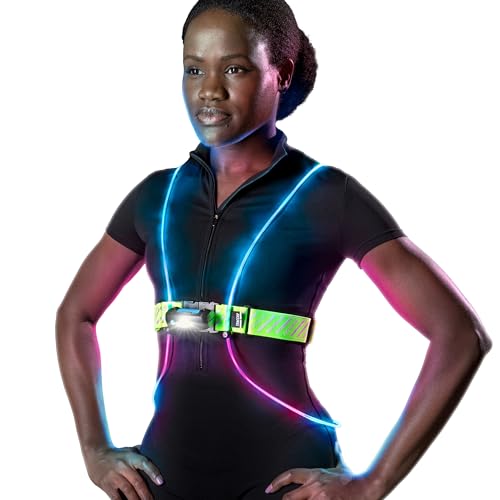
- ✓Provides 360-degree multi-color illumination visible from up to a quarter mile.
- ✓Minimalist bounce-free harness slips easily over light or winter layers.
Stick to familiar, well-lit sidewalks and multi-use paths at night rather than venturing onto unlit backroads. When autumn or winter weather brings rain and slick roads, review our safety advice for running in the rain and how to run in the cold to stay warm, upright, and injury-free.
Compare Two Time Slots Before Changing Your Routine
Rather than overhauling your entire lifestyle based on theoretical circadian science, it’s much better to run your own real-world two-week experiment. Pick two realistic time slots that fit your weekly commitments, such as 6:30 AM before work versus 5:30 PM afterward.
Run the same easy 3- to 4-mile route at conversational effort across both time slots over a 14-day testing period. Track how your body responds by recording these key daily indicators:
- Effort & Heart Rate: Does your normal pace feel smoother and require lower cardiovascular effort in the morning or afternoon?
- Digestive Comfort: Does your stomach feel calm, or do you battle nausea or side stitches during one specific slot?
- Habit Adherence: Did you complete 100% of your scheduled morning runs, or did afternoon work emergencies cause you to skip sessions?
- Sleep Quality: Did you fall asleep easily that night, and did you wake up feeling genuinely refreshed?

- ✓Tracks run duration, distance, and pace with dual-frequency satellite precision.
- ✓Lightweight 30g design allows effortless all-day activity and sleep tracking.
Many runners find that a hybrid schedule delivers the best balance. You might schedule easy aerobic miles at dawn to guarantee consistency, complete your Saturday long run early to match race start times, and tackle your Wednesday speed intervals at 5:00 PM when muscle temperature peaks.
Wrapping Up: Finding Your Ideal Running Time
There’s no single “perfect” hour to run that applies to every athlete. Early morning running excels at building unbreakable habits, avoiding summer heat, and freeing up your evenings. Midday runs provide a restorative physical break from sedentary desk work. Late afternoon and early evening training unlocks your highest physiological ceiling for fast speedwork, while night running offers a peaceful escape for night owls.
Pay attention to your body’s feedback, protect your nightly sleep above all else, and choose the training window that leaves you feeling energized rather than depleted. If you’re following best running shoes for beginners or training for your next marathon, the best time to run is always the time you can celebrate mile after mile.
Frequently Asked Questions
Is it better to run in the morning or at night?
Morning running often makes habit consistency easier because fewer work or family obligations can derail your plans. Night running can feel physically smoother because your core temperature is warmer, but hard sessions close to bedtime can make it tough to fall asleep. Neither slot is universally superior; the best choice is the one you can stick with consistently without sacrificing sleep or recovery.
Does running before breakfast burn more fat?
A fasted morning run does increase the proportion of fat your body uses for energy during that specific workout. However, scientific trials show that this doesn’t lead to greater overall fat loss over weeks or months compared to running after eating. Long-term body composition depends on your daily caloric balance and training consistency, so you shouldn’t force fasted runs if they leave you feeling weak or sluggish.
How long should I wait to run after lunch?
If you’ve eaten a full meal with protein, complex carbohydrates, and fats, waiting two to four hours allows your stomach to digest comfortably. If you’ve only had a light, simple snack like a banana or a slice of toast, you can usually start running within thirty to sixty minutes. Pay attention to how your stomach feels and test your digestion windows during easy runs rather than hard interval workouts.
Is running before bed bad for sleep quality?
Easy or moderate jogging in the evening generally doesn’t harm sleep and can actually help you unwind from daily mental stress. However, vigorous sprint intervals or tempo runs within two hours of bedtime can elevate your core body temperature and heart rate, leaving you too stimulated to drift off. If evening runs disrupt your rest, finish hard workouts at least three hours before turning out the lights.
Why does running feel harder first thing in the morning?
Your core body temperature naturally reaches its daily low point right around waking, leaving muscles cooler and less pliable. Additionally, hours of lying still allow fluid to accumulate in your spinal discs, which creates temporary morning stiffness. Starting with five to ten minutes of brisk walking and gentle jogging allows your body to warm up naturally, after which your stride will feel noticeably smoother.
Should I train at the exact same time as my upcoming race?
Doing a few key weekend runs at your race’s scheduled start time is a smart way to practice waking up early, timing your pre-race breakfast, and dialing in your bathroom routine. You don’t need to move all your weekday workouts to match race time. Protecting your overall sleep and training consistency matters far more than matching the clock every single day.
