
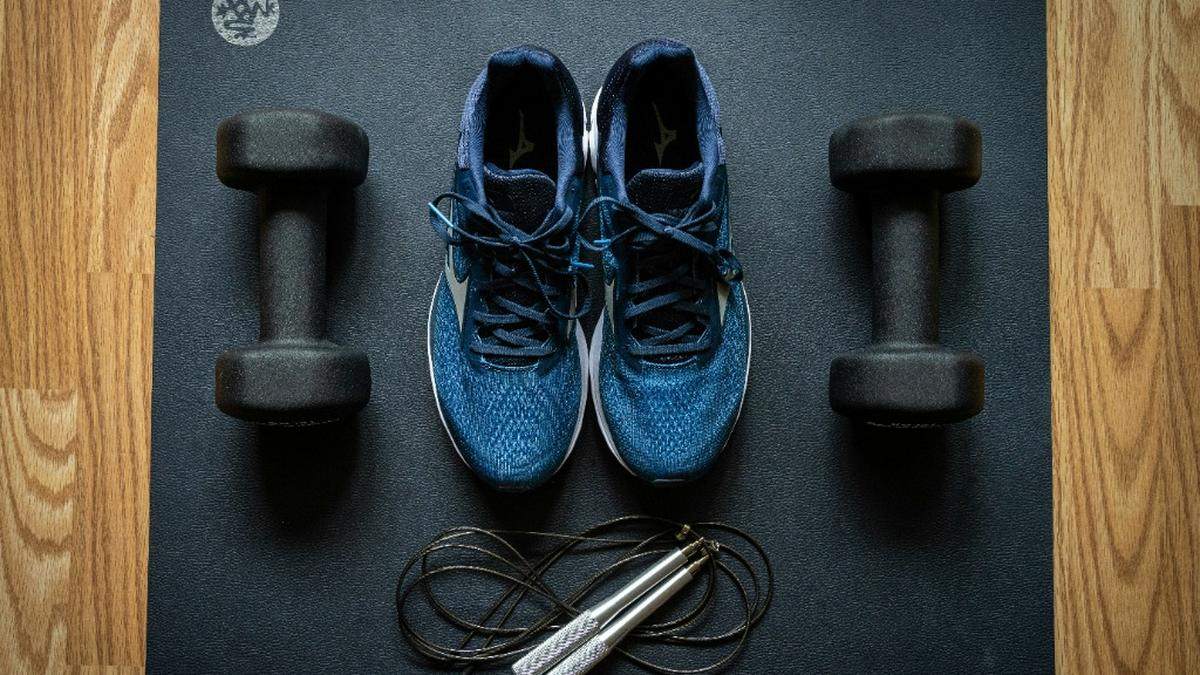
Maybe you’ve been meaning to add strength training to your running routine for months. Then you look up a workout and suddenly you’re staring at a list of 15 exercises, half of which require gym equipment you’ve never touched. You close the tab and go for another run instead.
Fair enough.
The good news is that strength training for runners doesn’t have to involve complicated workouts, expensive equipment, or an entirely new fitness schedule. You can start with a handful of simple exercises, a little floor space, and two short sessions a week. If you’re also new to running, our run-walk method for beginners can help you build your running routine alongside these strength sessions.
Here’s the simple starting point: Aim for two full-body strength workouts per week, focusing on your legs, hips, calves, core, and upper body. Start with bodyweight exercises, learn the movements, and gradually add resistance as you get stronger.
Below, we’ll cover exactly which exercises to do, how many repetitions to start with, and how to fit strength training around your regular runs without turning every day into leg day.
Your Shortcut to Stronger Runs
- Why strength training matters for runners
- Seven beginner-friendly strength exercises
- A simple workout you can follow
- A weekly strength training plan for runners
- How often to strength train
- Whether to lift before or after running
- Strength training at home without gym equipment
- Whether running counts as strength training
- How to get stronger without overdoing it
Why Should Runners Do Strength Training?
Running is already a workout. Your legs are certainly aware of this, especially after a hilly route or a particularly ambitious long run. So why add strength training?
Because running and strength training challenge your muscles in different ways.
Running develops cardiovascular endurance and repeatedly uses the muscles that move you forward. Strength exercises provide additional resistance, allowing you to work on muscular strength through movements such as squatting, pushing, pulling, and lifting.
There are potential running benefits, too. A 2024 systematic review published in Sports Medicine found that certain strength-training methods improved running economy in middle- and long-distance runners. Running economy refers to how much energy your body uses to maintain a particular pace.
That doesn’t mean doing squats twice will magically shave three minutes off your 5K. The research also includes training approaches that are more demanding than the beginner routine in this guide. Still, it supports the value of making strength work part of a runner’s overall training.
There are everyday benefits beyond race times, too. Stronger muscles can make tasks such as climbing stairs, carrying groceries, and getting up from the floor easier.
And if you’re a newer runner, you don’t have to wait until you’ve completed a certain number of races to begin. Strength training can be part of your routine right from the start. The trick is making room for it consistently. Our guide to building healthy habits without guilt can help you work it into your week without an all-or-nothing approach.
What Strength Exercises Should Runners Do?
You don’t need to memorize every exercise in the gym. A good starting routine includes movements that train your lower body, upper body, and core.
Here are seven running strength exercises that work well together.
| Exercise | What It Trains | Beginner-Friendly Option | Optional Progression |
|---|---|---|---|
| Squats | Thighs, glutes, hips | Sit-to-stand from a sturdy chair | Goblet squats with a dumbbell |
| Glute bridges | Glutes, hamstrings, hips | Two-leg floor glute bridge | Single-leg or weighted glute bridge |
| Step-ups | Thighs, glutes, single-leg control | Low, stable step with hand support | Hold dumbbells |
| Calf raises | Calves | Both feet on the floor, holding a wall | Single-leg or weighted calf raises |
| Incline push-ups | Chest, shoulders, triceps | Wall push-ups | Countertop or floor push-ups |
| Planks | Core, shoulders, trunk stability | Incline or knee plank | Forearm plank or side plank |
| Dead bugs | Core and trunk control | Small, slow arm-and-leg movements | Increase the movement range |
| Start with the beginner-friendly option and add resistance only after the movement feels steady and controlled. | |||
You can use this same exercise selection for both weekly workouts. There’s no need to create a completely different routine for every session.
1. Squats: Build Lower-Body Strength
Squats train several of the major muscles runners use, including the quadriceps in the front of the thighs and the glutes around the hips.
Start with a sturdy chair behind you. Stand with your feet about hip- to shoulder-width apart, bend your hips and knees, and lower yourself toward the seat. Touch down gently, then stand back up.
The chair gives you a clear target while you’re learning the movement. Once you’re comfortable, try regular bodyweight squats without sitting down. Later, you can hold a dumbbell close to your chest.
Beginner tip: Don’t worry about squatting as low as possible. Use a comfortable range of motion that you can control.
2. Glute Bridges: Work Your Glutes and Hamstrings
Glute bridges target the muscles along the back of your hips and thighs without needing any weights. Because you’re pressing your hips upward against gravity, your own body weight provides the resistance.
Lie on your back with your knees bent, your feet flat on the floor about hip-width apart, and your arms resting comfortably by your sides. Press through your heels to lift your hips until your body forms a straight line from your shoulders to your knees. Pause briefly at the top, then lower your hips back down with control.
The movement should come from your hips and glutes rather than overarching your lower back.
Once standard two-leg bridges feel comfortable, you can progress to marching bridges, single-leg glute bridges, or holding a weight across your hips.
Beginner tip: Keep your heels close enough to your body that you feel the work in your glutes rather than cramping in the back of your thighs.
3. Step-Ups: Practice Using One Leg at a Time
Every running stride involves supporting your body on one leg, which makes step-ups a useful addition to your strength routine.
Find a low, stable step. Place one foot fully on it, press through that foot to step up, and lower yourself back down slowly. Repeat on both sides.
Start with a low height and use a railing or other secure support if you need help balancing.
You can eventually increase the step height within a comfortable range or hold dumbbells, but there’s no reason to rush.
Beginner tip: Use an actual stair step or an exercise step platform, not a wobbly chair. Your workout doesn’t need an unexpected trip to urgent care.
4. Calf Raises: Give Your Lower Legs Some Attention
Your calves do plenty of work while running, especially during hills and faster efforts.
For a basic calf raise, stand with your feet about hip-width apart and hold a wall for balance. Slowly rise onto the balls of your feet, pause briefly, and lower your heels back to the floor.
Once raising both heels feels easy, you can gradually work toward single-leg calf raises or add resistance.
The key is controlling the movement rather than bouncing through repetitions as quickly as possible.
5. Incline Push-Ups: Don’t Forget Your Upper Body
Runners understandably pay a lot of attention to their legs, but a balanced strength routine should train the upper body, too.
Push-ups are one convenient option, and you don’t have to start on the floor.
Place your hands against a sturdy wall or countertop, step your feet back, and keep your body in a straight line. Bend your elbows to bring your chest toward the surface, then push yourself away.
A wall push-up is typically easier than a countertop push-up, so you can change the difficulty by changing the angle.
6. Planks: Build Core and Shoulder Stability
A steady torso helps you maintain your posture when you start getting tired late in a run. Planks train your deep core muscles while also asking your shoulders and upper back to support your body weight.
Place your forearms on the floor with your elbows positioned directly underneath your shoulders. Step your feet back so your body forms a straight line from your head to your heels, or lower your knees to the floor for a gentler starting option. Brace your abdominal muscles and glutes gently, keep breathing normally, and hold your position without letting your hips sag toward the floor.
You can also start with an incline plank by placing your forearms or hands on a sturdy bench, step, or countertop.
As your endurance improves, increase your hold time gradually or try side planks to challenge the muscles along the sides of your trunk and hips.
Beginner tip: Stop the hold as soon as your lower back begins to arch. Two short, steady holds are much more effective than one long, shaky one.
7. Dead Bugs: Core Training Without Endless Crunches
While planks practice holding your trunk steady, dead bugs train your core to stay controlled while your arms and legs are moving.
Lie on your back with your arms pointing toward the ceiling and your knees bent above your hips.
Gently tighten your abdominal muscles. Slowly lower one arm and the opposite leg toward the floor, going only as far as you can without your lower back arching excessively. Return to the starting position and switch sides.
Move slowly enough that you can maintain control.
Beginner tip: If coordinating your arms and legs feels like trying to pat your head and rub your stomach at the same time, start by moving only one leg at a time.
A Simple Strength Training Workout for Runners
Now that you know the exercises, here’s how to turn them into an actual workout.
This routine uses the seven movements above. You can perform the same workout twice each week, with recovery time between sessions.
| Exercise | Starting Reps or Hold |
|---|---|
| Chair or bodyweight squats | 8–12 |
| Glute bridges | 10–12 |
| Low step-ups | 6–8 per leg |
| Standing calf raises | 10–15 |
| Wall or countertop push-ups | 6–10 |
| Incline, knee, or forearm plank | 15–30 seconds |
| Dead bugs | 6–8 per side |
| Start with 1 full set of each exercise and build toward 2 sets once one round feels comfortable. | |
How to do it:
- Warm up for 3–5 minutes. Walk around, march in place, or do a few gentle practice repetitions.
- Perform one set of each exercise using the repetitions or hold times above. Choose easier variations if necessary.
- Rest as needed, generally around 30–60 seconds between exercises, or longer if you need it.
- Work toward a second set of each exercise once one full round feels comfortable.
- Finish when you’re done. You don’t need to add an exhausting cardio circuit to make the workout count.
With two rounds and appropriate rest, this can be roughly a 25–35-minute workout. Your first few sessions may be shorter.
Choose a difficulty that makes the last couple of repetitions feel like work while still allowing good form. You should feel as though you could manage another repetition or two rather than having to struggle through every set.
The goal is to build strength consistently, not to leave your legs so sore that walking downstairs becomes a two-handed activity.
A Simple Weekly Strength Training Plan for Runners
One of the biggest challenges isn’t figuring out which exercises to do. It’s figuring out where to put them when you already have running days on your calendar.
Here’s an example schedule for someone who runs three days a week and wants to add two strength sessions.
| Day | Workout | Focus |
|---|---|---|
| Monday | Rest or easy walk | Recovery |
| Tuesday | Easy run + strength workout | Running and full-body strength |
| Wednesday | Rest or gentle walking | Recovery |
| Thursday | Running workout | Easy run for beginners; optional harder session for experienced runners |
| Friday | Strength workout | Full-body strength |
| Saturday | Rest or easy walk | Recovery before the longer run |
| Sunday | Longer, comfortable run | Endurance |
| Adjust days as needed so your priority runs always get fresh legs. | ||
Both Tuesday and Friday use the exact same strength workout described above.
On Tuesday, you can complete the strength exercises after your easy run or separate the sessions by several hours if that fits your schedule better.
This is only an example, not a required training calendar. You may need to change the days depending on your experience, race schedule, other responsibilities, and how your legs recover.
For example, if Friday’s strength workout consistently leaves you sore for Sunday’s long run, reduce its difficulty or rearrange your training days. Your most important runs should still get the attention and energy they deserve.
If you’re deciding which running distances to work toward, our guide to how long it takes to train for a race can help you plan the running side of your schedule.
How Often Should Runners Strength Train?
Two strength sessions per week are a practical goal for many runners.
The Centers for Disease Control and Prevention recommends that adults perform muscle-strengthening activities on at least two days per week, covering all major muscle groups.
That doesn’t mean every session needs to be an hour long.
If you’re completely new to strength training, you could begin with one manageable session during your first week, then work toward two weekly sessions as your body adjusts.
Give yourself recovery time between challenging full-body workouts. You also don’t need to increase your running mileage and strength-training workload dramatically at the same time.
During a demanding race-training week, you might need to shorten a strength session, use lighter resistance, or adjust your schedule.
Consistency over time matters more than forcing every workout to happen exactly as planned.
Should Runners Strength Train Before or After Running?
It depends on your training priorities and how demanding the two workouts are.
If running is your main focus, completing your important run before a full strength session is often the more practical choice. That way, you aren’t starting a difficult run with tired legs.
If improving your lifting performance is the priority, you may prefer to strength train first, while your muscles are fresher.
You can also schedule the sessions at different times of day or on separate days.
The important part is considering your overall workload. The National Strength and Conditioning Association advises against combining high-volume, high-intensity resistance and endurance training without accounting for the resulting fatigue.
For beginners, pairing an easy run with a manageable strength session is a reasonable starting point.
A gentle warm-up with a few squats or glute bridges before running is fine, too, but it isn’t the same as completing a progressive strength workout.
Can You Do Strength Training for Runners at Home Without Equipment?
Absolutely. Every exercise in this seven-move starting routine can be done at home without buying specialized gym equipment.
A floor, a wall, a stable chair, and a low stair step are all you need for bodyweight squats, glute bridges, step-ups, calf raises, incline push-ups, planks, and dead bugs.
Once standard two-leg movements feel easy, you can make several exercises more challenging without weights by switching to single-leg variations (such as single-leg glute bridges or single-leg calf raises), lowering your push-up or plank angle toward the floor, or holding planks a little longer.
If you later want to add upper-back pulling exercises like rows or extra load for squats, glute bridges, and step-ups, a resistance band or a pair of adjustable dumbbells is an easy addition to a home setup.

- ✓Includes five color-coded 12-inch loop bands ranging from extra light to extra heavy so you can scale glute bridges and squats gradually.
- ✓Packs into a small drawstring pouch that takes up almost zero space in a home workout corner or race-weekend carry-on.
Optional Home Weights for Progressive Overload
The American College of Sports Medicine’s 2026 resistance-training guidance also recognizes bodyweight exercises, resistance bands, and home-based routines as effective training options.
You can get started with what you have and consider adding simple home weights later if your current exercises become too easy.

- ✓A textured neoprene coating gives you a secure, comfortable grip for goblet squats, single-arm rows, and Romanian deadlifts without needing lifting gloves.
- ✓Flat hexagonal ends keep the weights from rolling across your living room floor between sets.
Does Running Count as Strength Training?
Running certainly uses your muscles, and it can help develop muscular endurance. Hills, faster running, and changes in terrain also create different physical demands.
However, running is primarily an aerobic activity, not a complete substitute for progressive resistance training.
Strength exercises let you deliberately challenge movement patterns and muscle groups that running doesn’t train as directly, including your upper body.
You don’t need to treat running and strength training as competing workouts. They serve different purposes and can fit into the same routine.
How to Start Strength Training Without Overdoing It
If you want strength training to become a lasting part of your running routine, start with something you can comfortably repeat.
A few simple habits can make that easier.
Start Light and Learn the Movements
For the first few workouts, focus on learning each exercise rather than lifting the heaviest weight available.
A controlled bodyweight squat is more useful for learning technique than a heavily loaded squat you can’t perform comfortably.
If you’re unsure how an exercise should look, the American Council on Exercise movement library offers demonstrations and instructions for many common movements. A qualified strength coach or physical therapist can also help you adapt exercises to your needs, and physical therapist Jay Dicharry’s manual Running Rewired, one of the best books for runners who want to understand movement mechanics at home, walks through self-tests and corrective strength routines in plain English.

- ✓Written by a physical therapist and biomechanics specialist, this guide helps you spot mobility restrictions and single-leg stability gaps before they affect your stride.
- ✓Includes structured home strength and corrective movement routines designed to fit directly alongside your weekly running calendar.
Make One Change at a Time
Once your current workout feels manageable, you can progress by:
- Adding a few repetitions or a few seconds of hold time within the recommended range.
- Working from one set toward two sets.
- Using a slightly more challenging exercise variation.
- Adding a small amount of resistance.
- Improving your control and range of motion.
You don’t need to change everything at once.
For example, if eight chair squats become comfortable, try ten. Once you can comfortably perform twelve, consider regular bodyweight squats or adding a little resistance.
The same principle applies to calf raises, step-ups, and your other exercises.
Pay Attention to Recovery
Some muscle soreness is common when you introduce unfamiliar strength exercises. However, sharp pain, worsening joint pain, or discomfort that changes how you move shouldn’t be treated as something to push through.
Stop an exercise if it causes concerning pain or makes you feel unwell. If symptoms persist, or you’re managing an existing injury or medical condition, seek guidance from an appropriate healthcare professional before continuing.
And remember that recovery still matters. Eating adequately, sleeping, and allowing time between demanding sessions all help support your training, while gentle self-care like learning how to use a massage gun for running recovery can ease everyday muscle tightness between workouts.
Stronger Running Starts With a Manageable Routine
You don’t have to become a gym enthusiast to benefit from strength training. You can enjoy running, prefer being outdoors, and still spend a little time each week working on your strength.
Start with the seven exercises in this guide, choose variations that fit your current ability, and aim to build toward two manageable sessions per week.
Over time, you can add resistance, explore different exercises, or get more specific about your strength goals.
For now, a simple workout you can actually stick with is a pretty good place to start.
Your running shoes will still get plenty of attention. Your muscles are just getting a little extra help.
Frequently Asked Questions About Strength Training for Runners
What are the best strength exercises for runners?
Squats, glute bridges, step-ups, calf raises, push-ups, planks, and dead bugs provide a practical starting point. Together, they train your legs, hips, calves, upper body, and core without requiring gym equipment. As you get stronger, you can progress to single-leg variations or add weights and rows.
How often should runners do strength training?
Two full-body strength sessions per week are a practical goal for most runners and align with adult muscle-strengthening guidelines. Beginners can start with one session and build toward two per week while leaving enough recovery between workouts.
When should runners strength train during the week?
Schedule strength sessions around your priority runs so you have time to recover. You can pair an easy run with strength work on the same day or use separate days, avoiding tired legs before long runs or speed workouts.
Can runners strength train at home without equipment?
Yes. Bodyweight exercises such as squats, glute bridges, step-ups, calf raises, incline push-ups, planks, and dead bugs only require floor space, a wall, a sturdy chair, and a stair step. Resistance bands or dumbbells are optional once you want extra load.
Does running count as strength training?
Running builds muscular endurance, but it doesn’t replace progressive resistance training. Dedicated strength exercises let you challenge other muscle groups and movement patterns, including pushing, pulling, and single-leg stability, so your whole body stays balanced.
Should beginner runners do strength training?
Yes, beginners can include scaled strength exercises right away. Start with basic bodyweight movements, focus on steady technique, and increase difficulty gradually. You don’t need to reach a specific mileage or pace before starting.
