

A training plan can tell you what to run on Tuesday. It can’t tell you why your legs feel heavy on Thursday, how to stop turning an easy recovery jog into an accidental race, or what to do when your motivation vanishes into thin air. The miles matter, but taking care of the person who’s actually logging them matters even more.
That’s why this isn’t another generic stack of running memoirs or training manuals. It’s a complete runner’s bookshelf: thirteen essential books where each title’s got one specific job. From dialing in training intensity and sports fueling to mobility, deep sleep, mental resilience, and pure enjoyment, these selections give you the practical knowledge to run strong without burning yourself out.
Best Books for Runners: The Complete Bookshelf
- 1. Smarter Training Intensity: 80/20 Running by Matt Fitzgerald
- 2. Strength & Running Biomechanics: Running Rewired (2nd Edition) by Jay Dicharry
- 3. Everyday Mobility & Movement: Built to Move by Kelly & Juliet Starrett
- 4. Practical Sports Nutrition: Nancy Clark’s Sports Nutrition Guidebook (6th Edition) by Nancy Clark
- 5. Long-Term Everyday Health: How Not to Die by Michael Greger, MD & Gene Stone
- 6. Female Physiology & Fueling: ROAR (Revised Edition) by Stacy T. Sims, PhD & Selene Yeager
- 7. Sleep Science & True Recovery: The Sleep Solution by W. Chris Winter, MD
- 8. Endurance & The Mind-Body Limit: Endure by Alex Hutchinson
- 9. Real Mental Toughness: Do Hard Things by Steve Magness
- 10. Consistency & Habit Design: Atomic Habits by James Clear
- 11. Joy & Movement Relationship: The Joy of Movement by Kelly McGonigal, PhD
- 12. Female Athlete Culture & Systems: Good for a Girl by Lauren Fleshman
- 13. The Full Running Lifestyle: Born to Run 2 by Christopher McDougall & Eric Orton
1. Smarter Training Intensity
80/20 Running by Matt Fitzgerald

- ✓Teaches you why slower aerobic running builds greater stamina.
- ✓Helps eliminate the common trap of running every session medium-hard.
- ✓Provides structured guidelines for heart rate and pace tracking.
An easy run can quietly become a workout. By mile two, you’re chasing a pace that looks good on your watch rather than an effort you can recover from. That middle ground isn’t useless, but too much of it can leave you tired without enough energy for harder sessions.
In 80/20 Running, Matt Fitzgerald explains why keeping roughly 80 percent of training easy creates room for purposeful harder work. It’s a guiding framework, not a demand to make every week mathematically perfect. On rolling hills, the run-walk method can help you keep the effort conversational. You’ll get more from your training when easy days stop competing with workout days.
- The Big Takeaway: Easy running isn’t wasted time; it builds endurance while leaving you fresher for harder efforts.
- Best For: Runners stuck on a pace plateau or feeling worn down halfway through a training block.
2. Strength & Running Biomechanics
Running Rewired (2nd Edition) by Jay Dicharry

- ✓Focuses on foot control, hip stability, and rotational trunk strength.
- ✓Includes progressive exercise circuits tailored specifically for runners.
- ✓Explains force management so miles don’t overload vulnerable tissues.
Running is a series of single-leg landings and push-offs. When your hips, feet, or trunk struggle to control those movements, more mileage won’t automatically solve the problem. Physical therapist Jay Dicharry explains how strength and coordination help your body manage repeated impact. His focus isn’t on looking strong in the gym; it’s on moving well when you’re tired.
Running Rewired pairs self-assessments with progressive exercises for foot control, hip movement, and trunk stability. You’ll find a clearer purpose for strength work than simply adding squats to your schedule. Understanding stability vs neutral running shoes can inform footwear choices, but shoes don’t replace strength training or an assessment of persistent pain.
- The Big Takeaway: Good running form isn’t a pose; it depends on the strength, mobility, and coordination to handle repeated strides.
- Best For: Runners who want their gym sessions to support running mechanics and physical durability.
3. Everyday Mobility & Movement
Built to Move by Kelly & Juliet Starrett

- ✓Addresses full-body mobility, floor sitting, and hip extension.
- ✓Integrates non-exercise physical activity into busy workdays.
- ✓Prevents joint stiffness caused by hours of seated desk work.
Running gives you plenty of forward movement, but it doesn’t explore every direction your joints can move. Add long stretches at a desk, and your hips or ankles might feel stiff before you’ve even laced up. Kelly and Juliet Starrett look beyond workouts to the everyday habits that help you stay capable and comfortable.
Built to Move offers ten practices covering movement, walking, sleep, and other foundations of physical health. Simple checks, such as getting down to the floor and back up, make the advice tangible. There’s no need to turn mobility into another demanding workout. A few regular movement breaks can help you spend less of the day feeling stuck.
- The Big Takeaway: Your running hour isn’t the whole picture; everyday movement deserves attention, too.
- Best For: Desk-bound runners who want practical ways to address stiffness and maintain mobility.
4. Practical Sports Nutrition
Nancy Clark’s Sports Nutrition Guidebook (6th Edition)

- ✓Clear guidelines for fueling before, during, and after long runs.
- ✓Practical advice for balancing athletic fueling with real-life schedules.
- ✓Debunks extreme diet myths that rob endurance runners of energy.
Fueling shouldn’t feel like a second endurance event. Between diet trends and complicated supplement advice, it’s easy to eat too little and wonder why your legs feel flat. Registered dietitian Nancy Clark brings the conversation back to meals, snacks, and enough energy to support an active life.
Her guidebook covers carbohydrates, protein, hydration, and eating before, during, and after exercise without labeling food as good or bad. Whether you’re planning breakfast before an early run or practicing marathon fueling, you’ll find advice you can use. It’s practical rather than restrictive, with room for busy schedules and foods you actually enjoy.
- The Big Takeaway: You can’t consistently train and recover well without enough fuel.
- Best For: Runners who want straightforward help with daily eating and workout nutrition.
5. Long-Term Everyday Health
How Not to Die by Michael Greger, MD & Gene Stone

- ✓Focuses on nutrient-dense whole plant foods for daily meals.
- ✓Encourages runners to think about nutrition during the other 23 hours.
- ✓Features the Daily Dozen checklist for balanced daily micronutrients.
Sports nutrition asks what will get you through today’s miles. Everyday nutrition asks how your eating patterns can support health over years. Physician Michael Greger and coauthor Gene Stone focus on that longer view, with a strong emphasis on whole plant foods.
How Not to Die explores links between diet and chronic disease through a whole-food, plant-based lens. You don’t have to adopt every recommendation to find useful ideas for eating more beans, vegetables, fruit, and whole grains. For runners, it’s a companion to sports fueling, not a replacement: nutrient-rich meals still need to provide enough energy for training.
- The Big Takeaway: Long-term health and workout fueling aren’t competing goals; your eating habits should support both.
- Best For: Runners interested in plant-rich meals and the relationship between diet and chronic disease risk.
6. Female Physiology & Fueling
ROAR (Revised Edition) by Stacy T. Sims, PhD & Selene Yeager

- ✓Sex-specific guidance for hydration, gut tolerance, and recovery.
- ✓Nutritional adjustments tailored for distinct hormonal phases.
- ✓Strategies for navigating perimenopause and menopause in sport.
Women haven’t always been adequately represented in sports science research. Exercise physiologist Stacy Sims challenges the assumption that findings from male athletes can simply be applied to everyone. It’s a useful starting point for discussing fueling, recovery, and changes across a female athlete’s life.
ROAR explores how hormones can influence training responses, temperature regulation, and nutritional needs, including during perimenopause. You’ll find practical ideas for strength work, hydration, and fueling. Still, cycle-related effects vary, and the evidence doesn’t support one universal schedule for every woman. Use the book to inform your questions and track your own responses, not to override how you feel.
- The Big Takeaway: Female physiology deserves attention, but individualized responses matter more than rigid cycle-based rules.
- Best For: Female runners and coaches seeking a starting point for more informed training and fueling conversations.
7. Sleep Science & True Recovery
The Sleep Solution by W. Chris Winter, MD

- ✓Demystifies sleep architecture and reduces bedtime performance anxiety.
- ✓Teaches you why consistent sleep schedules beat recovery gadgets.
- ✓Provides practical tools to overcome restless pre-race nights.
Training supplies the stimulus; recovery helps your body adapt. Yet sleep often gets squeezed between an early alarm and everything that didn’t get done yesterday. Neurologist and sleep specialist W. Chris Winter explains what sleep does and why worrying about it can become part of the problem.
The Sleep Solution covers sleep stages, circadian rhythms, and common misconceptions about insomnia. It’s reassuring without pretending that chronic sleep problems don’t matter. You’ll learn ways to support a regular schedule, manage light exposure, and make bedtime less stressful. One restless night isn’t a ruined training block, but ongoing sleep trouble deserves medical attention.
- The Big Takeaway: Sleep supports recovery, and you don’t need a perfect tracker score to benefit from it.
- Best For: Runners who regularly sacrifice sleep for mileage or feel anxious about their sleep data.
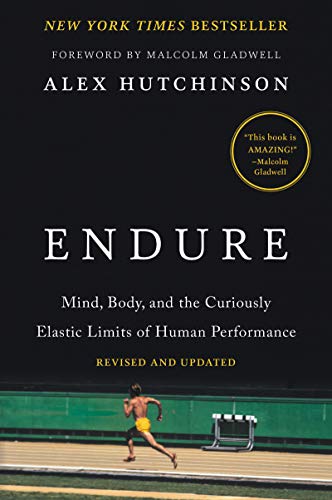
8. Endurance & The Mind-Body Limit
Endure by Alex Hutchinson
- ✓Investigates the interplay of muscle physiology and perceived effort.
- ✓Explains the science behind pacing and late-race surges.
- ✓Grounds mental limits in rigorous physiological research.
Late in a hard race, slowing down can feel inevitable. But what determines that moment: your muscles, your brain, or the conversation between them? Science journalist and former competitive runner Alex Hutchinson explores why endurance limits aren’t as simple as an empty fuel tank.
Endure examines how heat, thirst, discomfort, mental fatigue, and expectations influence performance. Hutchinson doesn’t suggest that physical limits are imaginary or that every warning signal should be ignored. Instead, he’ll give you a richer way to understand effort. It’s compelling reading for anyone who’s wondered why the same pace can feel manageable one day and brutal the next.
- The Big Takeaway: Endurance reflects both physical capacity and perceived effort; neither tells the whole story alone.
- Best For: Runners curious about sports science and the factors that shape performance under pressure.
9. Real Mental Toughness
Do Hard Things by Steve Magness

- ✓Replaces blind suffering with adaptive mental flexibility.
- ✓Teaches how to interpret discomfort without panicking in races.
- ✓Helps runners navigate bad workouts without losing confidence.
Pushing through everything isn’t mental toughness. Sometimes it’s poor judgment wearing a motivational slogan. Coach Steve Magness challenges the idea that resilience means suppressing emotions and ignoring your body’s signals. His alternative centers on awareness, flexibility, and staying composed when things get difficult.
Do Hard Things explores how to create space between a stressful sensation and your response. For runners, that’s useful when a tough interval triggers panic or a disappointing race sparks harsh self-talk. You’ll find ways to respond more deliberately, not instructions to dismiss pain. Sharp, worsening, or persistent symptoms still call for backing off and getting appropriate help.
- The Big Takeaway: Toughness isn’t blind suffering; it’s responding to difficulty with clear judgment.
- Best For: Runners who struggle with negative self-talk or confuse resilience with never backing off.
10. Consistency & Habit Design
Atomic Habits by James Clear

- ✓Techniques for reducing friction and automating morning training routines.
- ✓Shifts focus from rigid outcome goals to sustainable daily systems.
- ✓Explains why small one-percent adjustments compound into huge aerobic gains.
A brilliant training plan can’t help much if getting out the door feels like a daily negotiation. Often, the problem isn’t a lack of discipline; it’s too many small obstacles. James Clear explains how cues, convenience, and repeatable routines can make useful behaviors easier to sustain.
For runners, Atomic Habits might mean laying out your kit at night or linking a short warmup to an existing morning routine. On a busy day, a manageable run can keep the habit alive without forcing the full session. You’ll learn to build systems that don’t depend on feeling motivated. Just remember that consistency includes planned rest, not running at any cost.
- The Big Takeaway: Make running easier to start instead of expecting willpower to do all the work.
- Best For: Beginners building a routine and experienced runners returning after a break.
11. Joy & Movement Relationship
The Joy of Movement by Kelly McGonigal, PhD

- ✓Explores how endurance activity triggers neurochemical mood boosts.
- ✓Protects runners from viewing workouts solely through pace and data.
- ✓Highlights the mental health and social bonding benefits of running.
Running can start to feel like a second job when every outing comes with a performance review. Pace, cadence, and training load have their uses, but they aren’t the whole experience. Health psychologist Kelly McGonigal explores movement as a source of connection, meaning, and emotional resilience.
The Joy of Movement combines research and personal stories to examine why moving alone or with others can feel so rewarding. It’s a welcome counterweight to endless optimization. You’ll come away with reasons to value a friendly group run or an unhurried trail loop, even when neither improves your watch’s fitness estimate.
- The Big Takeaway: Running doesn’t need to produce a personal best to give you something valuable.
- Best For: Runners who have lost their enthusiasm beneath training metrics or race expectations.
12. Female Athlete Culture & Systems
Good for a Girl by Lauren Fleshman

- ✓Illuminates the lived challenges of female athletic development.
- ✓Challenges coaching models and sponsorship norms built around male bodies.
- ✓Advocates for a healthier, more inclusive future for women runners.
Physiology books can’t fully explain what it’s like to grow up in a sports system that treats male development as the default. Former national champion Lauren Fleshman brings that experience into focus through her own running career. Her story connects individual struggles with the expectations and institutions surrounding young athletes.
Good for a Girl examines body image, restrictive eating, coaching, and pressure to resist normal physical development. It’s personal, but the questions reach well beyond one runner. You’ll see why athlete health can’t rest on individual toughness alone. Supportive coaching and realistic expectations matter, especially when a developing athlete’s performance isn’t following a straight line.
- The Big Takeaway: Healthy development shouldn’t be treated as an obstacle to athletic success.
- Best For: Runners, parents, and coaches who want to understand and improve the experience of female athletes.
13. The Full Running Lifestyle
Born to Run 2 by Christopher McDougall & Eric Orton

- ✓Practical exercises for foot strength, upright posture, and cadence.
- ✓Reintroduces playfulness, exploration, and adventure to training.
- ✓Reinforces the core truth that running should be an enjoyable lifelong craft.
After training zones, fueling, and recovery, there’s room for a book that makes running feel like an adventure again. Christopher McDougall and coach Eric Orton follow their original bestseller with a practical guide to movement, training, and community. It’s an invitation to experiment, not another reason to judge every stride.
Born to Run 2 includes form drills, foot-strength exercises, food ideas, and ways to make running more playful. Don’t treat its barefoot or minimalist themes as an injury cure. Anyone considering changes while running with plantar fasciitis should prioritize appropriate care and gradual loading. You can enjoy the book’s spirit without abandoning comfortable shoes or rebuilding your gait overnight.
- The Big Takeaway: Curiosity and community can enrich your running, but physical changes still need a gradual approach.
- Best For: Runners who want more play, exploration, and shared miles in their routine.
Where Should You Start?
You don’t need to read all thirteen books at once. Choose the one that addresses your biggest sticking point, then try a small change before adding another title.
- Newer Runners: Start with Atomic Habits for consistency, then use 80/20 Running to understand easy effort.
- Performance Focused: Pair 80/20 Running with Running Rewired, then explore Endure for the science behind effort.
- Health & Longevity: Combine Built to Move with The Sleep Solution and How Not to Die. Don’t forget to fuel your training adequately.
- Feeling Burned Out: Pick up The Joy of Movement or Born to Run 2 to reconnect with what you enjoy.
- Female Athletes & Coaches: Read ROAR for a physiology-focused perspective, followed by Good for a Girl for cultural context.
Persistent or sharp pain needs more than a reading list. A qualified clinician can help assess what’s going on. For broader footwear knowledge, explore how to build a running shoe rotation and heel-to-toe drop, but don’t mistake a shoe change for a diagnosis or guaranteed fix.
Wrapping Up: Curating Your Runner’s Bookshelf
Running well isn’t just about completing the miles on your plan. Fueling, sleep, strength, and mindset all shape how those miles feel and what you get from them. There’s no single book that handles everything, and you don’t need one.
That’s the value of a bookshelf with different jobs. Dicharry can sharpen your approach to strength, while Clark makes fueling less confusing. Winter helps you understand sleep; McGonigal brings enjoyment back into view. Pick the book that fits today’s challenge, test one useful idea, and give it time. A smarter running routine doesn’t have to be a more complicated one.
Frequently Asked Questions
What’s the best book for a beginner runner?
It depends on what’s getting in your way. Atomic Habits is a useful starting point if you can’t build a consistent routine. For runners who push every outing too hard, 80/20 Running can help explain why easier effort matters. You don’t need an elaborate program on day one. Start with manageable runs, enough recovery, and expectations that match where you’re at.
Can these books replace a training plan or running coach?
Not completely. Books explain training principles, and some include plans, but they can’t see how you’re responding or adjust to your injury history, schedule, and goals. A suitable plan organizes the work; reading helps you understand why it’s there. Coaching adds personalized feedback when you need it. That doesn’t mean every recreational runner needs a coach.
Should runners prioritize sports nutrition or general healthy eating?
Both matter, but they don’t answer the same question. Nancy Clark focuses on fueling exercise, while Greger emphasizes everyday eating for long-term health. There’s room for both approaches, provided you’re getting enough energy to support your running. Don’t let food rules make you afraid of convenient carbohydrate sources. A gel during a long run and a bean-based dinner can each do a useful job.
Are ROAR and Good for a Girl only useful for women?
No, they’re also useful for coaches, partners, parents, and teammates. ROAR explores female physiology and training considerations, while Good for a Girl examines lived experience and sporting systems. Neither should be treated as a universal rulebook. You’ll get more from ROAR if you account for individual variation, and one athlete’s story can’t represent every woman’s experience.
How do I apply advice without changing everything at once?
Pick one problem and one manageable change. When easy runs keep turning hard, practice effort control. Chaotic mornings? Set out your kit the night before. Cutting sleep for optional mileage is a sign your schedule isn’t working. Give each change enough time to see whether it’s helping before adding another. You don’t get extra credit for turning 13 books into 13 projects you can’t sustain.
